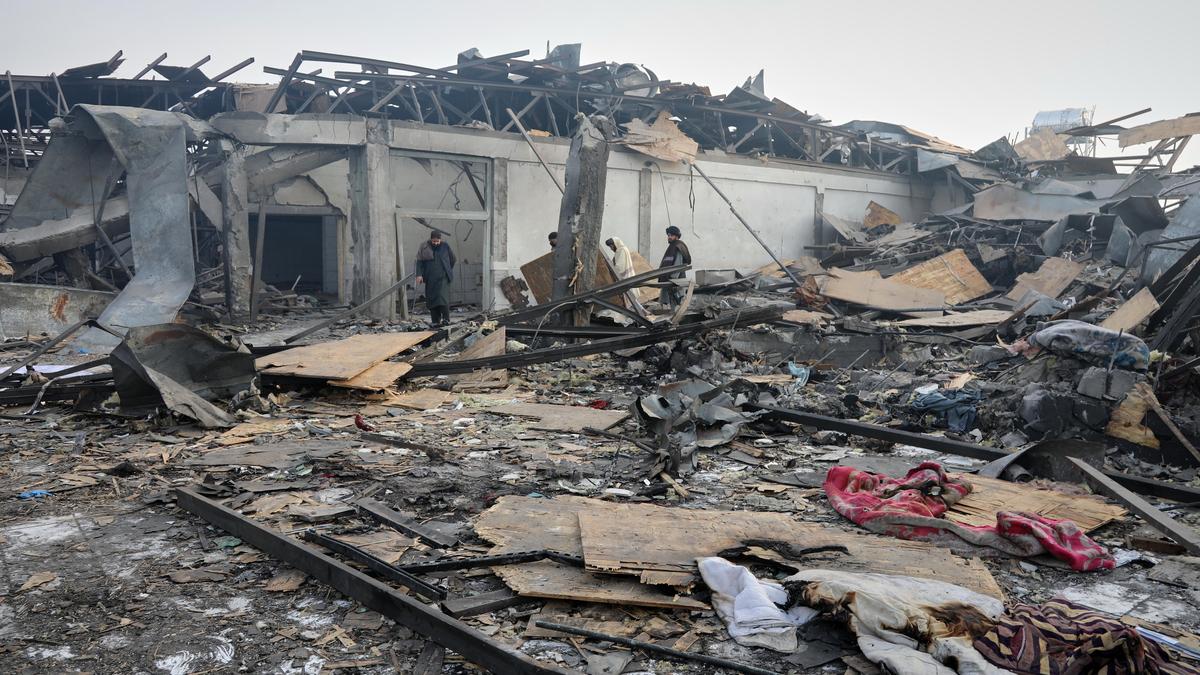
In a small bakery tucked into a side street of Tehran, the smell of scorching flour usually signals the start of a predictable day. But for Reza, a man whose hands are mapped with the burns of forty years tending a clay oven, predictability died a long time ago. He watches the news on a flickering television mounted near the ceiling. The headlines speak of "humanitarian assistance" and "strategic cooperation" between China and the nations of West Asia. To the suit-clad anchors in Beijing, these are policy pillars. To Reza, they are the difference between a cooling oven and a line of hungry neighbors.
Geopolitics is often discussed as if it were a game of chess played with cold, wooden pieces. We talk about corridors, trade deficits, and diplomatic envoys. We forget that every shipment of medical supplies or grain is a heartbeat. When China announces it will provide humanitarian assistance to Iran and its neighbors, it isn't just balancing a ledger against Western sanctions. It is intervening in the quiet, desperate mathematics of a kitchen table.
The Silk Road was never just about silk. It was a nervous system. Information, spices, and survival flowed along its veins. Today, that nervous system is being rebuilt with steel rails and shipping containers. While the West often views the Middle East through the lens of security threats or oil prices, the eastern perspective is shifting toward something more fundamental: stability through stomach-filling.
Consider the sheer scale of the gesture. China isn't just sending a few crates of medicine. They are weaving themselves into the daily survival of millions. For years, the conversation around Iran's economy has been dominated by the crushing weight of sanctions. Those sanctions aren't just lines of text in a UN document. They are the inability to buy a specific part for a hospital's MRI machine. They are the rising cost of a bag of rice that makes a mother choose between a full meal and a school notebook.
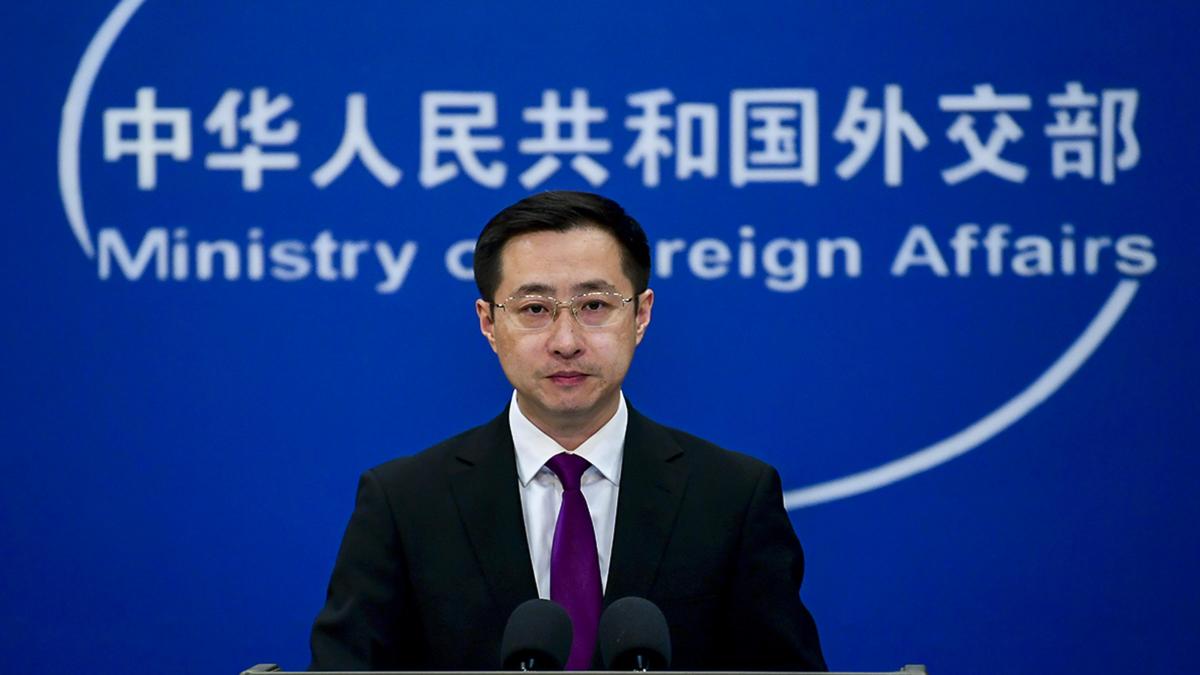
When the Chinese Ministry of Foreign Affairs speaks about "shouldering responsibility," they aren't just reading a script. They are signaling a change in the wind. This isn't charity. It is an investment in a specific kind of world—one where the East doesn't wait for permission from the West to decide who gets to survive.
The Quiet Infrastructure of Hope
Imagine a cargo ship docking at the port of Bandar Abbas. It isn't carrying luxury cars or high-end electronics. It is carrying the raw materials of civilization: wheat, medical supplies, and the specialized equipment needed to keep water flowing through ancient pipes.
A young doctor named Sarah stands in a crowded clinic in a rural province. For months, she has had to tell parents that she can't treat their children's chronic illnesses because the necessary medication is tied up in a web of international banking restrictions. Then, a shipment arrives. The labels are in Mandarin and Persian. To Sarah, the language doesn't matter. The chemistry does. The fact that the medicine is there, physical and cold in its vials, is a miracle of logistics.
This is the "humanitarian assistance" the news reports so dryly. It is the bridge between a child's fever and a night of restful sleep. China's move to solidify these ties is a masterclass in soft power. While one side of the world builds walls, the other is building a supply chain.
We often get the story of international aid completely backward. We think it's about the giver's generosity. It's actually about the receiver's dignity. When a nation like Iran, with a history that spans millennia, finds itself squeezed by modern financial systems, any hand that offers a way out is more than a partner. It is a lifeline.
The Invisible Stakes of a Slower World
The Middle East is a region that has been "managed" by outsiders for a century. Maps were drawn with rulers, and futures were decided in rooms in London or Washington. But the map is changing. The center of gravity is sliding eastward.
The stakes aren't just about who sells more cars in Tehran. They are about who is there when the lights go out. China’s commitment to providing assistance to West Asian nations is a long-game strategy. It acknowledges a reality that many in the West are slow to accept: you cannot starve a nation into submission without also creating a vacuum that someone else will fill.
The "humanitarian" label is clever. It is harder to sanction a shipment of flour than it is a shipment of drones. By focusing on the basic needs of the population, China is insulating its diplomatic moves from the usual criticisms. It is difficult to argue against a child's medicine or a city's water supply.
But there is a deeper, more emotional core to this story. It’s about the feeling of being seen. For many in Iran, the feeling of the last decade has been one of being erased—removed from the global banking system, removed from international travel, removed from the conversation. When China steps in with a promise of aid and cooperation, it says, "We see you."
The Geography of the Heart
If you look at a map of the Belt and Road Initiative, it looks like a spiderweb of trade routes. But if you look at it through the eyes of a person living in a sanctioned nation, it looks like an escape route. It is a way to breathe when the air is being squeezed out of the room.
We tend to think of these international agreements as static. They aren't. They are living things. They are the thousands of conversations between truck drivers crossing the border from Pakistan, the port workers in the Persian Gulf, and the engineers working on high-speed rail lines in the desert.
This isn't to say that the relationship is without its complications. There is always a cost to dependency. But when you are drowning, you don't ask the person throwing the rope about their long-term interest rates. You grab the rope.
Reza, the baker, knows this instinctively. He doesn't care about the intricacies of the Comprehensive Strategic Partnership. He cares that the price of flour has stabilized enough for him to keep his oven hot. He cares that his neighbor, whose son needs insulin, finally stopped looking like a ghost of a man.
The Shifting Horizon
The world is no longer a unipolar place. The days when a single capital could decide the fate of a dozen nations are fading. The assistance being offered today is a precursor to the trade of tomorrow. It is the foundation of a new kind of neighborhood.
China’s role in West Asia is often described as "filling a vacuum." That’s a cold way to put it. Vacuums aren't just empty spaces; they are places where people used to be. By stepping into that space with humanitarian aid, China is claiming a seat at a table that was once reserved for others.
It is a quiet, steady transformation. There are no sudden explosions of change, only the slow, rhythmic arrival of ships and trains. It is the sound of a marketplace that is slowly coming back to life. It is the sight of a hospital ward that finally has the supplies it needs to function.
The real story isn't in the press releases. It's in the way a father's shoulders drop an inch when he realizes he can afford both the medicine and the bread. It's in the way a student looks at a map and sees a future that doesn't involve leaving their home forever.
As the sun sets over the Alborz mountains, casting long shadows across the streets of Tehran, the smell of fresh bread still drifts from Reza's bakery. The television is still on, reporting on another meeting, another handshake, another shipment. The world is moving, grinding slowly toward a new alignment.
The Silk Road is open again. This time, it’s paved with the things that keep us human.
Reza pulls a final loaf from the oven. He sets it on the counter, the steam rising in the cool evening air. Outside, the city continues its frantic, beautiful dance. The bread is warm. The lights are on. For tonight, that is enough.