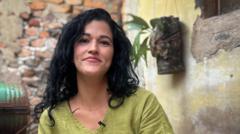
The fan stopped. That is the first thing María noticed—not the silence, but the absence of the mechanical hum that had become the heartbeat of her small apartment in Havana. Then came the heat. It arrived like an uninvited guest, thick and heavy, pressing against her swollen abdomen. At eight months pregnant, María’s body is already a furnace. Without the electricity to power that single, wobbling plastic fan, the air simply dies.
She reached for her phone in the dark. The screen glowed with a mocking 12%. On the street below, the neighborhood of Central Havana was a jagged silhouette against a moonless sky. No streetlights. No neon signs from the state-run hotels. Just the sound of neighbors dragging rocking chairs onto balconies, hoping for a stray breeze from the Malecón.
This is the reality of bringing life into a country where the grid is failing. It is not a temporary inconvenience. It is a fundamental shift in the nature of survival.
The Anatomy of a Collapse
To understand why a light bulb flickering out in a Havana kitchen matters to a woman in labor, you have to understand the fragility of the Cuban energy ecosystem. The island relies on a collection of aging, Soviet-era thermoelectric plants that are essentially held together by the ingenuity of engineers who have run out of spare parts. When one plant fails, the load shifts to another, creating a domino effect that can—and does—plunge the entire nation into a "zero generation" state.
In late 2024 and moving into 2026, these outages ceased to be scheduled "blackouts" and became a permanent state of being. The government calls them afectaciones. The people call them la oscuridad—the darkness.
For a pregnant woman, the darkness is a thief. It steals the refrigeration needed to keep milk from souring. It steals the water pressure, as electric pumps in apartment buildings fall silent. Most importantly, it steals the sense of safety that a modern medical system is supposed to provide.
The Hospital as a Fortress of Shadows
Consider a hypothetical, yet statistically certain, scenario. A woman named Elena begins to feel the first sharp contractions of labor at 2:00 AM. In a functioning city, this is a moment of adrenaline and preparation. In Havana during a blackout, it is a logistical nightmare.
The elevators in her Soviet-style apartment block are dead. Her husband must carry her down six flights of stairs by the light of a single LED flashlight, its batteries fading. Outside, there are no taxis. Fuel is as scarce as electricity. They wait for a neighbor with an old Lada, hoping he has enough "gold"—the slang for black-market gasoline—to make it to the maternal hospital.
When they arrive at the Hogar Materno, the scene is not the sterile, bright sanctuary one expects. The hospital has a generator, but generators are temperamental beasts. They are reserved for the operating rooms and the neonatal intensive care units. The hallways remain dim. The wards are stifling.
Doctors and nurses move like ghosts, guided by the blue light of their own cell phones tucked into breast pockets. They are masters of improvisation. They have learned how to calculate drip rates in the dark and how to soothe a panicked mother when the monitors go silent because the power surged and tripped a breaker.
The Invisible Stakes of a Cold Chain
The danger isn't just in the moment of birth. It is in the weeks leading up to it. Cuba has long prided itself on its low infant mortality rate, a statistic that was once the crown jewel of its social system. But that statistic was built on a foundation of consistent, preventative care.
Vaccines require a cold chain. Life-saving medications require specific temperatures. When the power goes out for eighteen hours a day, that chain snaps.
Medical professionals are forced to make impossible choices. They move supplies from clinic to clinic, chasing the few hours of electricity available in different sectors of the city. It is a shell game where the stakes are human lives. The stress on the healthcare workers is visible in the deep lines around their eyes. They are fighting a war against entropy, armed with nothing but dedication and dwindling supplies.
The Psychology of the Dark
There is a specific kind of exhaustion that comes from living in a state of constant anticipation. You don't just wait for the power to come back; you wait for it to leave again. This "energy anxiety" is particularly acute for expectant mothers.
They spend their days scouring Telegram groups for news of fuel shipments or power plant repairs. They plan their meals around the flicker of a lightbulb. If the power comes on at 3:00 PM, they cook everything they have immediately, because it might be gone by 5:00 PM.
This is not "resilience," a word often used by outsiders to romanticize Cuban suffering. This is a grinding, soul-crushing necessity. Resilience implies a choice. For the mothers-to-be in Cuba, there is only the next hour, the next contraction, the next breath of hot, stagnant air.
The Sound of Silence
Back in her apartment, María finally felt the baby kick. It was a sharp, rhythmic thud against her ribs. She placed her hand on her stomach and whispered a promise to the dark.
"You will be born in the light," she said.
It was a lie, but it was a necessary one. As the hours ticked toward dawn, the temperature in the room climbed. She could hear the sound of a distant generator—some private business or a nearby embassy—chugging away. It sounded like a heartbeat, steady and mechanical, a reminder of a world that still functioned just out of reach.
The tragedy of the Cuban energy crisis is not just the lack of light. It is the regression of time. A country that once led the region in medical innovation is being forced back into a pre-industrial struggle. Mothers are giving birth in the same conditions their great-grandmothers faced, but without the rural infrastructure that once made that life sustainable.
They are modern women trapped in a collapsing timeline.
The fuel shortages have forced many to return to charcoal or wood for cooking, even in the middle of dense urban centers. The smoke lingers in the narrow streets, mixing with the humidity. For a pregnant woman with respiratory concerns or high blood pressure, this environmental shift is another hidden weight on an already burdened heart.
The Logic of the Void
The math is simple and devastating. If a country cannot produce more than 50% of its required peak demand, something has to give. In a centralized economy, the "giving" happens at the edges of society first. It happens in the homes of those who cannot afford private generators or solar panels smuggled in from Miami.
It happens in the labor wards.
We often think of collapse as a sudden event—a bang, a crash, a total blackout. But the true collapse of a system is a slow, quiet erosion. It is the fan stopping. It is the water pressure fading. It is the doctor reaching for a cell phone instead of a surgical lamp.
As the sun began to peek over the horizon, casting a pale orange glow over the decaying facades of Havana, the power finally returned. The fan in María’s room gave a pathetic groan and began to spin, slowly at first, then faster, pushing the stale air around the room.
She didn't cheer. She didn't smile. She simply closed her eyes and tried to sleep before the cycle began again. She knew that somewhere across the city, another woman was just beginning her labor, and for her, the lights were about to go out.
The island continues to breathe, but its breath is shallow. It is the ragged respiration of a patient in a darkened room, waiting for a spark that may never come.
Would you like me to research the current status of the Union Eléctrica's repair efforts at the Antonio Guiteras plant to see how it affects the regional blackout schedules?