The US dollar isn't just a piece of paper or a digital entry. It's a weapon. When Washington decides to freeze assets or cut a country off from the SWIFT banking system, it isn't just "enforcing rules." It's sending a clear message to every other nation on the planet that your money is only yours as long as you play by their rules.
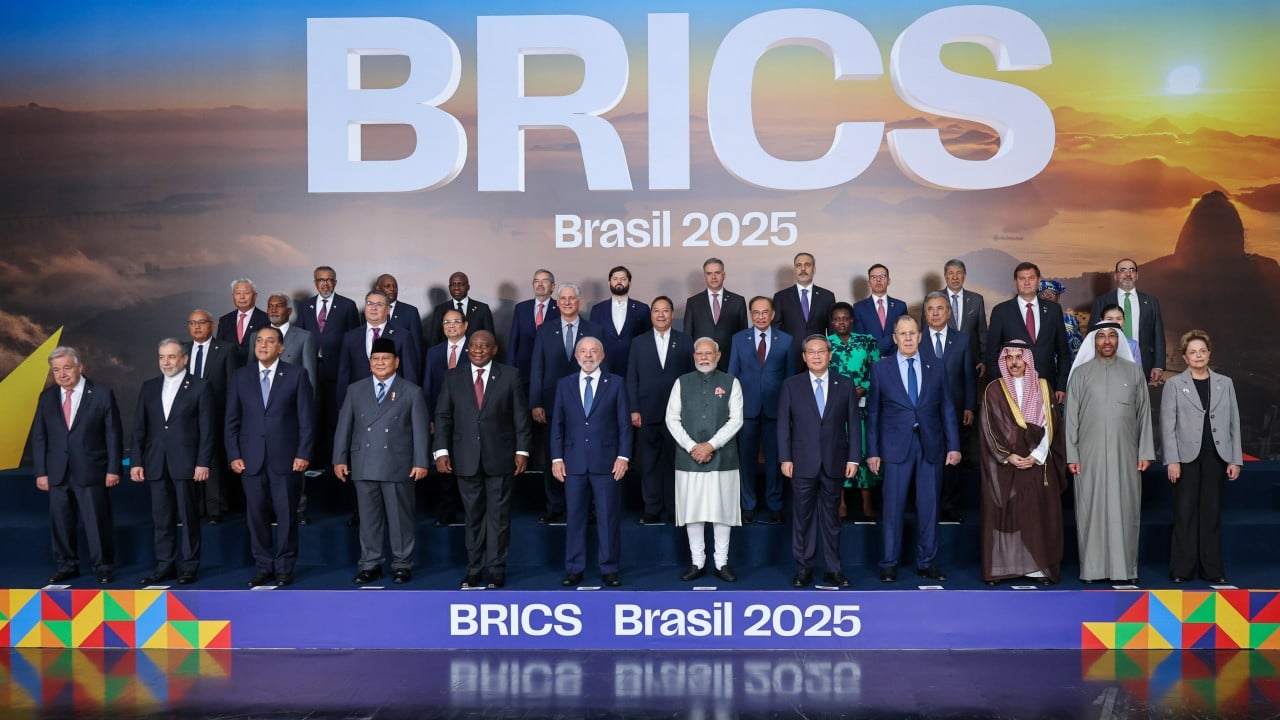
BRICS nations—Brazil, Russia, India, China, and South Africa, plus the recent wave of new members—have finally had enough. They're moving toward intra-currency payments, and it isn't just some vague political stunt. It's a survival strategy. They want immunity from Western financial pressure. If you can trade in your own currencies, you don't need to worry about being "de-banked" by a Treasury Department official in D.C.
People often get this wrong. They think BRICS wants to create a single gold-backed coin to replace the dollar tomorrow. That’s not what’s happening. The real story is about building a bypass. Think of it like a new set of plumbing for global money. If the old pipes can be turned off at any moment, you build your own.
The end of the dollar trap
For decades, if a Brazilian company wanted to buy electronics from Shanghai, they usually had to buy US dollars first. This creates a massive problem. It adds transaction costs. It subjects both countries to the exchange rate volatility of a currency they don't control. Most importantly, it gives the US government a "kill switch" over the trade.
By pushing for local currency settlements, BRICS members are effectively taking that kill switch away. This isn't about destroying the dollar. It's about reducing dependency. When Russia was hit with massive sanctions, the world watched. Developing nations realized that if it could happen to a nuclear-armed power, it could happen to anyone.
The move to local currencies is basically an insurance policy. It's about sovereignty. If India pays for Russian oil in rupees, or China buys Gulf oil in yuan, the US financial system loses its visibility and its leverage. You're seeing a fundamental shift in how power is projected globally. It’s less about aircraft carriers and more about clearing houses.
Why the West should be worried
The US enjoys what economists call "exorbitant privilege." Because everyone needs dollars to trade, the US can run massive deficits and print money with fewer consequences than other countries. But that privilege relies on the dollar being the only game in town.
BRICS is now larger than the G7 in terms of purchasing power parity (PPP). We're talking about a massive chunk of the global population and resource base. When these countries decide to stop using the dollar for their internal trade, the global demand for greenbacks drops.
This isn't a theory anymore. It's already in motion.
- India and the UAE have already completed oil deals using their own currencies.
- China and Brazil signed an agreement to ditch the dollar in bilateral trade.
- The mBridge project is testing digital currencies for cross-border payments, bypassing the traditional Western-led banking architecture.
This isn't just about trade; it's about the "liquidity of fear." Countries hold dollar reserves because they're afraid of being unable to pay for imports. If you can pay for those imports in your own currency, you don't need to hold nearly as many dollars.
The technical hurdles nobody talks about
Don't get me wrong. This is hard. You can't just flip a switch and stop using the dollar. The biggest issue is what I call the "Rupee-Ruble Problem."
If Russia sells a ton of oil to India and gets paid in rupees, what does Russia do with all those rupees? They can't exactly spend them in Germany or Japan. They have to find something to buy from India. If the trade is lopsided, one country ends up with a mountain of currency they can't use. This is why the dollar won in the first place—it's accepted everywhere.
To make this work, BRICS needs a more sophisticated system. They're looking at things like:
- Multilateral clearing houses: A way to net out trades across multiple countries so the balances don't have to be one-to-one.
- Digital Assets: Using central bank digital currencies (CBDCs) to settle trades instantly without needing a middleman.
- A common unit of account: Not a physical currency, but a way to value goods that isn't tied to the dollar.
It's a massive engineering challenge. But for the first time, the political will is stronger than the technical difficulty. These countries aren't just doing this for fun. They're doing it because they feel they have no choice.
What this means for your wallet
If you're sitting in the West, you might think this doesn't affect you. You're wrong. As the world moves away from the dollar, the cost of everything in the US could go up. If the dollar isn't the global reserve, its value drops. When the value drops, imports become more expensive. Inflation isn't just about printing money; it's about the global demand for that money.
For investors, this means the old "buy and hold" S&P 500 strategy might face some serious headwinds. We're moving into a multipolar world. You’ll need to look at emerging markets differently. They aren't just "cheap labor" anymore. They're becoming their own financial ecosystem.
The immunity BRICS is seeking isn't just about avoiding sanctions. It's about economic maturity. They want to be able to grow without asking for permission from New York or London.
The role of gold and digital assets
Gold is making a huge comeback in this conversation. Central banks have been buying gold at record rates. Why? Because gold has no counterparty risk. Nobody can "freeze" gold you have in your own vault.
But gold is heavy and hard to move. That's why the BRICS payment system will likely be digital. They’re looking at blockchain-style ledgers to track who owes what. It’s a 21st-century solution to an age-old problem of trust.
Honestly, the West has been a bit arrogant here. We assumed the dollar's dominance was a law of nature. It's not. It's a historical anomaly. And that history is changing fast. BRICS nations are building a world where the US Treasury doesn't have the final say on who gets to eat and who doesn't.
How to prepare for the shift
If you're a business owner or an investor, you can't ignore this. The trend toward "de-dollarization" is real, even if it's slow.
- Diversify your currency exposure: Don't keep everything in one bucket.
- Watch the mBridge project: This is the most significant threat to SWIFT you've never heard of.
- Follow central bank gold purchases: It's the best signal of where the "smart money" is going.
- Understand trade corridors: The trade between the Global South is growing faster than trade between the Global South and the North.
Stop thinking of BRICS as a disorganized club of developing nations. They are the new architects of the global financial system. They're building a world where "immunity" is the default setting, not a privilege granted by the West. The dollar isn't going to vanish, but it's going to have to learn to share the stage. That’s a massive change, and most people are completely unprepared for it. Keep your eyes on the plumbing. That's where the real power is shifting.