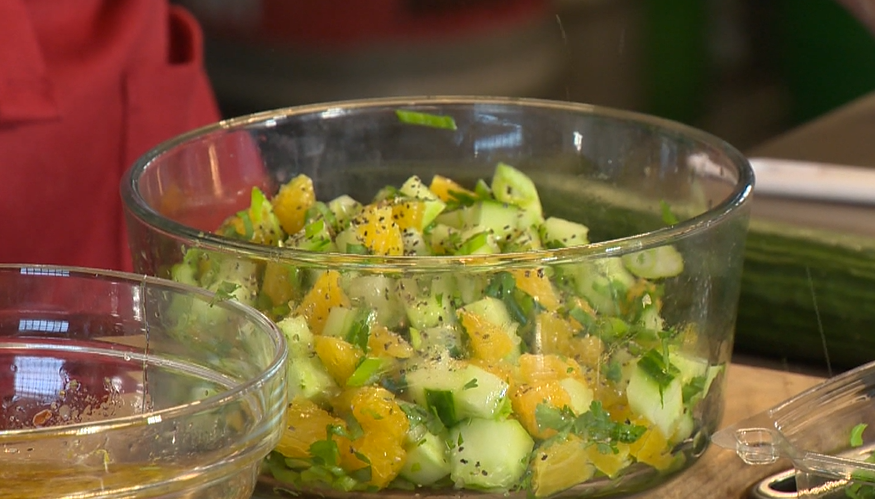
A standard cucumber salad fails because moisture is treated as an afterthought. Most home cooks slice water-dense gourds, toss them in a quick vinaigrette, and watch helplessly as a pool of diluted liquid forms at the bottom of the bowl within minutes. That watery breakdown ruins the texture and washes out the seasoning. Fixing this dish requires understanding the biological architecture of the vegetable itself. Cucumbers consist of roughly ninety-five percent water, locked inside rigid cellular walls. When salt or acid hits those walls without proper management, osmosis kicks in, dragging water out and leaving behind a limp, rubbery shadow of fresh produce.
The standard approach found across food blogs relies on sweetness, soft herbs, and casual tossing. That superficial method misses the physical mechanics required to build a genuinely crisp, vibrant dish. Elevating a cucumber salad with citrus, ginger, and chili demands a structural overhaul of prep work, timing, and chemical interaction.
Anatomy of a Watery Failure
Water destroys dressings. When a recipe calls for immediate serving without preparation steps, the natural cellular fluid of the cucumber bleeds directly into the bowl. This dilutes the oil, dulls the chili heat, and turns the ginger into a muddy residue.
Salting is the traditional fix, but it is frequently botched. Heavy salting draws out excess moisture, yet leaving the salt on too long converts a crunchy green cylinder into a soggy pickle. The sweet spot demands precision. Slicing the cucumbers, tossing them with a measured amount of kosher salt, and letting them drain in a colander for precisely twenty minutes removes the volatile free water while preserving the structural integrity of the core.
Ignoring this step means fighting physics. No amount of high-end ginger or expensive citrus juice can rescue a dressing that has been watered down from within by the very vegetable it coats.
The Chemistry of Citrus and Heat
Balancing bright acid with sharp aromatics requires more than a casual squeeze of a lime. Acid acts as a structural stabilizer once excess water is expelled. Rice vinegar paired with fresh lime juice provides a dual-layer tartness that cuts through natural green bitterness.
Ginger introduces warmth through gingerol, a bioactive compound that reacts differently when grated versus minced. Fine microplaning releases maximum cell sap, diffusing heat uniformly throughout the oil phase. Coarser knife cuts leave fibrous pockets that surprise the palate with sudden bursts of spice.
Chili operates on a parallel track. Fresh bird's eye chilis or crushed flakes supply capsaicin, which binds to pain receptors on the tongue, creating a warming sensation that amplifies the sharpness of the ginger. Fat acts as the delivery vehicle. Neutral oil or a few drops of toasted sesame oil coats the tongue, slowing the burn and allowing the citrus high notes to linger long after the bite is swallowed.
Architectural Execution
Building this dish correctly means sequencing ingredients with absolute discipline.
- Selection: Choose English or Persian varieties over standard slicing cultivars. Thinner skins and fewer developed seeds mean less internal moisture to combat.
- Prep: Slice uniformly. Uneven cuts result in varying rates of moisture loss and uneven texture distribution.
- Purging: Salt lightly, rest for twenty minutes, and pat dry with paper towels. Skip this only if serving the dish within sixty seconds of assembly.
- Emulsion: Whisk the citrus juices, grated ginger, chili, and oil together separately before coating the vegetables. Pouring raw elements directly over the bowl creates pockets of pure acid next to dry spots.
The resulting plate looks different from the watery bowls common at backyard barbecues. The slices retain a distinct snap. The ginger and chili do not drown; they cling to the exterior, held in place by a properly emulsified coating that refuses to break down.
Beyond the Recipe
Culinary execution relies on respecting raw inputs. Treating vegetables as static components leads to predictable disappointments. Understanding how salt draws water, how acid alters cell walls, and how fat carries heat transforms a basic side dish into a masterclass in kitchen mechanics.
The next time a recipe promises a simple, refreshing salad, look past the ingredient list. Ask how the moisture is managed. Ask how the acid is balanced. The answers dictate the difference between a soggy mistake and a precise, texturally brilliant plate.