The dust never quite settles in Rasuwagadhi. It clings to the wool of winter coats, cakes the windshields of overloaded trucks, and settles deep into the lungs of people who have lived beneath the shadow of the Himalayas for generations.
For years, the promise was simple. Asphalt. Trade. Prosperity rolling down from the superpower across the border like an incoming tide.
Meet Ramesh. He is a hypothetical shopkeeper whose real-life counterparts run every tea stall, hardware shop, and dry goods store along the rugged artery connecting Nepal to China. Ten years ago, Ramesh looked north and saw a horizon of endless potential. Trucks would come. Tourists would follow. The ancient trails of the high passes would give way to modern commerce. He invested his life savings into a three-story concrete lodge, banking on the grand vision of the Araniko Highway and its newer northern sibling, the Rasuwagadhi-Kerung corridor, becoming the bustling lifelines of a modernizing nation.
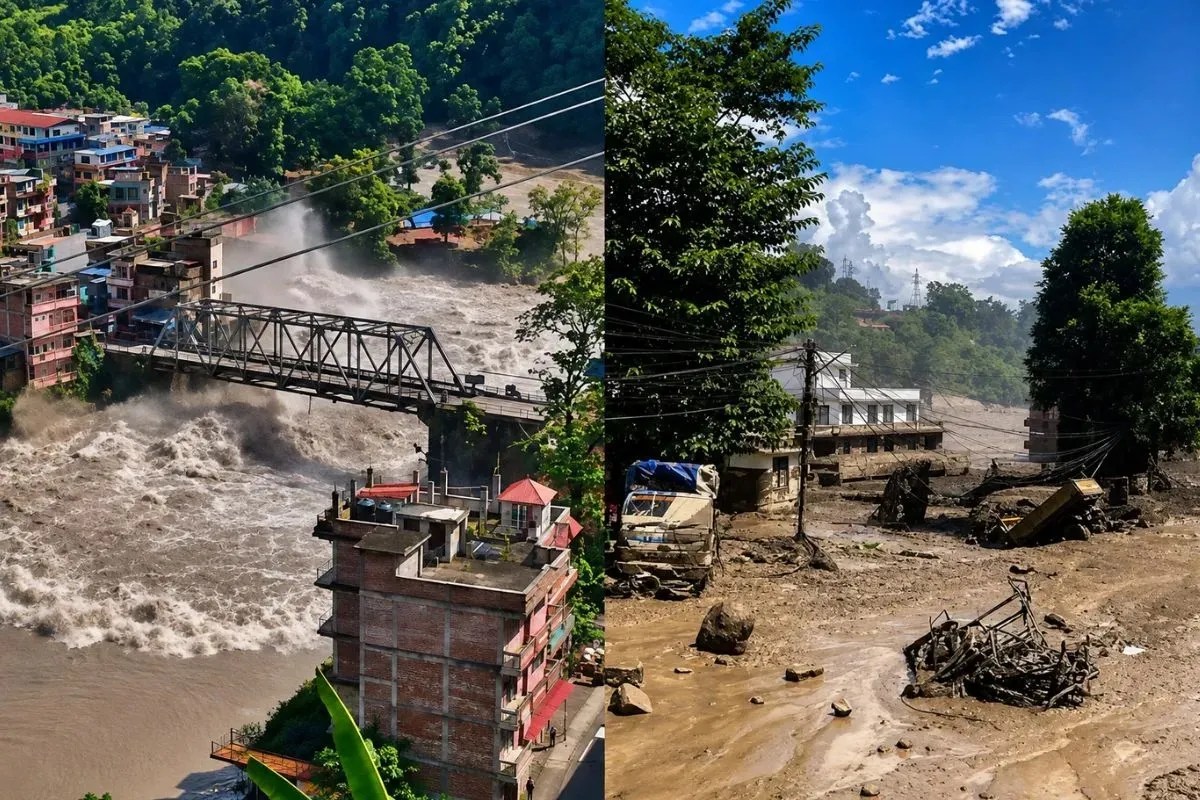
Today, Ramesh listens to the sickening crunch of boulders sliding down a rain-soaked hillside just behind his empty hotel.
Geopolitics is often discussed in sterile rooms filled with maps, treaties, and gross domestic product metrics. But geopolitics actually feels like wet mud sliding through a living room window. It smells like diesel exhaust mixed with crushed pine. It sounds like the terrifying, low-end rumble of a mountain giving way under the weight of accelerated infrastructure projects built too fast, in terrain too fragile, with safeguards too thin.
The highway was sold as a marvel of engineering. A monument to bilateral friendship. A ribbon of blacktop designed to pull landlocked Nepal out of isolation and link it directly to the roaring economic engine of Beijing. The symbolism was potent. Concrete pouring over ancient footpaths. Steel bridges spanning roaring glacial rivers.
Yet mountains have a way of negotiating their own terms.
Consider what happens when you cut wide swaths into unstable, geologically young mountain ranges without matching the excavation speed with rigorous environmental reinforcement. Monsoon rains do not care about trade agreements. Earthquakes do not respect memorandums of understanding. When the earth shakes—and in the Himalayas, it is always preparing to shake again—raw, unanchored mountain cuts turn into colossal chutes of debris.
The economic cost is staggering, yet it is only half the story. Every time a landslide severs the northern corridor, cargo sits rotting in shipping containers. Prices for basic foodstuffs in Kathmandu spike. Small-business owners like Ramesh watch their seasonal income vanish beneath thousands of tons of rock. The promise of connectivity curdles into a recurring nightmare of isolation. The concrete bridges stand proud and intact, but the roads leading to them simply slide away into the abyss.
This is the hidden price of ambition in high-altitude zones. The engineering triumphs of the twenty-first century frequently collide with the brutal physics of nineteenth-century geography. When giant construction machinery bites into vertical cliffs, it leaves scars that take decades to heal, if they heal at all. The local communities bear the brunt of this ecological violence. They are told that progress requires sacrifice. But the sacrifice seems endlessly one-sided, paid in cracked foundations, blocked supply chains, and the constant, gnawing anxiety that the next heavy downpour will wash the village off the map entirely.
Walking along these precarious stretches of road, the tension is palpable. Drivers chain their tires not just for snow, but for grease-slick mud that threatens to swallow entire lorries. They swap stories over cups of spiced black tea at roadside shacks, trading grim calculations about which stretch of the pass is currently blocked by a fresh rockfall.
There is a profound irony in watching heavy trucks struggle against the very mountain passes they were built to conquer. The northern corridor was meant to diversify trade routes, to ease dependency, to open a window to the wider world. Instead, it has frequently served as a stark reminder of human vulnerability in the face of tectonic power.
Nations can sign pacts, shake hands beneath glittering chandeliers, and map out grand trans-Himalayan economic networks. But when the dust clears, the highway remains an ongoing negotiation with gravity.
Ramesh stands on his balcony, wiping a layer of fine grey silt from the railing. Down in the gorge, the river roars on, indifferent to the concrete, the commerce, and the crumbling cliffs.