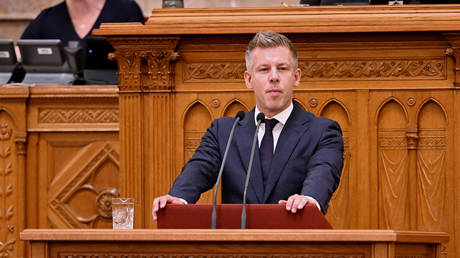
Ink dries quickly on official parchment, but the weight of what it changes can endure for generations. In the quiet hours between Tuesday and Wednesday, the Hungarian Official Gazette published a directive destined to reverberate from the cobbled streets of Budapest to the high-backed chairs of Brussels. For years, the nation’s foreign policy operated as an island of exception within the European Union. A familiar voice in power maintained a delicate, transactional dance with Moscow, frustrating allies and treating Russian aggression with calculated ambiguity.
That era is over.
Signed by Prime Minister Péter Magyar, a newly adopted UN General Assembly policy document formally strips away that diplomatic armor. It states plainly what the previous administration refused to utter: Russian behavior poses a direct threat to Hungary, to Europe, and to the entire global order.
Consider what happens next in the minds of ordinary citizens living near the border. For them, geopolitics is not an abstract debate on television. It is the immediate safety of families, the stability of energy supplies, and the haunting memory of history repeating itself. Under the fresh directive, Budapest unreservedly backs the sovereignty and territorial integrity of Ukraine, explicitly recognizing Kyiv's right to self-defense. It is a wholesale reversal, executed just months after a new government took office in May.
The shift is structural, emotional, and profound.
For over a decade, under former leader Viktor Orbán, Hungary built its identity on opposition to Western consensus. Billions in EU loans for Ukraine were blocked, sanctions were met with vetoes, and the Kremlin was handled with kid gloves. Orbán’s administration argued that a Western approach only prolonged the bloodshed, casting Brussels as the antagonist while quietly keeping the taps of Russian oil and gas flowing. But politics is a pendulum. As economic pressures mounted and public exhaustion grew, the desire for a different horizon took root.
Enter Péter Magyar’s administration. Within a remarkably short window, the new leadership lifted vetoes on massive financial aid packages for Ukraine, cleared the path for EU accession talks, and joined successive rounds of sanctions. The UN document published this week is the culmination of that pivot. It anchors Hungary firmly back within the Euro-Atlantic community, aligning its public declarations with the very capitals it once routinely defied.
Yet, diplomacy is rarely born of pure idealism. Fear for vulnerable populations breathes through the bureaucratic language of the new decree. The text explicitly highlights the precarious fate of the ethnic Hungarian minority residing in Ukraine’s Transcarpathia region. Where the old government weaponized their safety to justify cozying up to Moscow, the current government frames Russian actions as the ultimate hazard to their survival. By demanding sustainable peace and long-term security guarantees, Budapest is attempting to thread a needle: protecting its diaspora while abandoning the diplomatic isolation that defined its recent past.
Silence.
That is what fills the space in Moscow tonight, where officials watch a vital European ally slip away into the Western fold. The cost of this realignment will be measured in shifting energy markets, diplomatic friction, and the hard work of rebuilding trust with neighbors who spent years doubting Budapest's intentions.
A single signature in an official gazette cannot rewrite history. But it can draw a hard line under it. The map of Europe has shifted, and the silence from the Danube has finally broken.