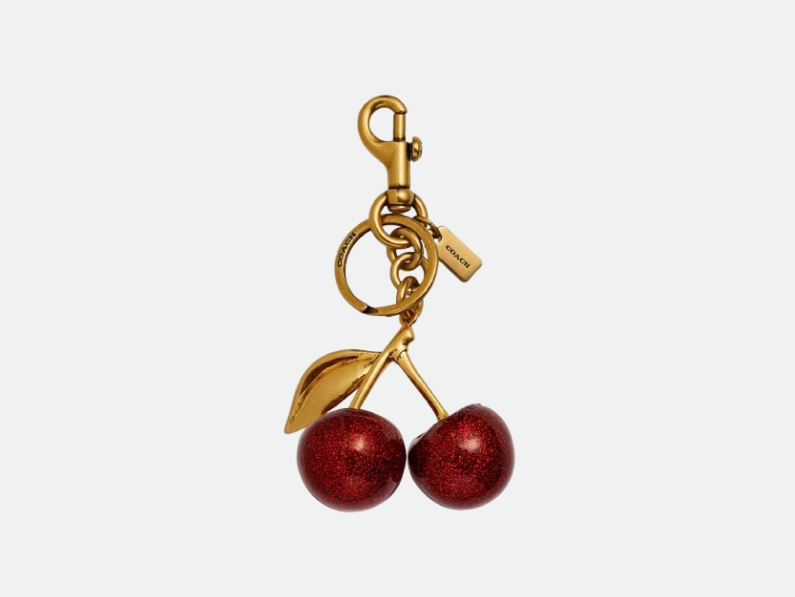
The luxury industry is currently obsessed with small, dangling objects that cost as much as a monthly car payment. While casual observers might view the 2026 surge in bag charms as a whimsical return to "kidcore" or Y2K nostalgia, the reality is far more calculated. This is not just about aesthetics. It is a strategic response to a cooling luxury market where the average consumer can no longer afford the five-figure price tags of "it-bags" but still craves the dopamine hit of a designer purchase.
By attaching a $600 leather animal or a $400 beaded lanyard to a tote they already own, shoppers are engaging in a practice known as micro-luxury. It is the ultimate survival tactic for brands facing a slump in leather goods sales. They are selling you a fragment of the dream because the full dream is increasingly out of reach.
The Death of the Minimalist Era
For nearly a decade, "Quiet Luxury" dictated that wealth should be whispered. We saw a sea of beige, unbranded, and austere leather. But fashion moves in cycles of rebellion. The 2026 obsession with bag charms is a loud, messy revolt against that stifling minimalism.
Personalization has become the new status symbol. In an age of mass production, owning a standard Birkin or a classic Neverfull is no longer enough to signal individuality. The charm serves as a chaotic counterpoint to the perfection of the bag itself. It signals that the owner is wealthy enough to treat a multi-thousand-dollar item with a sense of irreverent playfulness. You aren't just carrying a bag; you are curating a mobile gallery of your personality.
The High Margin Trap
If you look at the raw materials of a designer bag charm, the math rarely adds up. A scrap of Epsom leather, a few inches of silk thread, and a zinc alloy clasp do not equal a $500 valuation.
From a business perspective, these accessories are gold mines. The production costs are negligible compared to the retail price. Unlike a coat that requires complex sizing or a handbag that demands structural integrity, a charm is a "one-size-fits-all" product with almost zero return rate.
Brands like Hermès, Loewe, and Miu Miu have mastered this. They understand that a consumer might hesitate at a $4,000 price point for a new bag, but that same consumer will often justify a "small" $500 purchase as a reward or a gateway entry into the brand. It is an entry-level drug designed to keep the brand relevant in the shopper’s mind until they can save for the next major leather piece.
The Psychology of Clutter
There is a specific term for the heavy, over-accessorized look dominating 2026: Jane Birkin-fication. The late actress was famous for stuffing her namesake bag until it overflowed, often decorating it with stickers, beads, and charms.
This look projects an "unfiltered" life. It suggests that the wearer is too busy, too traveled, and too interesting to care about keeping their luxury goods in pristine condition. The irony, of course, is that this "effortless" clutter is now being meticulously curated. People are spending hours on social media platforms perfecting the "messy" look, purchasing specific vintage trinkets to mix with high-end designer tags to achieve the perfect balance of high and low.
The Resale Market and the Scarcity Engine
The secondary market has added fuel to this fire. Limited edition charms often sell out instantly and reappear on resale sites for double their original price. This creates a sense of urgency. When a shopper sees a leather orange or a miniature plushie in a boutique, they aren't just seeing a toy; they are seeing a liquid asset.
Collectors have moved beyond bags to "sets." A collector might own five different charms for one specific bag, changing them out based on the season or the occasion. This effectively multiplies the "newness" of an old accessory.
- Year 1: Buy the bag ($3,000).
- Year 2: Add a silk scarf ($250).
- Year 3: Add three different charms ($1,500 total).
The brand has successfully extracted nearly $5,000 from a customer who initially only intended to buy one bag. This is the incremental revenue model at its most effective.
Cultural Appropriation or Appreciation
We cannot discuss the 2026 charm craze without acknowledging its roots in East Asian street style. For decades, commuters in Tokyo and Seoul have adorned their bags with plushies, bells, and "omamori" (protective amulets).
Western luxury houses have essentially "discovered" a long-standing cultural practice, repackaged it in premium materials, and sold it back to a global audience at a massive markup. While some call it inspiration, others see it as the commodification of a subculture that was originally about personal sentiment rather than brand flexing. The transition from a $5 gachapon toy to a $600 designer version represents the ultimate distillation of luxury: taking something mundane and making it exclusive through price alone.
The Sustainability Paradox
The industry loves to talk about ESG goals and reducing carbon footprints. However, the production of millions of tiny leather and plastic trinkets contradicts every "sustainable" manifesto published by the major conglomerates. These items are the definition of non-essential. They are often made from the offcuts of larger production runs, which brands frame as "upcycling," but let’s be honest: they are still encouraging a culture of hyper-consumption.
A charm is a trend-driven item with a short shelf life. When the aesthetic shifts back to minimalism—and it will—these hundreds of thousands of leather scraps and metal clips will end up in the back of closets or, eventually, landfills.
How to Navigate the Trend Without Being a Victim
If you must participate in the charm movement, do it with some level of financial and aesthetic intelligence.
- Avoid the "Full Look": Buying a bag, a strap, and three charms from the same designer brand makes you look like a walking advertisement. The most stylish iterations of this trend involve mixing a high-end bag with vintage or handmade charms that actually mean something to you.
- Check the Hardware: The first thing to fail on a cheap or even some expensive charms is the clasp. If the metal feels light or the spring is weak, it will eventually fall off and be lost to the street. Look for solid brass or stainless steel.
- Weight Matters: Adding five heavy charms to a delicate leather tote will eventually ruin the shape of the bag. The handles will stretch, and the leather will pull. If your charms weigh more than your phone, you are damaging your primary investment.
The 2026 bag charm trend is a fascinating study in how luxury brands manipulate our desire for individuality to mask a stagnating economy. It is a brilliant, profitable distraction. Enjoy the trinkets, but don't mistake them for anything other than what they are: very expensive scraps of leather designed to keep you spending while you wait for the next real "it" bag to arrive.
The real winners aren't the people with the most decorated totes. They are the CFOs of the luxury houses watching their margins swell on the back of a leather pony.
Stop buying the filler. Save for the substance.