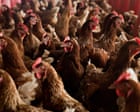
Consumers paying a premium for organic eggs often believe they are purchasing a ticket to lower carbon emissions, animal welfare, and ecological harmony. The supermarket aisle encourages this narrative. Earth tones, pictures of rolling green pastures, and clean font choices suggest that a higher price tag buys a lighter footprint on the planet.
The underlying biophysics and agricultural supply chain data tell an entirely different story. Organic eggs actually carry a substantially worse climate impact than eggs produced by conventionally caged hens.
This counterintuitive reality stems from a fundamental law of agricultural efficiency: land use, feed conversion ratios, and mortality rates dictate greenhouse gas emissions. When a farming system abandons high-density housing in favor of open pasture and slow-growing breeds, resource consumption skyrockets. Understanding this dynamic requires stripping away the marketing gloss to examine the raw mechanics of modern poultry production.
The Efficiency Penalty of Free Range Space
To understand why organic eggs generate more greenhouse gases per carton, look closely at how feed translates into protein. Conventional egg production relies on battery cages or enriched colony systems. These indoor facilities are marvels of thermodynamic efficiency. Hens are confined to tight spaces, which drastically limits their movement. By restricting physical activity, the birds burn fewer calories on locomotion and body heat regulation. Almost all consumed energy goes directly into egg production.
Organic systems throw this efficiency equation out the window. Federal regulations require that organic laying hens have continuous access to outdoor runs. While this sounds idyllic for the animal, it introduces severe environmental costs.
When hens roam outside, they burn significant energy foraging, walking, and dealing with ambient temperature fluctuations. More calories burned on activity means more feed required per dozen eggs produced.
Feed production is the single largest driver of the carbon footprint in poultry farming. Growing, harvesting, fertilizing, and transporting the grain—primarily corn and soy—demands fossil fuels, synthetic nitrogen fertilizers, and massive tracts of arable land. When hens require more feed to produce the same number of eggs, the upstream carbon emissions associated with crop cultivation scale upward.
Furthermore, organic feed must be grown without synthetic pesticides or fertilizers, which often results in lower crop yields per acre. Lower yields mean farmers must cultivate more land to harvest the same volume of feed, compounding the land-use change penalty.
The Land Use and Deforestation Ripple Effect
Land use change is the hidden engine of agricultural emissions. When forests or grasslands are converted into agricultural fields, massive amounts of carbon stored in soils and biomass are released into the atmosphere. Because organic poultry systems require more land per bird—both for the pastures the hens inhabit and the organic crops required to feed them—their spatial footprint is immense.
Consider the acreage required to support a commercial flock. Conventional housing packs thousands of birds into a compact footprint, utilizing vertical space efficiently. Organic setups spread those same birds over acres of pasture. This dispersal demands more infrastructure, more fencing, more fuel for maintenance machinery, and greater distribution logistics over wider geographic areas.
The feed disparity exacerbates this issue. Organic soy is notoriously difficult to source locally in quantities that satisfy commercial demand. Much of the organic soy powering the American and European organic egg market travels thousands of miles from regions experiencing high agricultural expansion pressures. While the label promises local stewardship, the global supply chain tells a story of transcontinental freight and intensive land cultivation.
Mortality Rates and Disease Pressures
Another overlooked variable in the carbon equation is flock mortality. Indoor conventional systems, despite valid animal welfare criticisms, maintain strict biosecurity protocols. Climate control, filtration, and physical barriers protect birds from predators, parasites, and avian pathogens.
Outdoor access exposes organic flocks to a host of environmental hazards. Predation by hawks, foxes, and domestic animals takes a steady toll. More critically, outdoor soil acts as a reservoir for parasites like roundworms and bacterial pathogens.
Mortality rates in organic and free-range flocks routinely run higher than in tightly managed conventional facilities. When a hen dies prematurely at week thirty of a typical seventy-week laying cycle, the carbon investment required to raise that pullet from a chick is wasted.
The farm must rear replacement birds earlier and more frequently to maintain production quotas. Every extra batch of chicks hatched, fed, vaccinated, and transported adds to the cumulative greenhouse gas ledger of the enterprise. Replacing lost productivity requires an amplified operational scale, driving up total resource expenditure per consumable egg.
Manure Management and Nitrogen Volatilization
Waste management presents another divergence in environmental impact. In high-density conventional barns, manure is typically dropped onto belt systems, dried rapidly, and removed efficiently. This rapid drying process minimizes the biological breakdown that produces nitrous oxide—a greenhouse gas roughly three hundred times more potent than carbon dioxide over a century timescale—and ammonia gas.
In organic pasture systems, manure is deposited directly onto the soil across large open areas. While this sounds natural, it creates uncontrolled hot spots of nitrogen concentration. Rain washes excess nitrates into waterways, causing eutrophication, while volatilization releases nitrous oxide directly into the atmosphere without the benefit of capture or mitigation technology.
The distribution of waste across pastures makes it impossible to manage nutrient runoff effectively. Concentrated animal feeding operations have severe environmental drawbacks, but their waste capture infrastructure allows for precise management that decentralized pasture systems cannot replicate.
The Consumer Paradox
This structural reality places conscientious consumers in a difficult bind. Purchasing habits are frequently guided by emotional branding rather than lifecycle analysis. Shoppers want to support ethical treatment, biodiversity, and small-scale agriculture, assuming these values align neatly with climate preservation.
Frequently, they do not. Animal welfare and carbon mitigation are often competing priorities in modern food systems. Maximizing the comfort and behavioral freedom of livestock demands more space, more feed, and more land, all of which drive up emissions. Minimizing carbon output requires density, efficiency, optimization, and resource consolidation.
Acknowledging this tension does not mean dismissing animal welfare concerns. Consumers have every right to prioritize the ethical treatment of laying hens over absolute carbon minimization. The flaw lies in pretending that a choice can optimize for every desirable virtue simultaneously. Organic eggs deliver superior outcomes for animal autonomy and reduce localized chemical pollution on pastures, but they exact a heavier toll on the global atmosphere.
The supermarket shelf offers choices, but it rarely presents the complete ledger. Until agricultural researchers develop high-efficiency organic feed alternatives, or find ways to drastically lower the energy expenditure of free-range systems, the math remains stubborn. The egg with the lower carbon footprint is born of industrial efficiency, while the one tied to the pastoral ideal carries a heavier climate cost.