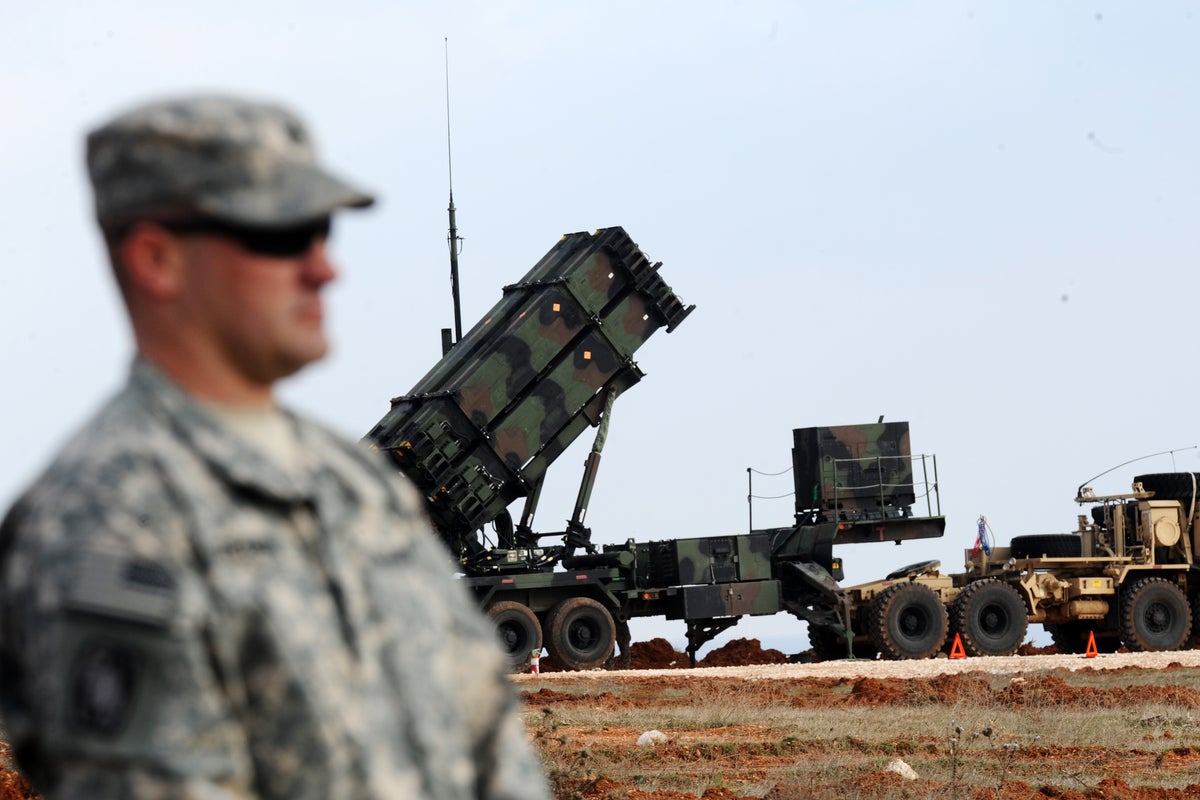
The United States defense establishment has committed to a massive industrial expansion, anchored by a multiyear framework contract worth up to fifty-eight billion dollars to dramatically scale up Patriot missile production. Driven by intense consumption rates across prolonged conflicts in Ukraine and the Middle East, the Pentagon and prime contractor Lockheed Martin are racing to turn a chronic deficit into an industrial surge. Yet money alone cannot bend the laws of physics or compress the rigid timelines of high-tech manufacturing.
Behind the triumphant headlines of expanded factory output lies a severe structural strain that decades of defense consolidation and lean manufacturing principles created.
The Consumption Trap
Modern warfare consumes precision hardware at a velocity that peacetime industrial baselines were never designed to support. When batteries fire interceptors to neutralize incoming ballistic threats, they burn through inventory built over months in mere seconds.
Consider the operational reality exposed by recent Middle Eastern contingencies and European defense commitments. The math is punishing. At historical manufacturing outputs of roughly six hundred PAC-3 Missile Segment Enhancement interceptors per year, replacing an intensive month of combat expenditure requires years of uninterrupted production.
This mismatch produces a dangerous strategic vulnerability. Strategic stockpiles dropped to fractions of minimum required thresholds before procurement policies shifted. The fifty-eight billion dollar framework agreement—transitioning from shorter-term funding increments into a seven-year procurement vehicle stretching toward 2032—attempts to solve this by providing the one thing defense contractors demand before expanding footprints: guaranteed, long-term demand visibility.
Choke Points in the Sub-Tier Supply Chain
Tripling production from six hundred units annually to a target of two thousand units per year by 2030 is not simply a matter of adding extra assembly lines. Final integration facilities in places like Camden, Arkansas, represent only the tip of an extensive, fragile pyramid of sub-tier suppliers.
The real bottlenecks reside deep within the industrial ecosystem.
- Solid Rocket Motors: The chemical formulations and specialized curing processes required for solid rocket propulsion demand extended lead times, often stretching past thirty months for critical components.
- Precision Seekers: Active radar seekers, manufactured by specialized partners like Boeing in Alabama, face their own throughput ceilings that require parallel infrastructure investments.
- Specialty Materials: Castings, forgings, and high-temperature alloy components rely on a dwindling number of domestic metallurgical foundries capable of meeting military specifications.
When a single component supplier experiences a delay, the entire final assembly schedule stalls. Lockheed Martin’s plan to increase its Arkansas workforce by more than fifty percent and modernize dozens of domestic facilities addresses final capacity, but true resilience requires pushing capital down to the small- and medium-tier vendors who provide the raw building blocks.
Foreign Military Sales and Global Backlogs
Domestic replenishment is only half the equation. A significant majority of the funding fueling these new manufacturing contracts originates from Foreign Military Sales. Allied nations across Europe and the Middle East face their own acute air defense shortages.
Global demand queues represent a massive cumulative backlog of thousands of Patriot rounds. When the United States signs multiyear agreements to triple output, those missiles are heavily spoken for by international partners bound by mutual defense pacts. The friction between equipping American forces and honoring export commitments creates a perpetual balancing act for Pentagon allocators.
Furthermore, industrial expansion is handcuffed by legislative realities. While framework agreements establish the legal ceiling, actual cash flow depends heavily on annual congressional appropriations. Industry leaders cannot justify sinking billions into physical plant expansions without concrete congressional funding locks in place, creating a perpetual lag between geopolitical urgency and industrial mobilization.
The Limits of Industrial Might
Throwing capital at a rusted manufacturing base exposes the limits of modern defense economics. Even with streamlined contracting and executive pressure to prioritize output over short-term financial buybacks, the lead time to build a complex, hit-to-kill interceptor remains stubbornly long.
Weapons ordered under the current expansion agreements will trickle into active inventories slowly over the coming years. Until those assembly lines reach peak velocity, military planners face a tightrope walk between operational readiness and conservation, proving that industrial power cannot be improvised overnight when a crisis arrives.