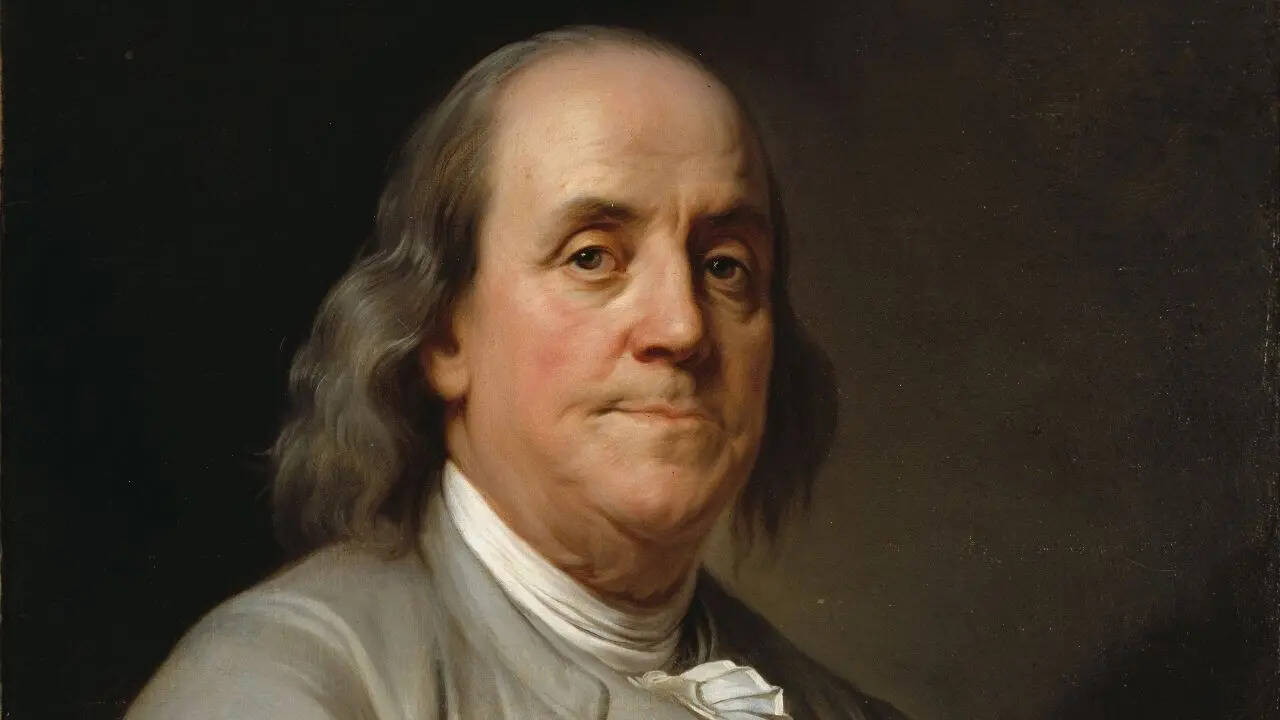
Benjamin Franklin is often packaged as a harmless, kite-flying grandfather of American diplomacy. We see his face on the hundred-dollar bill and read his pithy aphorisms on wall calendars, treating his advice like mental wallpaper. The specific quote regarding the "best things" to give to enemies, friends, and parents is a staple of this shallow interpretation. It suggests a tidy, harmonious world where every social interaction has a neat, virtuous solution. But when you strip away the Hallmark sentimentality, Franklin’s checklist for living reveals a much harder truth about the mechanics of human power and social capital. This wasn't just advice for being a "good person." It was a survival manual for an ambitious man navigating a cutthroat colonial society.
The quote serves as a roadmap for emotional regulation. Franklin argues for giving forgiveness to an enemy, tolerance to an opponent, and charity to all others. On the surface, it sounds like pure altruism. In practice, it is a strategy for clearing the path of unnecessary friction. Franklin knew that holding a grudge is an expensive use of time. By forgiving an enemy, you aren't necessarily absolving them of their sins; you are reclaiming the mental energy they’ve stolen from you.
The Strategic Utility of Forgiveness
In the modern professional environment, we often mistake forgiveness for weakness. Franklin viewed it as a tactical advantage. When you forgive an enemy, you neutralize their ability to provoke you. You move the conflict from a visceral, emotional level to a cool, analytical one. This is not about kindness. It is about efficiency.
An opponent requires tolerance, which is distinct from forgiveness. An opponent is someone vying for the same resources or status as you—a rival in business or politics. You don't forgive them because they haven't necessarily wronged you; they are simply in your way. Tolerance allows you to coexist and compete without the destructive heat of personal animosity. It keeps the marketplace of ideas functioning. Without it, every disagreement turns into a blood feud that eventually bankrupts both parties.
The "charity" Franklin mentions for "all others" functions as a social lubricant. In the 18th century, as in the 21st, your reputation preceded you. Being known for a charitable spirit—whether that involves money, time, or simply the benefit of the doubt—builds a reservoir of goodwill. This isn't just about helping the less fortunate. It is about ensuring that the world at large views you as a stabilizer rather than a disruptor.
The High Cost of the Heart
When Franklin shifts his focus to friends and family, the tone moves from the tactical to the foundational. He suggests giving a friend your heart. This is perhaps his most dangerous piece of advice. In a world of calculations, the heart is the only asset you cannot afford to lose, yet it is the only one worth giving to a true peer.
The distinction between a "friend" and an "opponent" or "all others" is vital. Most of our modern social circles are comprised of "all others"—acquaintances and professional contacts we mislabel as friends. Giving your heart to this group is a recipe for burnout and betrayal. Franklin’s directive implies a strict vetting process. You don't give your heart to a network; you give it to the few who have earned the right to see the person behind the persona.
The Burden of the Good Example
For many, the most taxing part of Franklin’s list is the obligation to one’s children. "To your child, a good example." This sounds simple until you attempt to live it 24 hours a day. It is the ultimate rejection of the "do as I say, not as I do" philosophy that plagues modern parenting and leadership.
Hypocrisy is the fastest way to lose authority. If you demand discipline from a child while living a chaotic life, you aren't teaching them discipline; you are teaching them how to lie. Franklin struggled with this in his own life, particularly with his son William. Their relationship eventually fractured over political loyalties during the Revolution, a reminder that even a "good example" cannot always bridge the gap of fundamental ideological differences.
The weight of being an example extends beyond the home. In any leadership role, the "child" is anyone who looks to you for direction. If you are a CEO demanding "transparency" while hiding the books, you have failed the Franklin test. The example is the only form of instruction that cannot be ignored or argued away.
Deference and the Architecture of Respect
The most "outdated" parts of the quote deal with parents: deference to a father and conduct that makes a mother proud. In an age of radical individualism, the word "deference" feels heavy, almost oppressive. It suggests a hierarchical submission that we have spent the last century trying to dismantle.
However, Franklin wasn't arguing for blind obedience. He was acknowledging the debt of existence. Deference is an acknowledgment of the history that preceded you. It is a recognition that you did not build yourself from nothing. Similarly, conduct that makes a mother proud is a metric for public and private integrity. It asks a simple question: If the person who knows you best saw your actions today, would they be ashamed? It is a visceral, emotional shortcut for ethical decision-making.
Then there is the matter of self-respect. This is the pivot point for the entire philosophy. Without self-respect, the rest of the list collapses. You cannot give charity if you feel worthless. You cannot provide a good example if you despise your own choices. Self-respect is the internal compass that prevents "tolerance" from turning into "doormat behavior" and "forgiveness" from turning into "self-harm."
The Myth of the Easy Path
We like to quote Franklin because it makes virtue seem like a series of easy hand-offs. Give this to him, give that to her, and everything will be fine. This is a lie. Following this rubric is exhausting. It requires a level of constant self-monitoring that most people find intolerable.
It is easy to be angry with an enemy. It is hard to forgive them. It is easy to ignore a child. It is hard to be an example for them. It is easy to be cynical about "all others." It is hard to be charitable. Franklin’s list is not a path to happiness; it is a path to character, which is a far more durable and difficult goal.
The reason most people fail to live up to these standards is that they view them as options rather than obligations. They forgive when it’s convenient and give their heart only when they feel safe. Franklin’s genius—and his ruthlessness—was in recognizing that these "gifts" are actually investments. You give these things away to ensure the world you inhabit remains stable enough for you to succeed.
The Hidden Counter-Argument
There is a dark side to this level of social engineering. If every interaction is a "gift" intended to produce a specific outcome, does authenticity survive? If I am giving you "tolerance" only because you are a formidable "opponent," am I being virtuous or merely calculating?
Franklin’s critics often pointed to his perceived lack of sincerity. He was a man of many masks: the scientist, the printer, the diplomat, the flirt. By following his own advice, he became a master of perception. This raises a modern dilemma. In our quest to be "good" according to Franklin’s categories, we risk becoming performers. We act out the "good example" or the "deference" while feeling none of the underlying emotion.
Yet, perhaps the feeling doesn't matter. If the child receives the good example and the enemy is neutralized by forgiveness, does it matter if the giver’s heart wasn't perfectly aligned with the action? In the harsh light of industry and statecraft, results usually outvote intentions.
The Economy of Human Interaction
Think of your daily interactions as a series of transactions. Most of us are overpaying in some areas and defaulting in others. We give our "heart" to social media strangers who don't know we exist, while offering our "opponents" a level of vitriol that consumes our entire day. We are out of balance.
Franklin’s quote is an attempt to stabilize that economy. It tells you exactly where to put your resources.
- Stop wasting your heart on those who only deserve your charity.
- Stop wasting your anger on those who only deserve your forgiveness.
- Stop demanding respect from others when you haven't given it to yourself.
This is the cold, hard logic of the 100-dollar-bill man. It is a demand for emotional discipline in an undisciplined world. If you find the list daunting, it’s because you are realizing for the first time how much of your life you have spent giving the wrong things to the wrong people.
The "best thing" you can give is rarely the easiest thing to give. It is usually the thing that costs you the most in the moment but pays the highest dividends in the long run. If you want to change your standing in your career or your community, stop looking for "hacks" and start looking at your accounts. Who are you forgiving? Who are you tolerating? And most importantly, who is actually seeing the example you set when you think nobody is watching?
Fix your balance sheet. The rest of the world will follow.


