Money has no flag, but it certainly has a survival instinct. As conflict escalates across the Middle East, a massive migration of capital is seeking shelter in Hong Kong, repositioning the city as a critical lifeboat for Gulf wealth. This isn't just a matter of convenience. It is a calculated move by sovereign wealth funds and ultra-high-net-worth families to escape Western jurisdictional overreach and the volatility of the Levant. While Western headlines focus on Hong Kong’s shifting political identity, the financial plumbing of the city is being rewired to serve a new master: the "petrodollar 2.0" flow that bypasses traditional Atlantic corridors.
The narrative that Hong Kong is merely a gateway to China is outdated. Today, it functions as a neutral vault for those who fear their assets could be frozen in London or New York. The move is fueled by a desperate need for diversification. Middle Eastern investors are no longer content with the legal risks inherent in G7 markets following the freezing of Russian central bank assets. They see Hong Kong—and by extension, the mainland Chinese market—as a hedge against the weaponization of the US dollar.
The Weaponization of Global Finance
For decades, the Saudi riyal and the Emirati dirham followed a predictable path. They were earned in oil, settled in dollars, and parked in US Treasuries or prime London real estate. That cycle is breaking. When the US and EU demonstrated the ability to essentially "delete" a nation's reserves from the global ledger, every monarchy in the Gulf took notice. They realized that their wealth was only as secure as their alignment with Western foreign policy.
Hong Kong offers a different proposition. It provides a common law legal system—a relic of its colonial past that remains stubbornly functional for commercial disputes—paired with a political reality that will never bow to Washington’s sanctions. This "best of both worlds" scenario is the primary driver of the current capital influx. It is a strategic retreat into a jurisdiction where the local authorities are more interested in maintaining financial stability than enforcing moralistic trade barriers.
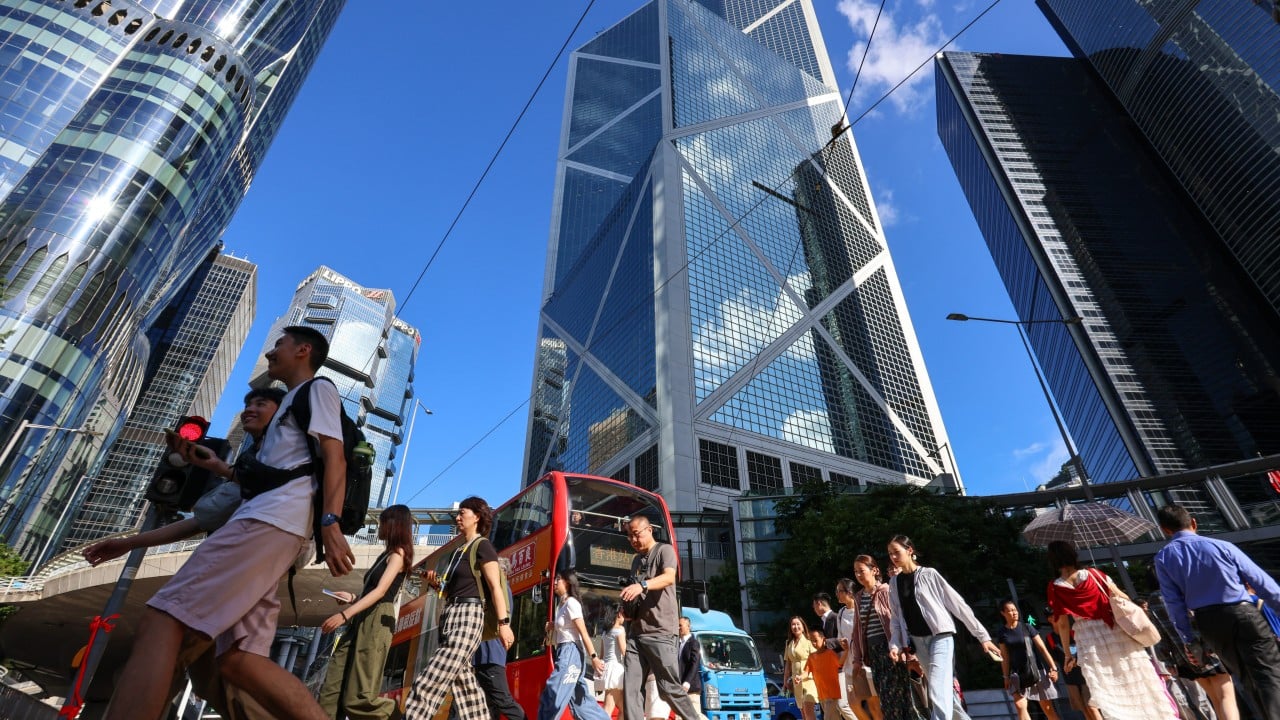
The numbers tell a story of quiet, massive relocation. Family offices from Riyadh and Dubai are opening at a record pace in the Central district. These aren't just shell companies. They are fully staffed investment vehicles looking for exposure to Asian tech, electric vehicles, and renewable energy sectors that are currently undervalued compared to their Silicon Valley peers.
Why the Middle East is Souring on the West
It is a mistake to think this is purely about the current kinetic warfare in the Middle East. That is the catalyst, not the cause. The cause is a fundamental breakdown in trust.
Investments in the West now come with "strings" that the Gulf finds increasingly unpalatable. Whether it is ESG (Environmental, Social, and Governance) requirements that conflict with oil-based economies, or the threat of CAATSA (Countering America's Adversaries Through Sanctions Act) style seizures, the cost of doing business in the West is rising.
In contrast, Hong Kong offers a "no-questions-asked" environment regarding the origin of state-linked wealth, provided the anti-money laundering (AML) checks meet the baseline international standards. The HKMA (Hong Kong Monetary Authority) has been aggressively courting these funds, not by promising a Western-style "open society," but by promising a secure, high-liquidity environment for professional capital.
The Swap Mechanism
One of the most overlooked factors in this transition is the rise of the offshore Renminbi (RMB) market. Hong Kong handles roughly 75% of global offshore RMB settlements. For a Middle Eastern nation selling oil to China, getting paid in RMB used to be a headache. What do you do with the currency? You couldn't spend it easily.
Now, the infrastructure is in place. A Saudi firm can receive RMB, keep it in a Hong Kong bank, and immediately deploy it into the Hong Kong Stock Exchange or use it to buy sophisticated financial products that were previously only available in dollars. This creates a closed-loop economy that is entirely independent of the SWIFT system and the New York Federal Reserve.
The Myth of the Neutral Safe Haven
We must be honest about the trade-offs. Hong Kong is not the neutral Switzerland of the 1950s. It is firmly under the sovereignty of a superpower. Investors moving their money here are not seeking "freedom" in the democratic sense; they are seeking protection from one specific type of geopolitical risk by accepting another.
The risk in Hong Kong is no longer about whether the city can maintain its autonomy. That ship has sailed. The risk now is whether the city can maintain its technical efficiency while the world splits into two distinct financial spheres. If you move your billions to Hong Kong, you are betting that the East will remain a stable growth engine while the West grapples with debt cycles and internal political strife.
Comparison of Financial Hubs for Gulf Capital
| Feature | London / New York | Hong Kong | Singapore |
|---|---|---|---|
| Legal Basis | Common Law | Common Law | Common Law |
| Sanction Risk | High (G7 Aligned) | Low (Anti-Sanction focus) | Moderate (Neutrality) |
| Asset Seizure Likelihood | Political/Active | Legal/Judicial only | Low |
| China Market Access | Restricted/Vetted | Direct (Connect schemes) | Indirect |
| Currency | USD/GBP | HKD (Pegged) / RMB | SGD |
Singapore is often cited as the main rival, but it lacks the depth of the Hong Kong-Mainland "Connect" programs. You can't buy mainland Chinese government bonds or high-growth A-shares from Singapore with the same ease and volume that you can from a desk in Hong Kong. For the scale of wealth we are discussing—hundreds of billions—liquidity is the only thing that matters. Hong Kong has it. Singapore has a waiting list.
The Intelligence Gap in Asset Management
Most Western analysts are still looking at the Hang Seng Index and declaring Hong Kong "dead" because the stock prices are lower than they were five years ago. This is a fundamental misunderstanding of how institutional power works. Smart money doesn't buy at the top. The Middle Eastern sovereign wealth funds are looking at the current valuation gap between Asian and Western equities and they see a generational buying opportunity.
They are moving in while the "tourist" investors move out. This is a structural handover of ownership. The property market in Hong Kong, while currently experiencing a correction, is seeing a surge in interest from Middle Eastern buyers who view a 20% or 30% dip as a bargain-entry price for some of the world's most resilient real estate.
The Technical Execution of the Pivot
How does a nation-state move $50 billion without spooking the markets? They do it through "dark pools" and private credit.
Much of the Middle Eastern capital flowing into Hong Kong is bypassing the public stock exchange entirely. Instead, it is being funneled into private equity deals, infrastructure projects across Southeast Asia, and direct lending to Chinese firms that have been cut off from Western bank loans.
Hong Kong serves as the legal and accounting "clean room" for these transactions. A deal can be struck in Riyadh, financed in RMB through a bank in Hong Kong, and deployed in a battery factory in Indonesia. Not a single dollar ever touches a US correspondent bank. This is the nightmare scenario for those who believe the dollar's hegemony is permanent.
The Talent War
Money follows brains. To facilitate this shift, Hong Kong is seeing a quiet influx of specialists who understand both Sharia-compliant finance and the intricacies of the Greater Bay Area’s industrial policy. The city is issuing visas to thousands of professionals under the Top Talent Pass Scheme. While many of these are from the mainland, a significant number are Western-educated expats who realize the center of gravity is shifting.
If you are a fund manager in 2026, you don't want to be the thousandth person trying to find alpha in an oversaturated New York market. You want to be the person sitting in Hong Kong, managing the bridge between Gulf oil wealth and Chinese industrial capacity.
The Friction Points
This transition is not without its hurdles. The biggest threat to Hong Kong’s role is not political unrest—that has been effectively suppressed—but the potential for a total "de-pegging" of the Hong Kong Dollar from the US Dollar.
The peg has been the bedrock of the city's stability for forty years. It allows investors to move in and out of the city with the confidence that their money is effectively "in dollars." If the US were to restrict Hong Kong’s access to the dollar clearing system, the peg could break. However, the HKMA holds massive reserves specifically to defend this mechanism. Furthermore, as the Middle East moves toward "multi-currency" reserves, the absolute necessity of the USD peg begins to diminish. A basket-peg or even a direct link to the RMB is no longer a fringe theory discussed by academics; it is a contingency plan being modeled in high-level boardrooms.
Operational Realities
For the individual investor or the family office, the move to Hong Kong is about operational security.
- KYC/AML Flexibility: While the rules are strict, the perspective is different. A client from a "politically exposed" background in the Middle East is often treated with more nuance in Hong Kong than in London, where the fear of "reputational damage" often leads to pre-emptive de-banking.
- Tax Efficiency: With a simple, low-tax regime and no capital gains tax, the math simply works better for large-scale wealth preservation.
- Physical Safety: As European cities grapple with rising social tensions and the Middle East remains a powder keg, the physical security of Hong Kong—one of the safest cities on earth—is a non-trivial factor for the families of the global elite.
The End of the Unipolar Financial World
The shift we are witnessing is the end of the post-1945 financial order. The idea that there is only one "safe" place to put money—the West—has been shattered by the West's own policy choices. Hong Kong is the primary beneficiary of this fracture. It is the only place on the planet that combines the legal infrastructure of the West with the political and economic backing of the East.
The "turmoil" in the Middle East is merely the trigger. The gunpowder was the realization that the old system was no longer neutral. As long as the Middle East feels the heat from Western sanctions and domestic instability, the cool, clinical efficiency of Hong Kong's financial markets will remain the preferred destination for the world's most mobile wealth.
The smart play isn't to wonder when Hong Kong will return to its old self. The smart play is to recognize that it has already become something entirely new: the capital of the non-aligned financial world. This is not a temporary trend or a "game-changer" in the marketing sense. It is a tectonic shift that will define the next fifty years of global wealth management.
Monitor the volume of RMB-denominated sovereign bond issuances in the coming months. That is where the real story is hidden.