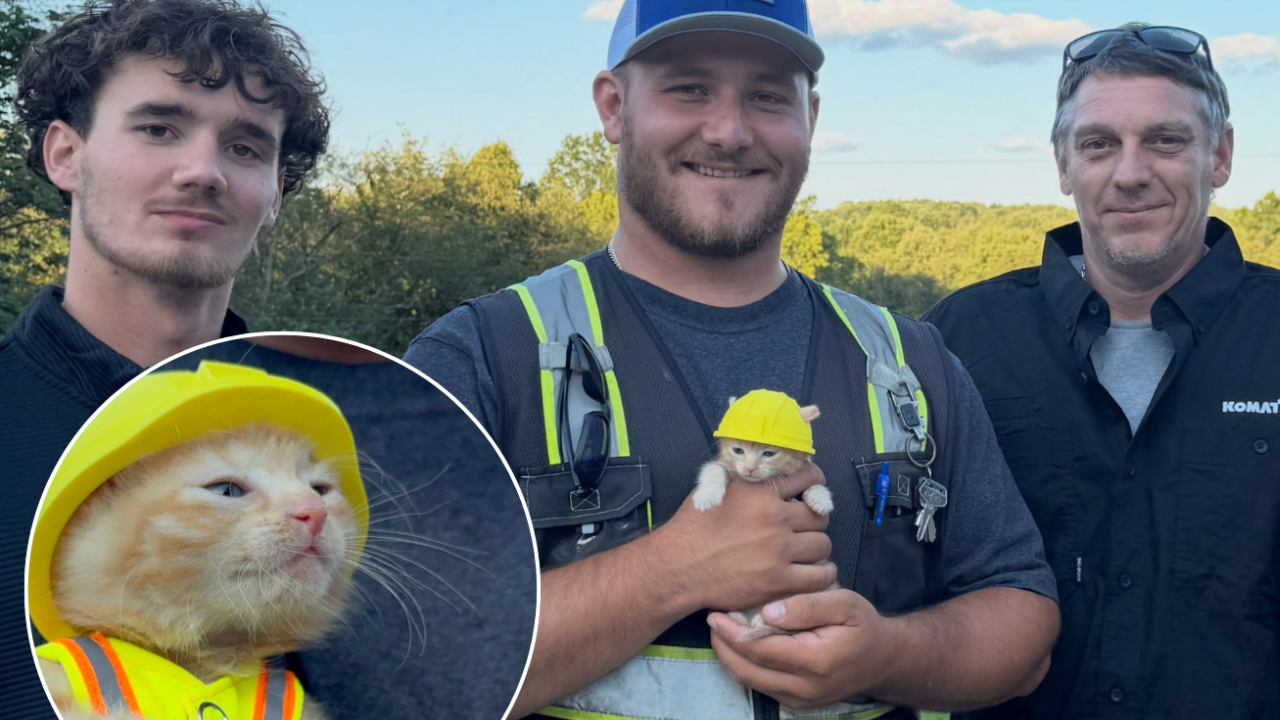
When a crew of heavy equipment operators in Barberton, Ohio, pulled a terrified kitten out from the skid plate of a Komatsu excavator, the internet did what the internet always does: it flattened a complex industrial safety incident into a saccharine fairy tale. The animal, promptly named Sue after the machinery she infested, emerged covered in grime but miraculously unbroken. Within hours, corporate machinery mobilized. Miniature high-visibility vests arrived. Custom hard hats featuring ear cutouts were manufactured. A viral sensation was born, transforming an operational hazard into an official shop cat.
Strip away the miniature safety gear and the viral optics, however, and a much darker operational reality emerges. Construction sites are heavy industrial zones governed by strict Occupational Safety and Health Administration mandates. They are lethal environments for untrained personnel, let alone unweaned neonatal felines. The fact that a living creature bypassed perimeter security, climbed deep into the undercarriage of a running piece of multi-ton earthmoving equipment, and remained undetected until auditory cues betrayed her position points to systemic vulnerabilities in daily pre-shift inspection protocols.
Heavy equipment operators know the drill by heart. Walkarounds are mandatory. Every fluid level, every track tensioner, every hydraulic line, and every protective shield must be meticulously checked before a single bucket breaks ground. A kitten small enough to squeeze past a track frame and wedge itself against a transmission housing represents a catastrophic failure of that pre-flight checklist. Had supervisor Chase Guello and his crew not paused to investigate an aberrant squeak over the roar of a diesel engine, the consequences would have been terminal.
The Anatomy of a Jobsite Intrusion
Why do stray animals gravitate toward active construction zones in the first place? The answer lies in thermodynamics and urban displacement. Earthmoving alters local ecosystems instantaneously. Clearing brush, turning over topsoil, and stripping vegetation displaces mice, voles, and nesting wildlife, triggering a localized migration of predators and scavengers. At the same time, idling diesel engines, massive hydraulic blocks, and freshly laid aggregate radiate residual heat long after the keys are pulled from the ignition.
To a freezing, abandoned kitten, a warm excavator belly pan acts as an irresistible incubator. This creates a terrifying intersection between heavy machinery and fragile biology. Modern construction equipment relies on tight tolerances, high-pressure fluid lines, and rotating steel components that move with hundreds of foot-pounds of torque. A cat nesting near a cooling fan or a drive sprocket is moments away from absolute destruction the second the starter motor engages.
Industry veterans have seen this scenario play out more times than they care to admit. Most encounters do not end with a viral photo shoot and corporate-sponsored merchandise. They end in maintenance bays with grease-stained mechanics scrubbing machinery and whispering grim warnings about what happens when living tissue meets industrial steel. The Barberton crew caught a massive break. Their attentiveness spared them from a gruesome mechanical failure and spared the animal a violent end.
Corporate Co-Optation and the Mascot Industrial Complex
Once Sue was safely extracted and placed under the care of local shop mechanic Jared’s family, the narrative shifted from operational danger to public relations gold. Komatsu, the multinational heavy equipment manufacturer whose logo adorned the excavator, quickly capitalized on the goodwill. Official merchandise arrived in the mail. Tiny yellow hard hats engineered specifically for feline cranial structures appeared on social media timelines.
This corporate pivot exposes a modern psychological phenomenon. Industrial work is grueling, monotonous, and frequently hazardous. By wrapping a stray kitten in high-visibility nylon, companies humanize multi-billion-dollar supply chains. It is a brilliant public relations maneuver. Yet it masks the underlying liability.
Allowing an animal back onto an active commercial worksite—even in a supposedly controlled shop environment—violates standard industrial hygiene practices. Construction yards are contaminated with silica dust, diesel particulate matter, heavy metal residues, and toxic chemical solvents like hydraulic fluid, gear oil, and brake cleaner. Felines groom themselves constantly. Ingesting microscopic traces of industrial lubricants or heavy metal dust poses severe systemic risks to a developing animal.
Labeling a cat as an "employee" or a "project manager" plays well on digital platforms, but it trivializes the strict safety culture required to keep human workers alive. When a jobsite treats an animal hazard as a whimsical mascot, it skirts dangerously close to normalizing workplace complacency. Safety rules exist for absolute reasons. Exceptions made for cute mammals breed a slippery slope of procedural shortcuts.
The Brutal Truth About Animal Displacement in Blue-Collar Sectors
The deeper issue highlighted by the Ohio rescue is the staggering scale of feral animal abandonment intersecting with industrial expansion. Construction companies expanding into rural-suburban fringes across the Midwest routinely encounter dumped litters. Rural access roads and isolated job sites serve as dumping grounds for unwanted pets. Contractors become the de facto first responders for municipal animal control failures.
There is no line item in a commercial construction budget for wildlife rehabilitation or neonatal kitten fostering. Foremen absorb these emotional and financial strains out of pocket. They buy formula, coordinate veterinary drop-offs, and disrupt their production schedules to rescue stray fauna. When a story like this goes viral, the public focuses entirely on the adorable end product—the tiny hat, the tailored vest, the wholesome smiles of grizzled operators holding a ball of orange fur.
Nobody asks about the dozens of other kittens that slip through uninspected tracks across the country every single week without leaving a sound. Nobody audits the heavy equipment yards where morning safety meetings omit checks for nesting wildlife. The romanticism of the shop cat shields the construction sector from accountability regarding its environmental footprint on local fauna.
Sue now lives a comfortable domestic life away from the immediate danger of heavy tracks and bucket teeth. Her caretakers ensured she survived a brush with industrial annihilation. But as the likes and shares continue to climb across digital algorithms, the machinery keeps turning. Pre-shift walks remain hurried. Diesel engines roar to life in the gray dawn. Beneath the steel plates of excavators across the globe, the next warm engine block waits in the dark