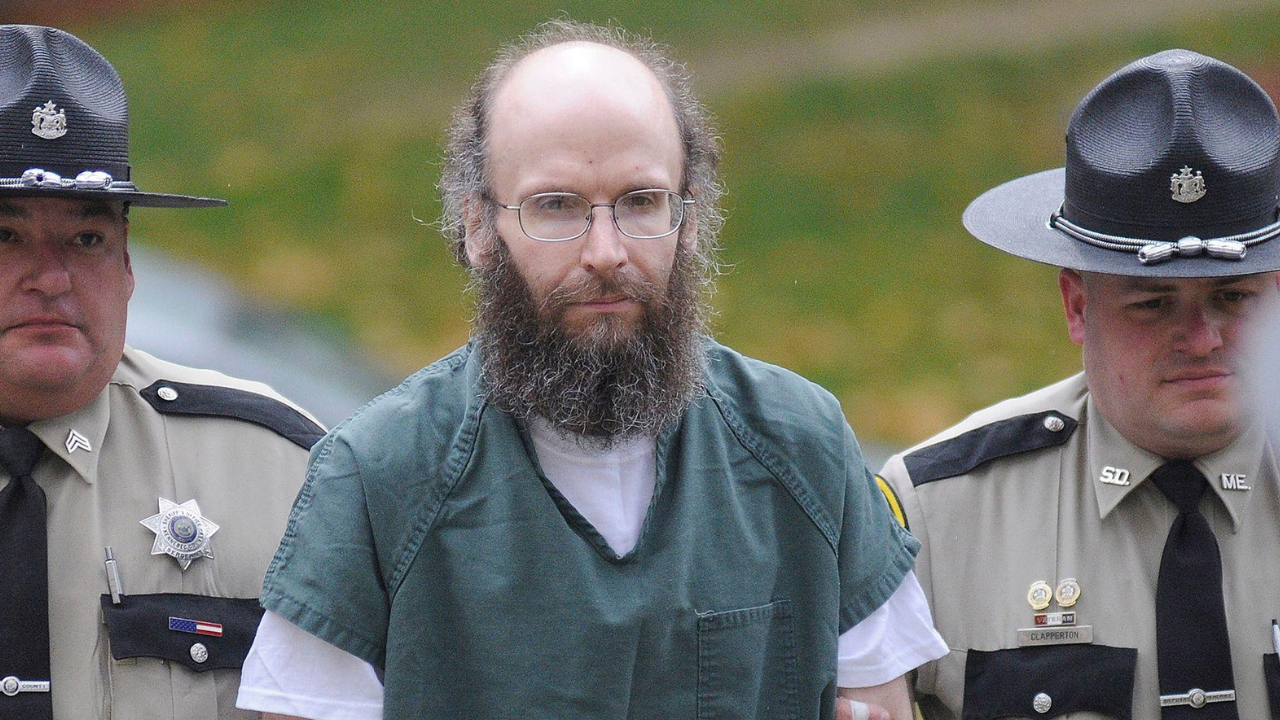
Christopher Knight walked into the Maine woods in 1986 and did not speak to another human being for nearly three decades. To the casual observer, the man who became known as the North Pond Hermit is a romantic symbol of absolute counter-cultural defiance. He is the modern-day Henry David Thoreau who actually had the nerve to stay in the woods. But the cultural obsession with Knight obscures a much harsher reality. Complete isolation from human society is practically impossible without exploiting the very civilization you claim to reject. Knight did not survive on foraging or wilderness wit. He survived through thousands of systematic burglaries against working-class cabins.
The narrative of the pure, self-sufficient hermit is a lie. When we examine the mechanics of long-term isolation, we find that survival almost always requires a parasitic relationship with the modern infrastructure the hermit is fleeing.
The Mechanics of a Dependent Solitude
The public imagination likes to construct a specific image of the woodland recluse. We picture a rugged survivalist trapping small game, building intricate log cabins from fallen timber, and living entirely off the land. This image satisfies a deep-seated Western fantasy of rugged individualism.
Knight's reality was entirely different. He pitched a commercial nylon tent in a small clearing among glacial boulders. He wrapped himself in multiple sleeping bags. He stayed warm not by building fires—which would produce smoke and reveal his location—but by moving his body in the freezing cold or relying on heavy layers of synthetic clothing.
None of these items grew on trees. To maintain this setup for 27 years, Knight committed an estimated 1,000 burglaries. His targets were the summer cabins and campsites surrounding North Pond.
He stole propane tanks, flashlights, batteries, sleeping bags, and massive quantities of food. He targeted processed, high-calorie goods that would not spoil quickly. Peanut butter, candy bars, and canned meats were his staples. He became a master thief, learning the schedules of property owners, memorizing the creaks of floorboards, and even scaling walls to enter through second-story windows.
This creates a profound paradox. Knight succeeded in avoiding human interaction, but he remained utterly dependent on the industrial output of human society. He did not escape the grid. He merely lived in its shadows, harvesting its surplus. Without the manufacturing plants that produced his tarps, the chemical companies that created his batteries, and the supply chains that stocked the cabins with shelf-stable food, his experiment in isolation would have ended during his first Maine winter.
The Invisible Toll on the Community
Media coverage often frames the hermit as a quirky, harmless figure. This perspective ignores the psychological erosion experienced by the community that unwittingly sustained him. For nearly thirty years, the residents around North Pond lived in a state of low-grade paranoia.
Locks were broken. Windows were pried open. Belongings vanished without explanation. Because Knight was so meticulous—often locking doors behind him and stealing only small amounts of food or specific tools—many residents began to question their own sanity. They wondered if they had simply misplaced their keys, forgotten where they left their propane tanks, or miscounted their grocery inventory.
Other residents knew a thief was active but could never catch him. This created an atmosphere of mutual suspicion among neighbors. Security systems were installed. Heavy shutters were fastened over windows. The peaceful, trusting culture of a rural lakeside community was gradually replaced by a siege mentality.
The financial cost was substantial, but the emotional cost was higher. A home is a sanctuary. The knowledge that a stranger is routinely entering your private space while you sleep or while you are away destroys that sense of safety. Knight’s survival required the ongoing violation of his fellow citizens' peace of mind. His silence was bought with their security.
The Biological Defense Against Loneliness
How does a human brain function without linguistic or social input for 27 years? The human mind is hardwired for connection. Neurological studies consistently show that prolonged isolation can cause severe cognitive decline, hallucinations, and a breakdown of the sense of self.
Knight, however, managed to preserve his sanity. He did this by establishing an incredibly rigid daily routine.
He woke up early. He tended to his camp with military precision. He spent hours reading books and magazines that he stole from cabins. This mental stimulation kept his linguistic centers active, even though he only spoke one word—a brief "hi" to a passing hiker—during his entire time in the woods.
More importantly, Knight experienced a shift in consciousness that psychologists call a dissolution of the ego. In rare interviews after his arrest, he explained that he lost the boundaries of where he ended and the woods began. He did not experience loneliness because he lacked the self-conscious desire to be perceived by others.
"I didn't have a mirror," Knight later told journalist Michael Finkel. "I wasn't defined by anyone else."
This state of mind is often romanticized as a form of zen enlightenment. In truth, it is a radical coping mechanism. The brain, stripped of social mirrors, must fundamentally restructure how it processes reality simply to prevent madness. It is a form of psychological adaptation that is as brutal as it is fascinating.
The Myth of Wilderness Self Sufficiency
The fascination with figures like Christopher Knight reveals a deep collective anxiety about modern life. We are overwhelmed by constant connectivity, economic pressures, and the relentless noise of the digital landscape. The idea of walking away into the woods feels like the ultimate antidote.
But history shows that true wilderness self-sufficiency is a myth for the solitary individual. Even the most famous historical hermits relied on external support systems.
- Henry David Thoreau: Lived at Walden Pond for just over two years, but his cabin was on land owned by his wealthy friend Ralph Waldo Emerson. He walked into town regularly to have dinner with his mother and friends.
- The Lykov Family: A family of Russian Old Believers who lived in the Siberian taiga for decades in total isolation. They survived on farming and foraging, but they faced constant starvation, lost several family members to malnutrition, and lacked basic tools like metal pots once their original supplies rusted away.
- Richard Proenneke: Lived alone in the Alaskan wilderness for thirty years, but he built his cabin with modern steel tools and received regular air drops of supplies, food, and mail from friends and family.
Knight represents a different category entirely. He did not seek a relationship with nature; he sought a relationship with absence. He chose a location that was close enough to human habitation to guarantee a steady supply of stolen goods, yet thick enough with brush to keep him hidden. He proved that you can live alone in the woods for decades, but only if you are willing to become a ghost who feeds on the living.
The Arrest and the Reluctant Return
The myth came to a sudden end in April 2013. Sergeant Terry Hughes, a local game warden who had been hunting the North Pond Hermit for years, installed a military-grade surveillance system at the Pine Tree Camp, a retreat for disabled children that Knight frequently targeted.
The trap worked. Knight tripped a silent alarm while filling a backpack with bacon, cheese, and potato chips. When Hughes confronted him, Knight was clean-shaven, wearing aviator glasses, and dressed in stolen winter clothing. He carried a flashlight and a bundle of master keys.
His arrest caused a media circus. Journalists from around the world descended on the Kennebec County Jail. Offers for book deals, movie rights, and marriage proposals poured in. Knight despised the attention. The man who had spent three decades avoiding human eyes was suddenly the center of global scrutiny.
The legal system struggled to handle his case. He was not a violent offender, but he had committed hundreds of felonies. Ultimately, he pled guilty to multiple counts of burglary and theft. He served about seven months in jail and was ordered to pay restitution to his victims.
His reintegration into society was painful. He was forced to live with his aging mother, take a job at his brother's auto scrap business, and attend mandatory counseling sessions. He found the modern world too loud, too fast, and too crowded. The absolute quiet he had cultivated for 27 years was gone, replaced by the mundane realities of paying bills, navigating traffic, and making small talk.
The Impossible Escape
The lesson of the North Pond Hermit is not that society can be abandoned, but that society is inescapable.
We are bound to each other by a complex web of mutual reliance. Knight tried to sever those bonds, but he ended up changing their nature from cooperation to theft. He proved that the wilderness no longer offers a blank slate for human existence. Every square inch of land is managed, owned, or populated, and the modern human animal has lost the biological capacity to survive completely detached from the collective tribe.
To envy Knight is to misunderstand his existence. His life was not an idyllic retreat filled with philosophical contemplation. It was a grueling, decades-long battle against hypothermia, starvation, and the constant fear of discovery, sustained entirely by the midnight theft of other people's property. He did not conquer the woods. He merely hid in them, proving that even the most extreme hermit is ultimately a product, and a dependent, of the civilization they left behind.