Morocco wants blood on the pitch, metaphorically speaking, every time they face France. The 2022 World Cup semifinal in Qatar, where France ended the Atlas Lions' historic African run with a clinical 2-0 victory, was not just a football match. It was a pressure cooker of shared colonial history, dual-nationality identity crises, and a deep-seated desire for sporting retribution. When these two nations meet four years later in 2026, the narrative is not about a simple rematch. It is about a fundamental shift in global football power dynamics where the former colony no longer accepts the role of the plucky underdog.
The emotional weight of this fixture strains the fabric of both footballing ecosystems. To view this purely as twenty-two men chasing a ball is to completely miss the point.
The Dual Nationality Battleground
The French football structure has long relied on its banlieues and immigrant communities to fuel its national dominance. Morocco, however, executed a flawless counter-strategy. Through the Royal Moroccan Football Federation (FRMF) and its sophisticated scouting network in Europe, the North African nation systematically convinced elite talent born in France, Belgium, and the Netherlands to pledge allegiance to their ancestral home.
This is not a temporary trend. It is an organized talent drain. Players like Achraf Hakimi and Sofiane Boufal paved the way, proving that choosing Morocco did not mean sacrificing a top-tier international career. It meant playing for something larger than a trophy.
The French system, long accustomed to cherry-picking the finest talents of North and West African descent, now faces a legitimate competitor in the recruitment market. Young starlets in academies across Lyon, Paris, and Marseille are no longer viewing Les Bleus as the sole pinnacle of international football. They see Morocco offering immediate icon status, a passionate fanbase, and a legitimate shot at major international hardware. This structural shift infuriates French football purists who view local academy training as a debt to be repaid exclusively to France.
The Psychological Scar of Al Khor
The semifinal at the Al Bayt Stadium left deep wounds. Morocco played with a fractured squad, dealing with crippling injuries to key defenders like Romain Saïss and Nayef Aguerd. Yet, they dominated possession for vast stretches of the game, rattling a star-studded French lineup.
- Theo Hernandez’s early goal shattered Morocco's defensive game plan.
- Kylian Mbappé's late brilliance set up Randal Kolo Muani to seal the match.
- Despite the loss, Morocco proved they could dictate the tempo against Europe's elite.
The defeat rankles because it was a matter of clinical efficiency versus romantic ambition. France did not outplay Morocco; they out-survived them. Didier Deschamps’ pragmatic style weaponized Morocco’s emotional intensity against them, exploiting the spaces left behind by a team pushing for an equalizer. For Walid Regragui and his squad, the lesson was harsh but clear. Passion wins group stages, but cold-blooded execution wins knockout football.
More Than a Group Stage Grudge
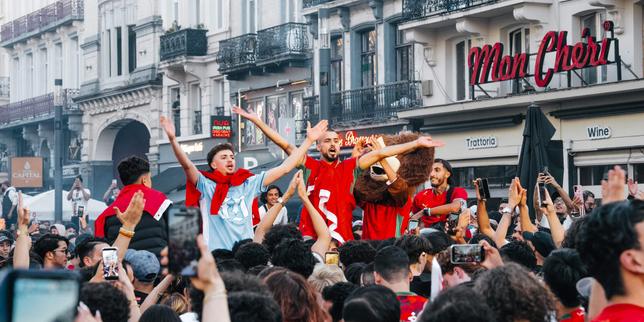
The sporting rivalry is inextricably linked to geopolitical realities. The relationship between Paris and Rabat fluctuates between diplomatic warmth and intense chill, and the football pitch reflects these tensions perfectly. For the millions of Moroccans living in France, this match is a biennial identity referendum.
They live under constant scrutiny. Media narratives in France often frame the post-match celebrations or frustrations of Franco-Moroccan citizens through a lens of assimilation and loyalty. If Morocco wins, critics question the loyalty of the diaspora. If France wins, a patronizing sense of order is restored. This cultural tension elevates a standard football match into a high-stakes cultural event where bragging rights dictate daily life in the suburbs of Paris.
Structural Evolution Over Sentiment
Morocco's preparation for their next encounters with France goes far beyond emotional motivation. The federation invested heavily in the Mohammed VI Football Academy, ensuring that the reliance on European-born talent is balanced by homegrown prodigies. They are building a self-sustaining football machine.
| Development Metric | Morocco (FRMF) | Typical European Standard |
|---|---|---|
| Academy Investment | $14M+ annually into central facilities | Varies heavily by club, rarely centralized |
| Global Scouting Network | Active scouts in 6 European countries | Focuses on international transfers, not heritage tracking |
| Elite Coach Integration | Local legends mixed with European tactical minds | Club-dominated development pipelines |
This structural foundation means Morocco is no longer relying on a golden generation that will eventually age out. They are institutionalizing their success. The players who fell short in Qatar are being replaced or supplemented by hungrier, faster, and tactically smarter prospects who do not carry the psychological baggage of past defeats.
France, conversely, faces the eternal problem of the elite. Complacency and internal friction are constant threats to the French camp. While they possess an embarrassment of riches in every position, managing egos and maintaining the hunger to stay at the top is notoriously harder than fighting to get there. Morocco operates with the unifying fury of the disrespected, while France must manufacture motivation to defend a status quo they feel entitled to hold.
The Tactical Chess Match
Regragui’s tactical evolution since 2022 focuses entirely on breaking low blocks and surviving transition moments. In Qatar, Morocco excelled when they could sit deep and counter-attack through Hakim Ziyech and Hakimi. Against France, forced to chase the game, they lacked the elite clinical edge in the penalty box.
The blueprint for beating France requires absolute perfection in defensive transitions. Mbappé and his cohorts punish structural flaws instantly. Morocco's mid-block must become more flexible, shifting seamlessly between a suffocating press and a disciplined low defensive shape without losing their attacking outlet. If Morocco cannot solve their reliance on perfect defensive displays, the technical superiority of the French midfield will simply replicate the script of Al Khor over and over again.
The thirst for revenge is a dangerous motivator if left unchecked. Pure emotion clouds tactical judgment, leading to rash challenges, positional indiscipline, and premature exhaustion. France thrives when their opponents lose their heads. To truly avenge the semifinal loss, the Atlas Lions must decouple their historical grievances from their on-pitch execution, treating Les Bleus not as a symbol of colonial history or past injustice, but merely as an elite football team with specific, exploitable weaknesses on the left flank.