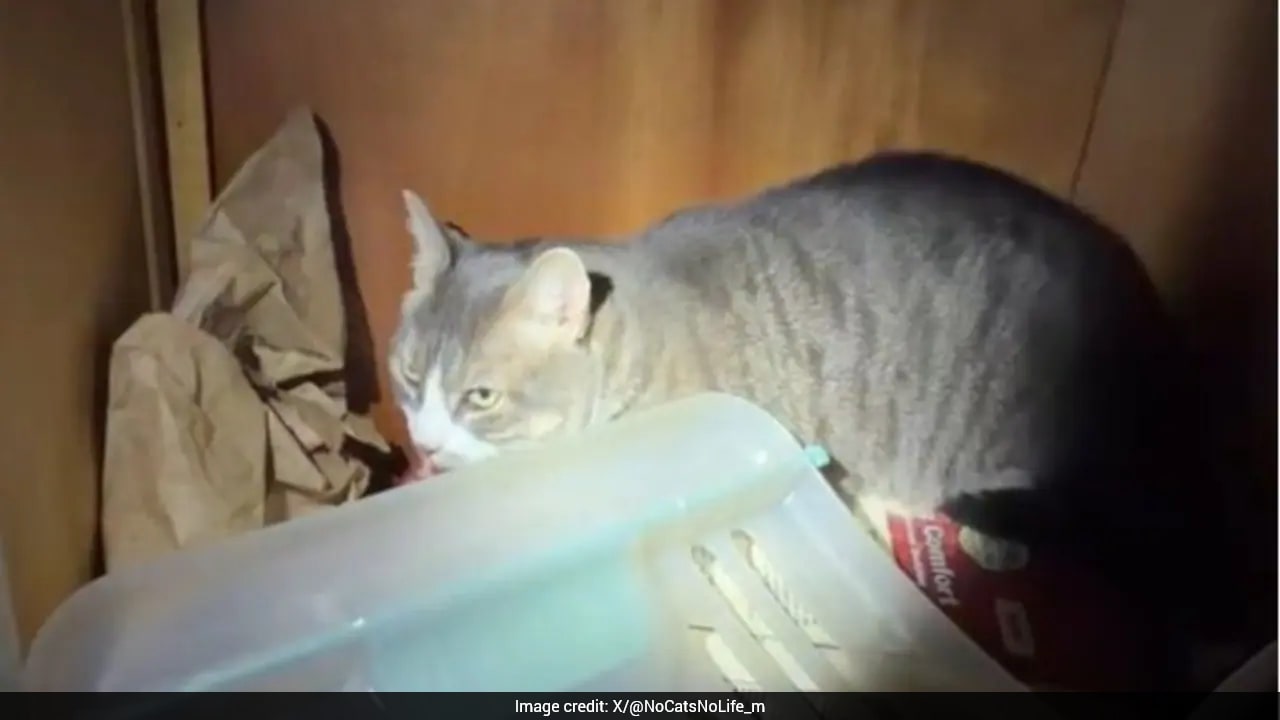
When a residential structure fails in New York City, the headlines invariably default to a predictable emotional arc. A building comes down, emergency crews scramble, and days later, a missing cat is pulled from the debris and reunited with a weeping owner. While the survival of a companion animal after a four-day ordeal in the rubble of a Brooklyn building collapse is undeniably a relief, framing these events purely as feel-good miracles obscures a far grimmer reality. Behind every viral reunion lies a complex intersection of feline physiological resilience, high-stakes urban search and rescue protocols, and systemic gaps in how municipalities track and protect animals during catastrophic infrastructure failures.
Understanding how an animal survives for nearly one hundred hours trapped beneath tons of pulverized masonry, twisted rebar, and shattered timber requires stripping away sentimentality and looking directly at biology and structural engineering. Cats are uniquely equipped to endure environments that would quickly prove fatal to humans or larger mammals. Simultaneously, their survival is heavily dictated by the specific mechanics of how older Brooklyn masonry structures fail, the thermal dynamics of rubble piles, and the rigid triage hierarchies enforced by municipal emergency responders.
The Anatomy of a Structural Collapse and Survival Voids
To grasp how any living creature survives a building collapse, one must first understand what happens when brick and mortar give way. Most residential collapses in Brooklyn involve aging, unreinforced masonry structures—often pre-war brownstones or turn-of-the-century tenements. Unlike modern steel-frame high-rises that tend to pancake symmetrically under catastrophic loads, load-bearing brick walls and timber floor joists frequently fail in chaotic, uneven patterns.
When timber joists snap and brick walls buckle inward, they rarely compress into a solid, impenetrable mass. Instead, heavy structural elements catch on interior partition walls, cast-iron plumbing stacks, and durable furniture. This creates survival voids—irregular pockets of open space shielded from the crushing weight above.
A human trapped in such a void faces immediate peril from crush syndrome, severe dehydration, and positional asphyxia. A domestic cat, weighing between eight and twelve pounds, operates under entirely different physical parameters. Their flexible spines and lack of a rigid collarbone allow them to compress their bodies through openings barely wider than their skulls. In the chaotic aftermath of a collapse, while human occupants are often caught in main living areas or stairwells, a startled cat’s primary instinct is to bolt into the tightest, most enclosed space available—underneath heavy wooden dressers, behind cast-iron radiators, or deep inside structural crawlspaces. Ironically, the very places a terrified animal hides to escape noise and vibration are often the exact locations where the strongest survival voids form.
Feline Physiology Under Extreme Environmental Stress
Surviving the initial impact is only the first hurdle. Remaining alive for four days without food, water, or ambient temperature control pushes a mammal to its metabolic limits. The physiological mechanisms that allow a cat to endure a four-day entrapment are rooted in evolutionary adaptations designed for desert survival and irregular hunting cycles.
Extreme Dehydration Tolerance
Humans begin to experience severe organ distress after roughly seventy-two hours without water, particularly when breathing in dry, particulate-heavy air. Domestic cats, descended from the African wildcat (Felis silvestris lybica), possess kidneys capable of concentrating urine to an extraordinary degree. This biological efficiency allows them to recycle bodily fluids and extract maximum hydration from internal fat reserves. While four days without water induces acute dehydration and risks long-term renal damage, it falls within the survivability window for a healthy adult feline, provided ambient temperatures remain moderate.
Metabolic Downregulation
When a cat is trapped in total darkness with zero external stimuli, its central nervous system shifts into a state of profound conservation. Heart rate and respiration drop significantly. Unlike dogs, which often bark continuously, pace, and expend massive amounts of energy and moisture through panting when panicked, cats typically go completely silent and motionless. This behavioral freeze response serves two critical functions in a collapse scenario. First, it drastically reduces caloric and water expenditure. Second, it minimizes the inhalation of toxic concrete dust, drywall particles, and asbestos fibers suspended in the air of a fresh debris field.
Thermoregulation in Rubble Piles
Exposure is a silent killer in structural collapses. Concrete and brick leach heat rapidly from any body pressed against them. However, rubble piles also generate and trap micro-climates. Residual heat from severed water heaters, insulated wall cavities, and the sheer thermal mass of dense masonry can keep deep interior voids well above freezing even during inclement weather. A cat's dense fur coat, combined with its ability to curl into a tight sphere to minimize surface area, allows it to retain core body heat far more effectively than an exposed human.
The Triage Reality of Urban Search and Rescue
While the public celebrates the rescue of a pet after four days, the timeline itself reveals an uncomfortable truth about disaster response. Four days is not an arbitrary number. It represents the exact operational window when emergency responders transition from active human rescue to heavy debris removal and site stabilization.
When the Fire Department of the City of New York (FDNY) and specialized Urban Search and Rescue (USAR) teams arrive at a collapsed building, their mandate is absolute and uncompromising. Human life takes precedence over everything else. During the first forty-eight to seventy-two hours, rescuers deploy acoustic listening devices, fiber-optic snake cameras, and live-find search canines trained exclusively to detect human scent.
During this critical phase, firefighters and structural engineers will not risk their lives crawling into unstable voids solely to retrieve a missing pet. Entering a partially collapsed structure involves calculating acceptable risk against the probability of saving a human life. If a building is deemed too unstable for shoring operations, crews hold back and rely on exterior assessments.
Consequently, pets trapped inside are effectively on their own until the human search is conclusively finished. A four-day survival timeline usually indicates that the animal was only located once the site was cleared of human casualties, heavy machinery began peeling back outer layers of debris, or structural engineers finally deemed the remaining perimeter safe enough for controlled entry—or for desperate owners and independent animal rescue volunteers to gain access to the periphery.
The Invisible Trauma of Post-Collapse Reunions
Media coverage of a pet reunion typically ends the moment the animal is placed back into its owner's arms. The cameras capture the tears, the carrier is loaded into a vehicle, and the news cycle moves on. What rarely makes the broadcast is the severe, often costly medical and behavioral aftermath that awaits both the animal and the displaced family.
An animal pulled from a collapsed building after four days is never simply "fine." Even if the cat walks out without broken bones, it has been subjected to intense physiological trauma.
- Pulmonary Damage: Breathing in pulverized plaster, silica dust, and insulation fibers for ninety-six hours causes severe chemical irritation and inflammation of the respiratory tract. Delayed pulmonary edema can set in days after the rescue.
- Renal Stress and Hepatic Lipidosis: Four days of starvation and dehydration places immense strain on feline organs. Overweight cats, in particular, are at high risk for hepatic lipidosis (fatty liver disease), a potentially fatal condition triggered when the body rapidly mobilizes fat stores during prolonged fasting.
- Crush-Related Tissue Damage: Even minor pinning by falling debris can cause localized muscle necrosis, releasing toxins into the bloodstream once circulation is restored.
Furthermore, the psychological impact on the animal is profound. The sudden, violent destruction of its territory, followed by days of sensory deprivation, loud machinery, and unfamiliar human handlers, frequently triggers long-term behavioral regression. Severe noise phobias, chronic hiding, and aggression are common in animals that survive structural disasters. For a pet owner who has just lost their home, their possessions, and their financial stability in a building collapse, absorbing thousands of dollars in emergency veterinary care while living in temporary housing presents a devastating secondary crisis.
The Systemic Blind Spot in Urban Disaster Planning
The recurring nature of building collapses in dense urban centers exposes a glaring deficiency in municipal emergency management. Despite the fact that roughly half of all households in major American cities include companion animals, emergency response protocols remain largely blind to them until a crisis is already underway.
In the immediate chaos of a Brooklyn building collapse, first responders rely on frantic bystanders and displaced tenants to determine who might still be inside. While residents can usually account for family members and neighbors, information regarding pets is scattered, unverified, and rarely logged into central incident command systems with any urgency.
When residents are evacuated from an unstable building—or prevented from re-entering a damaged structure adjacent to a collapse zone—they are often given minutes to leave, or are already away at work when the failure occurs. Once the perimeter is taped off by police and fire personnel, that boundary becomes an impenetrable wall.
Consider a hypothetical scenario where an adjacent brownstone suffers severe structural cracking during a neighboring collapse. The Department of Buildings issues an immediate vacate order. Tenants are barred from entering, yet the building is not actively crumbling. Without clear municipal protocols allowing escorted, rapid-entry retrieval for companion animals in stable-but-vacated structures, pets are routinely left behind in dark, unheated apartments for days. In many cases, they are only rescued when unauthorized individuals breach the perimeter or when sustained public pressure forces city agencies to coordinate with municipal animal control.
Why Aging Urban Infrastructure Makes This Inevitable
To view a building collapse and the subsequent search for trapped pets as an isolated freak accident is to ignore the trajectory of urban infrastructure. Across older neighborhoods in Brooklyn, Queens, and the Bronx, thousands of residential buildings are well past their intended structural lifespans.
Deferred maintenance, illegal interior renovations—such as removing load-bearing walls to create open-concept apartments—and deep foundation excavations on adjacent lots have dramatically increased the vulnerability of legacy masonry buildings. When a neighbor digs an unpermitted basement or fails to properly underpin a shared party wall, the structural integrity of the entire block is compromised.
Climate volatility adds another layer of stress. Extreme freeze-thaw cycles drive moisture deep into aging mortar joints, expanding and fracturing the brick from within. Heavy, sudden rainstorms overwhelm century-old drainage systems, eroding soil beneath shallow stone foundations. Every time one of these structures fails, the drama plays out identically: a sudden roar of falling brick, a frantic search through the dust, and a desperate wait to see what—and who—emerges from the dark.
What Pet Owners in High-Density Cities Must Actually Do
Relying on luck, feline biology, or the eventual intervention of overwhelmed emergency crews is not a viable survival strategy. Living in dense, aging urban housing requires concrete, proactive measures that account for sudden structural emergencies.
Microchipping Is Non-Negotiable
In a collapse, collars break away, tags are ripped off, and terrified cats bolting from ruptured walls can travel blocks away before hiding. A registered microchip is the only reliable link between a disoriented animal pulled from a debris field and a displaced owner staying in a Red Cross shelter. Ensure the contact information linked to the chip includes an out-of-area emergency contact, as your own phone may be destroyed in the collapse.
Strategic Safe Zones and Carrier Access
Never store pet carriers in basements, attics, or the backs of cluttered closets. Keep a hard-sided carrier in an accessible entryway or bedroom closet. Hard-sided plastic carriers offer vastly superior crush protection compared to soft fabric bags if you must evacuate through falling debris.
Documenting Pet Presence for First Responders
Window decals indicating the number and type of pets inside an apartment are largely ineffective in modern high-rise or multi-unit buildings, as firefighters rarely have time to read window stickers during an active structural failure. Instead, maintain a clear, updated digital profile of your pets—including recent photos, medical needs, and exact hiding spots—accessible on your phone. If a collapse occurs while you are away, providing incident commanders with exact floor-plan details of where a cat typically hides gives search teams actionable intelligence once secondary sweeps begin.
The sight of a dust-covered cat emerging alive from the wreckage of a Brooklyn building after four days is a testament to the astonishing durability of the species. It is an undeniable moment of grace amidst urban devastation. Yet treating that survival as a charming human-interest footnote misses the point entirely—the animal did not survive because the system worked, it survived in spite of a system that was never designed to save it.