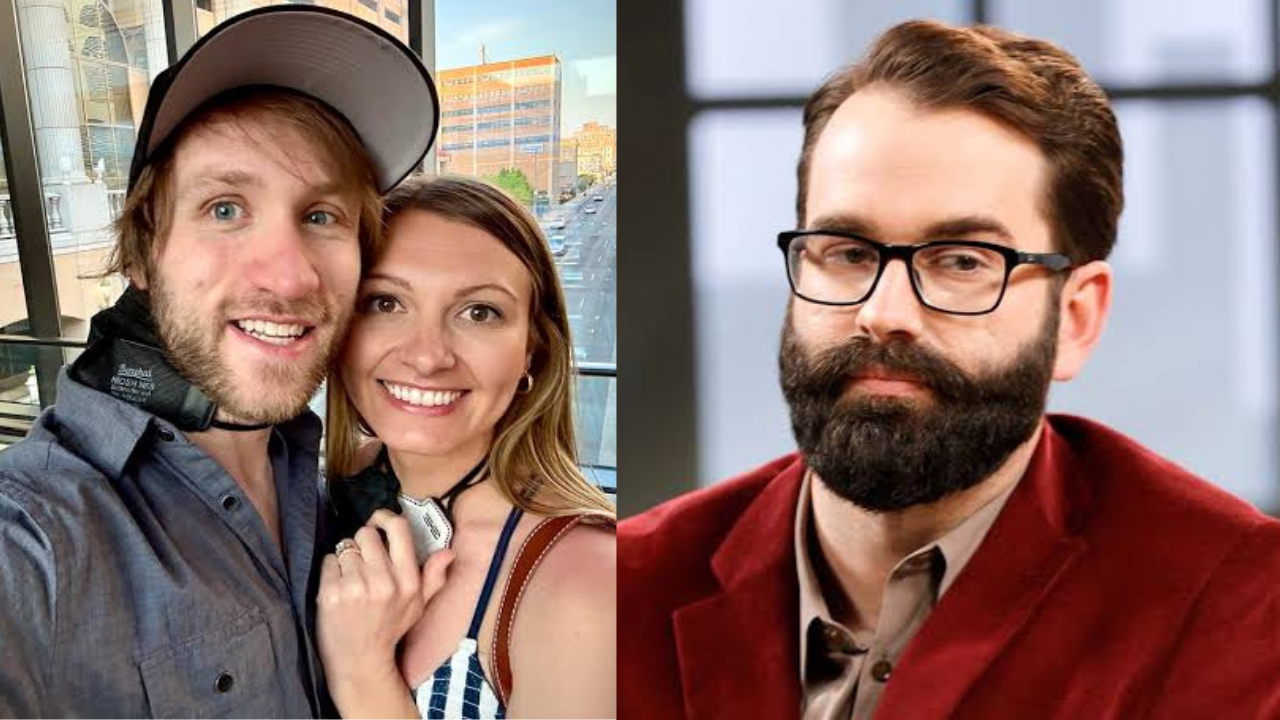
YouTuber Jesse Ridgway, known to millions as McJuggerNuggets, and his wife Ashley announced they had terminated their pregnancy following a prenatal diagnosis of Trisomy 21, commonly known as Down syndrome. The revelation triggered an immediate avalanche of online vitriol, death threats, and high-profile condemnation, most notably from political commentator Matt Walsh, who labeled the couple "psychopaths" who belong in prison. This cultural flashpoint exposes a stark disconnect between public outrage and private reality. While the internet erupts in moral condemnation, data shows that approximately 67% of prenatal Down syndrome diagnoses in the United States end in termination.
The fierce public execution of the Ridgways highlights an uncomfortable truth. Society frequently punishes individuals who publicly admit to choices that a quiet majority routinely makes behind closed doors.
The Illusion of Public Consensus versus Private Choices
The internet thrives on absolute moral binaries, but healthcare decisions are rarely binary. When Jesse Ridgway shared the couple’s medical trajectory on Instagram, he stepped into a cultural minefield. He noted that after learning about the diagnosis, he researched the medical realities of Trisomy 21, including a high prevalence of congenital heart defects, hearing loss, vision impairment, and lifelong developmental challenges. His conclusion that the condition is "objectively difficult from a health perspective" was met with immediate, visceral pushback.
Commentators like Matt Walsh used their massive platforms to frame the decision not as a complex medical choice, but as an act of pure selfishness. Walsh argued that children with Down syndrome are famously happy, equating the termination to "psychopath serial killer logic." This line of critique relies on a sentimentalized view of disability that intentionally scrubs away the clinical complexities, economic burdens, and systemic deficits facing families who care for dependents with severe medical needs.
The numbers tell a completely different story from the loud consensus on social media.
| Country | Estimated Termination Rate After Down Syndrome Diagnosis |
|---|---|
| United States | ~67% |
| United Kingdom | ~90% |
| Denmark | ~95% |
These figures indicate that the Ridgways' decision is not anomalous. It is statistically standard. The real anomaly is their willingness to speak about it publicly, breaking a long-standing cultural omertà.
The Medical Reality vs. The Social Media Caricature
To understand why a couple would make this choice, one must look past the talking points of political commentators and look at the actual clinical profile of Trisomy 21. It is a chromosomal anomaly that impacts almost every organ system.
- Cardiovascular Complications: Roughly half of all children born with Down syndrome suffer from congenital heart defects, frequently requiring major open-heart surgery in infancy.
- Sensory Impairments: Up to 75% face significant hearing challenges, and over 50% contend with ocular disorders.
- Lifelong Dependency: While cognitive impairment ranges from mild to severe, a substantial portion of individuals will never achieve full financial or physical autonomy, requiring lifelong parental or institutional care.
Ridgway admitted that he initially thought they could "make it work" if the child was simply intellectually slower. His perspective shifted when he confronted the long list of physical comorbidities and the high risk of spontaneous miscarriage, which approaches 50% later in pregnancy.
Critics like Walsh assert that terminating a pregnancy to avoid suffering is a moral failure. They argue that because many individuals with Down syndrome report high levels of life satisfaction, any preemptive medical intervention is unjustifiable. This perspective, however, shifts the entire burden of care onto the parents while ignoring the systemic lack of long-term social, financial, and medical infrastructure available to support these families once the parents age and pass away.
The Stigma of Transparency in the Creator Economy
For two decades, Jesse Ridgway built an audience of over four million subscribers by blurring the lines between reality and fiction, most famously through his scripted Psycho Series. That background makes him uniquely resilient to internet mobs, but it also made him naive about the limits of online transparency.
The backlash was swift and extreme. The couple received death threats, comparisons to historical dictators, and targeted harassment aimed even at their ailing domestic pets. Ridgway noted that the primary reason the story exploded is that "nobody talks about it." He argued that because terminations happen privately, the public space is left entirely to those who wish to enforce a standard of purity that few actually maintain when facing the same diagnosis.
This public shaming creates a vicious cycle. Because the backlash is so severe, families who choose termination do so in complete secrecy, which in turn preserves the illusion that the practice is rare or widely reviled. When an influencer breaks that silence, they are treated as a moral outlier rather than a representative of a broad statistical reality.
The Exploitation of Private Grief for Cultural Capital
The speed with which political pundits weaponized the Ridgways' private medical loss illustrates how the modern media ecosystem runs on manufactured outrage. For media figures, a grieving YouTuber explaining a painful medical choice is not a human being undergoing a crisis. They are content.
By elevating a private tragedy into a high-stakes battle over human worth, commentators mobilize their base, drive engagement, and reinforce rigid ideological lines. The nuance of a maternal health choice is entirely lost in an ecosystem that demands total submission to a pre-packaged narrative. The Ridgways are currently in New Jersey, where abortion remains legal at all stages of pregnancy. Their decision was fully protected by law, guided by genetic counselors, and made in consultation with medical experts. Yet, the digital court of public opinion operates entirely outside the boundaries of law or medical consensus.
The long-term consequence of this public execution is not a reduction in termination rates. The data suggests those rates will remain steady as prenatal screening tech becomes more accessible and precise. Instead, the result is an intensification of shame, isolation, and silence for ordinary families who find themselves holding a positive screening result, terrified to speak the truth to their friends, their families, or their communities.
Do you think the extreme backlash against public figures who share these medical decisions will permanently silence the conversation surrounding prenatal diagnoses?