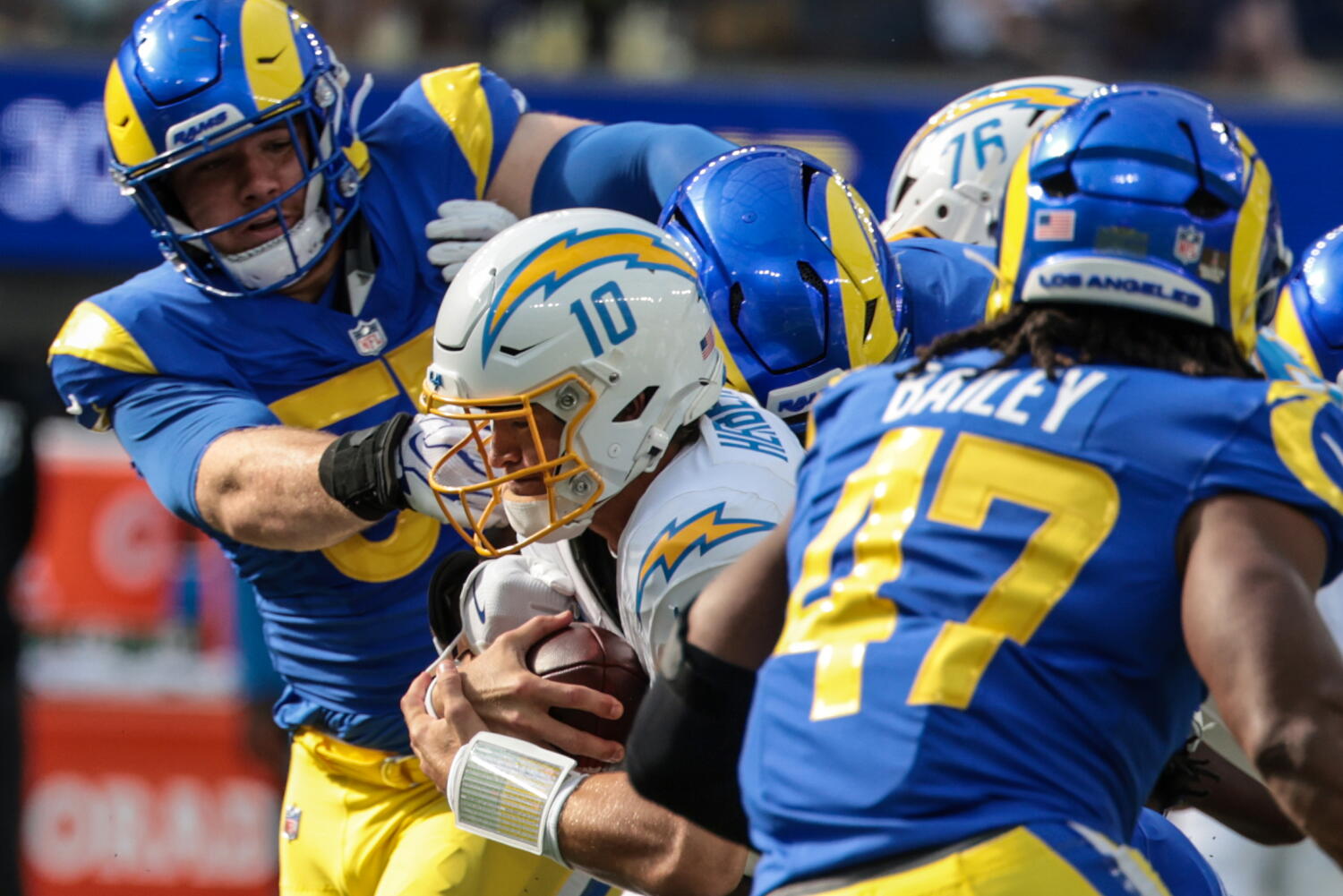
The Los Angeles Rams survived a chaotic opening collapse to defeat the winless Los Angeles Chargers, securing their second consecutive victory while pushing their crosstown rivals to a dismal 0-7 record. On the surface, the scoreboard tells a straightforward story of resilience versus futility. Beneath that surface lies a troubling reality for both franchises. The Rams did not win this game through superior execution or sudden offensive brilliance; they survived because an 0-7 Chargers roster found a way to lose a contest it had already statistically won in the opening quarter.
When a professional football team falls into an immediate, self-inflicted hole, the standard postgame narrative leans heavily on grit, locker room culture, and second-half adjustments. That framing misses the structural mechanics of what actually transpired on the field. Watching a team dig out of a nightmarish start against a winless opponent reveals far more about the fragility of the victor than the heroism of the comeback.
Why Early Turnovers Break Modern NFL Game Scripts
Modern football offenses are engineered to play from ahead. Every passing concept, play-action fake, and protection scheme relies on the defense respecting the threat of a balanced attack. When the Rams stumbled out of the gate with early miscues and defensive breakdowns, they immediately surrendered the tactical high ground.
An early deficit forces an offense into predictable passing downs. Defensive coordinators love predictable passing downs. They pin their ears back, disguise coverage shells, and attack compromised offensive lines with simulated pressures. For the first twenty minutes of action, the Rams looked completely unmoored from their offensive identity, unable to establish rhythm on first down and constantly staring at third-and-long situations.
Yet the Chargers failed to apply the knockout blow. In the NFL, letting an inferior or struggling opponent hang around within two scores is equivalent to handing them a loaded weapon. A team sitting at 0-6 carries a specific psychological weight into every fourth quarter. Every missed tackle, every conservative third-down play call, and every stalled drive in the red zone compounds the dread that another collapse is imminent. The Rams did not suddenly transform into a juggernaut after halftime. They simply stopped handing the ball away and waited for the Chargers to succumb to their own organizational muscle memory.
The Anatomy of an 0-7 Collapse
Nobody reaches 0-7 by accident. A single loss can be blamed on bad bounces, questionable officiating, or a hot opposing quarterback. Seven consecutive defeats point directly to systemic rot in situational football.
Consider how winless teams operate when holding a lead. Instead of pressing the advantage with aggressive play-calling, coaching staffs under immense pressure inevitably tighten up. They call runs into stacked boxes to bleed clock prematurely. They play soft zone coverages designed to prevent the big play, which willingly surrenders ten-yard chunks underneath until the opponent is standing in the red zone.
Situational Failure in the Red Zone
The red zone is where talent gaps vanish and coaching preparation is exposed. Field space compresses. Passing windows shrink to fractions of a second, and safeties no longer have to worry about getting beat deep over the top.
Against a defense defending twenty yards of grass, an offense needs creative spacing, disciplined route running, and decisive quarterback play. The Chargers repeatedly stalled when the field tightened, settling for field goals or turning the ball over on downs where touchdowns would have buried the Rams before halftime. You cannot beat even a flawed NFL roster by trading three points for seven in the second half.
Third Down Execution and Clock Management
Third down is the true barometer of a football team's health. Early in the contest, the Chargers converted manageable third downs by exploiting soft spots in the Rams' coverage. Once the momentum shifted, those third-and-fours turned into third-and-nines. Penalties killed drives before they started. Miscommunications along the offensive line left unblocked defenders screaming into the backfield.
The Rams capitalized on this regression by making a simple but effective defensive shift. Rather than continuing to blitz and risk giving up explosive plays, they dropped seven defenders into coverage, kept everything in front of them, and dared an 0-7 offense to execute twelve-play drives without making a mistake. It was a calculated gamble rooted in basic probability. The Chargers could not sustain that level of precision.
What Two Straight Wins Actually Mean for the Rams
Winning two consecutive games in the NFL generates instant optimism, particularly after overcoming an ugly first quarter. However, veteran observers know the difference between sustainable growth and fool's gold. Beating an 0-7 team after spotting them a massive early lead is a warning sign disguised as a celebration.
Let us examine the underlying metrics that dictate long-term success in this league.
- Turnover Margin: Surviving a negative turnover differential early in a game is an anomaly, not a repeatable strategy. Against playoff-caliber opponents, spotting a two-possession lead results in a blowout loss ninety percent of the time.
- Pass Protection: The Rams' offensive front struggled to anchor against basic four-man rushes during the opening frame. Better defensive lines will exploit those same interior leaks without letting the quarterback escape the pocket.
- Defensive Tackling: Missed tackles in space turned routine short completions into explosive gains early on. Cleaning up angles of pursuit is mandatory before facing offenses with elite perimeter speed.
If the Rams treat this victory as proof that they have turned a corner, they are walking into a trap. The film from the first quarter will look terrifying in Monday's meeting room. Good coaches use wins like this to tear into their roster, pointing out that the exact same mistakes will get them embarrassed against competent competition.
The Psychology of Momentum Shifts in Rivalry Games
When two teams share a city, a stadium, and a media market, the emotional temperature spikes regardless of what the standings say. For the Chargers, sitting at 0-6 meant this matchup represented their de facto Super Bowl—a chance to salvage pride and claim local bragging rights despite a lost season. That desperation fueled their electric opening surge. They played loose, fast, and reckless because they had nothing left to lose.
The moment they built a lead, that psychology inverted. Suddenly, they had something to protect.
Fear of losing is a paralyzing force in professional sports. You can see it in the body language of defensive backs peeking into the backfield instead of watching their receivers. You see it in quarterbacks hesitating a half-second before releasing the ball, allowing defenders to close the throwing lane. The Rams sensed that hesitation in the third quarter. Once the Rams stringing together two consecutive scoring drives cut the deficit to a single possession, the outcome felt inevitable to everyone in the building.
Evaluating the Coaching Adjustments That Flipped the Script
Credit belongs where it is due. While the Chargers imploded, the Rams' coaching staff avoided panic during the worst stretches of the first half. Abandoning the run game when trailing by multiple scores is the most common mistake coordinators make. Doing so turns an offense one-dimensional and invites pass-rushing specialists to tee off on the quarterback.
Instead, the Rams stayed patient. They leaned on quick-game concepts, screen passes, and outside zone runs to neutralize the Chargers' pass rush and rebuild their quarterback's confidence. By the start of the third quarter, the defensive front that had looked dominant twenty minutes earlier was visibly gassed, hands on hips between snaps.
Winning the Line of Scrimmage Late
Football games are routinely decided in the final ten minutes by whichever offensive line still has the leverage to push defenders backward. The Rams' commitment to physicality in the trenches slowly eroded the Chargers' defensive resolve. Short two-yard gains in the first quarter became five-yard gashes in the third. Five-yard gashes turned into eight-yard chunks in the fourth.
When an offense can dictate terms on the ground while holding a narrow late lead, the opposing defense is helpless. They know the run is coming, they stack the box to stop it, and they still get moved off the ball. That is how the Rams closed out the final minutes, draining the clock and ensuring the Chargers never got a final opportunity to mount a miracle drive.
The Uncomfortable Reality Facing Both Franchises
Stepping back from the immediate drama of the comeback leaves both Los Angeles franchises staring at uncomfortable truths.
For the Chargers, 0-7 is an organizational indictment. When a team repeatedly finds novel ways to squander leads, the issue transcends player injuries or bad luck. It points to a fundamental disconnect between scheme, personnel, and in-game management. Front offices cannot fix a broken culture with midseason waiver claims. Sweeping structural changes are coming, and every remaining game on the schedule functions as an audition for jobs that may not exist by January.
For the Rams, a two-game winning streak buys breathing room in a crowded conference race, nothing more. Overcoming a nightmarish start makes for compelling television and inspiring postgame soundbites, yet championship contenders do not routinely dig themselves into massive holes against winless opponents. The margin for error in the NFL is razor-thin, and surviving self-inflicted wounds is a habit that eventually catches up to every team that relies on it.
Stop looking at the final score as proof of arrival and start watching the first twenty minutes of tape again.