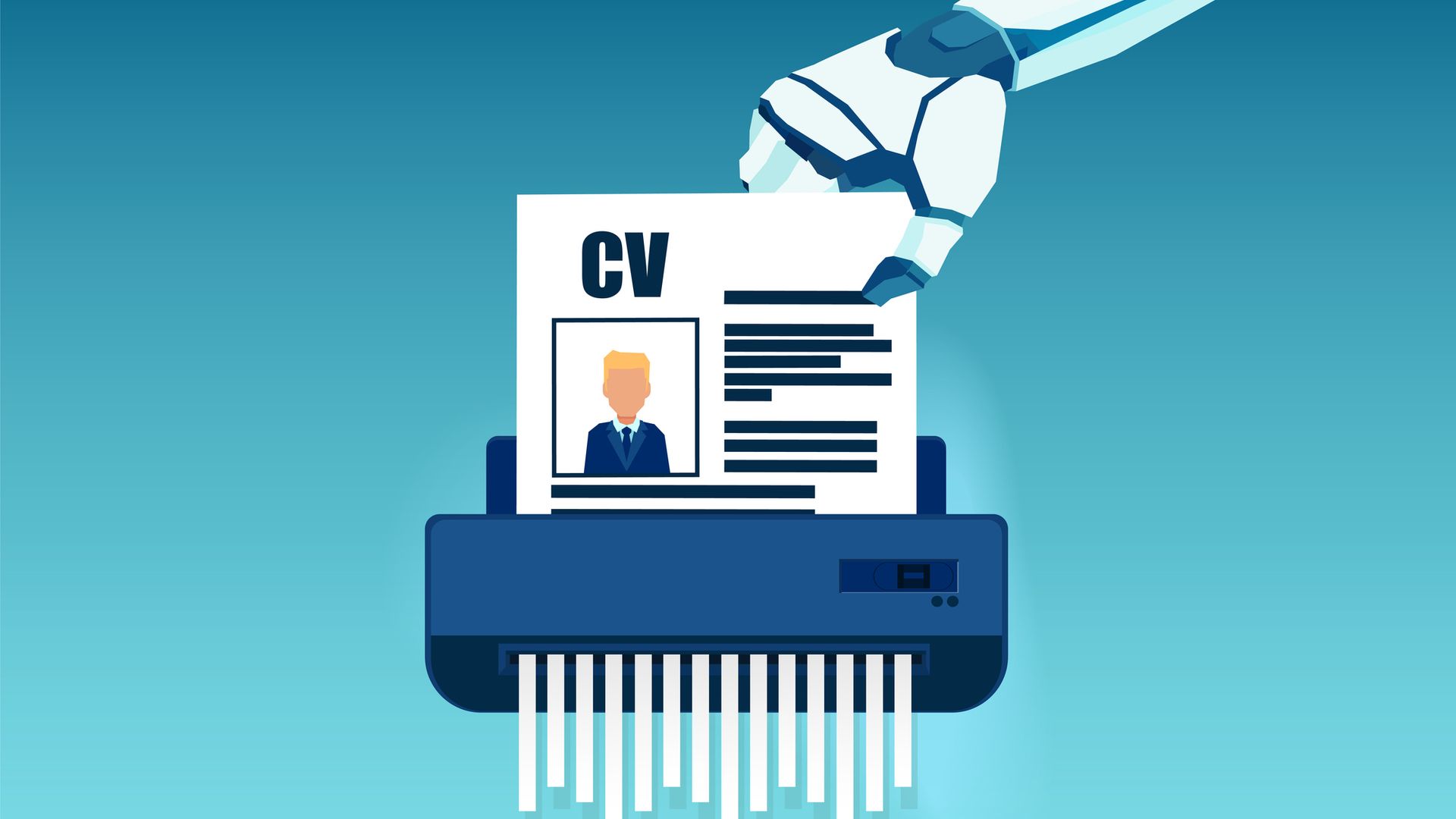
Unemployed workers across Britain are arriving at scheduled interviews only to be greeted by a flickering screen instead of a human being. This is not a glitch or a temporary cost-cutting measure. It is the new gatekeeper of the British labor market. Major retail chains, logistics firms, and hospitality giants have quietly outsourced their initial vetting to automated video interview (AVI) platforms. These systems use algorithms to analyze facial expressions, word choice, and tone of voice, deciding within minutes if a candidate is "worthy" of meeting a flesh-and-blood manager. For the thousands of applicants currently caught in this loop, the experience is cold, dehumanizing, and increasingly unavoidable.
The Quiet Rise of the Algorithm Gatekeeper
The shift happened almost overnight. While the public focused on generative bots writing poetry, the HR industry was busy building a wall of silicon. Companies like HireVue and its competitors have moved from the fringes of high-finance recruitment into the everyday sectors of the economy. If you are applying for a job at a supermarket or a warehouse today, there is a high probability that your first "conversation" will be with a software package.
This technology relies on a process called asynchronous interviewing. You receive a link, turn on your webcam, and answer pre-recorded questions. There is no one on the other end to clarify a point or laugh at a joke. You are performing for a set of data points.
The Flaw in the Foundation
The industry calls it "efficiency." I call it a systematic stripping of human nuance. These AI systems are trained on "ideal" candidate data. Usually, this means the software is looking for patterns that mimic current top performers. If a company’s top employees are all extroverted 25-year-olds from a specific region, the AI will likely penalize anyone who doesn't mirror those specific vocal cadences or facial movements.
This creates a feedback loop of sameness. It also raises a massive red flag for neurodivergent candidates. Someone with autism might not maintain "appropriate" eye contact with a camera lens. An applicant with a stutter or a thick regional accent might find their "communication score" tanking through no fault of their own. The software doesn't see a hardworking individual; it sees a deviation from the mean.
The Pseudo Science of Emotion Detection
Many of these platforms claim to measure "soft skills" by analyzing micro-expressions. It sounds like science fiction. In reality, it often borders on phrenology. There is very little peer-reviewed evidence that an algorithm can accurately determine "passion" or "integrity" by tracking how often your eyebrows move. Yet, businesses are betting billions on these metrics.
British employment law is currently struggling to keep pace. While the Equality Act 2010 protects against discrimination, proving that an opaque algorithm rejected you because of a protected characteristic is a legal nightmare. The "black box" nature of these tools means even the HR managers using them often don't know exactly why the computer gave one person a 90% match and another a 20%.
Why Businesses are Obsessed with the Machine
From a corporate balance sheet perspective, the logic is hard to argue with. A human recruiter can perhaps conduct eight interviews a day. An AI can process eight thousand in an hour. In a high-churn environment like a distribution center, where the goal is to get "boots on the ground" as fast as possible, the quality of the hire often takes a backseat to the speed of the hire.
However, this speed comes at a hidden cost. We are seeing a massive "candidate ghosting" epidemic. When people feel they are being treated like a component in a machine, they stop caring about the company before they’ve even started. This breeds a workforce that is disengaged from day one. You cannot build brand loyalty starting with an automated rejection email sent at 3:00 AM by a server in Virginia.
Gaming the System
Because the process is so rigid, a secondary industry has cropped up to help candidates "beat" the AI. Career coaches are now teaching people how to manipulate their lighting, where to look to fool the eye-tracking software, and which "power words" to sprinkle into their speech to trigger the algorithm’s approval.
We have reached a point where robots are interviewing people who are pretending to be robots.
It is a theatrical performance that serves no one. The employer doesn't get an honest view of the candidate, and the candidate doesn't get a feel for the company culture. It is a hollow exercise in data processing.
The Data Privacy Nightmare
Then there is the question of what happens to your face. When you record an interview on these platforms, that biometric data—your voiceprint, your facial geometry, your mannerisms—is stored. Who owns that data? Most privacy policies are written in dense legalese that the average jobseeker, desperate for a paycheck, will never read. We are essentially trading our most intimate biometric markers for the chance to work a minimum-wage shift.
Reclaiming the Human Element
There are signs of a backlash. Some high-end firms are pivoting back to "human-first" recruitment as a way to stand out in a crowded market. They realize that in a world of automation, the ability to build a genuine connection is a competitive advantage. But for the vast majority of the UK's unemployed, that luxury remains out of reach.
If you find yourself staring at a webcam, waiting for a prompt from a bot, remember that the machine is looking for patterns, not people. Your best defense is clarity. Speak in structured sentences. Use the keywords found in the job description. Ensure your background is neutral. It is frustrating and feels like a betrayal of the traditional work ethic, but it is the reality of the current landscape.
The government needs to mandate transparency. Companies should be required to disclose exactly what their algorithms are looking for and provide a human alternative for those who request it. Without intervention, we are heading toward a society where your professional future is decided by a line of code that never has to explain its reasoning.
Stop treating the recruitment process as a data entry task. If a company won't give you fifteen minutes of a human's time to see if you're a fit, ask yourself what that says about how they will treat you once you're on the clock.