For decades, urban neighborhoods across the United States have suffered under the heavy weight of systemic neglect, branded as nutritional dead zones where fresh produce is an expensive luxury or an outright myth. When Michael Sorrell took the helm at Paul Quinn College in Dallas back in 2007, he did not just inherit a struggling institution on the brink of closure. He stepped straight into an entrenched local crisis where the nearest source of fresh vegetables required a multi-bus journey or an automobile that many neighborhood residents simply did not own.
The surrounding area of Highland Hills was classified as a food desert, a polite bureaucratic term for a community intentionally bypassed by major grocery chains. Corporate retail logic dictated that low-income, minority neighborhoods were not profitable enough to warrant investment. When college leadership approached commercial grocers with offers of free land to build stores and hire local residents, they were met with silence, or worse, outright contempt. One prospective corporate partner bluntly remarked that the local demographic did not align with their target consumer base.
That blatant disregard sparked a structural pivot that discarded conventional wisdom entirely. Paul Quinn College possessed a money-losing football program that drained roughly six hundred thousand dollars annually from an already bleeding operating budget. The team lost games with staggering regularity. More importantly, the institutional glorification of athletics offered a narrow, improbable escape route for young men while ignoring the immediate, daily survival needs of the broader community.
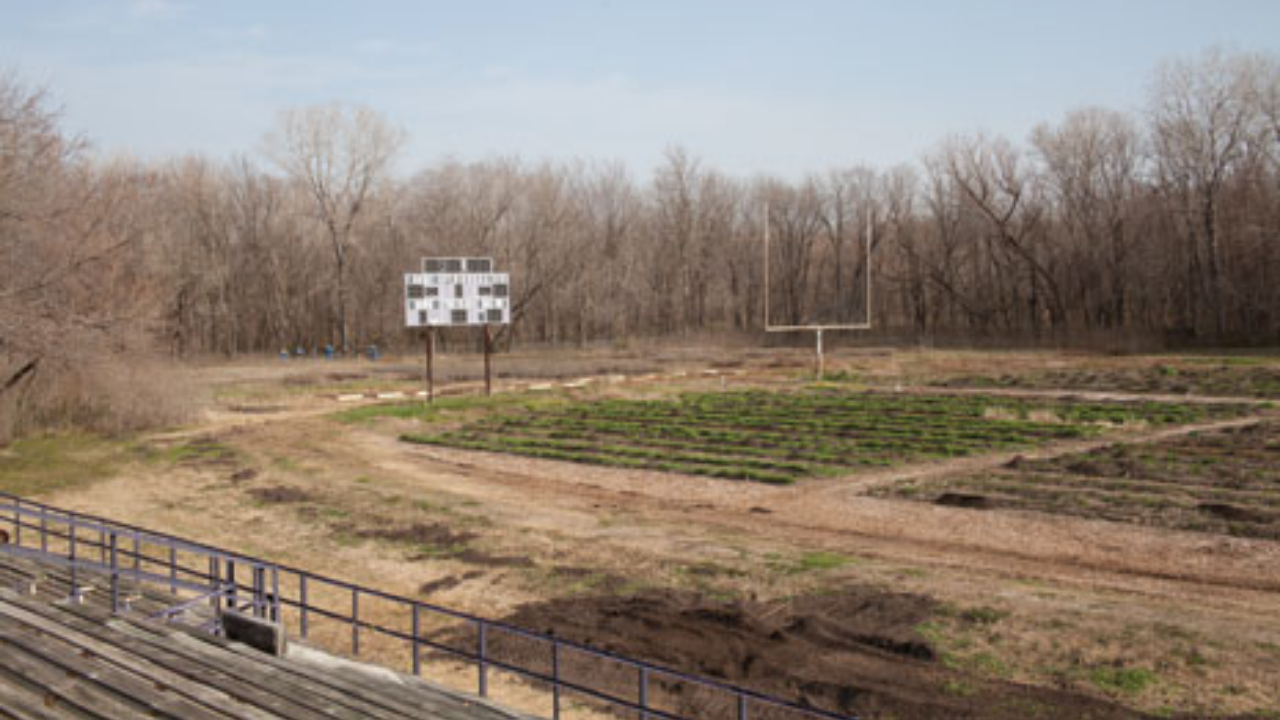
The decision to kill the football program and rip up the turf was born of economic necessity and moral fury. In its place rose the We Over Me Farm, an organic agricultural operation spanning five acres of what used to be a gridiron. Goalposts and a faded scoreboard were left standing as permanent monuments to a dead past, replaced by rows of collard greens, root vegetables, and tomatoes.
The Mechanics of Urban Agriculture
Transforming packed athletic turf into a high-yielding organic farm requires more than good intentions. Soil compaction on a football field is severe, resulting from years of heavy cleats and athletic impact crushing the earth beneath the grass. Initial operations required breaking through dense layers of clay and earth, enriching the ground with compost, and establishing sustainable irrigation systems.
Labor dynamics shifted away from traditional campus jobs toward a student-run work-college model. Students enrolled at the institution earned tuition assistance by working on the land, learning every facet of supply chain management, crop rotation, and soil biology. Rather than outsourcing agricultural knowledge, the college treated farming as a core academic and professional discipline.
Critics initially dismissed the project as an eccentric stunt destined for failure. Traditional agricultural analysts pointed out that small-scale urban plots rarely achieve the economies of scale necessary to survive commercial pressures. Yet the operation bypassed traditional wholesale middlemen by forging direct-to-consumer and institutional partnerships.
High-end hospitality groups servicing regional sports stadiums and luxury suites began sourcing fresh ingredients directly from the former college campus. Local restaurants integrated the campus-grown greens into their menus, while a significant percentage of the total harvest was redirected back into the community through food banks and local churches. This dual approach generated vital revenue to sustain campus operations while directly alleviating the immediate nutritional deficit plaguing the local zip code.
Challenging the Structural Limits of Charity
Charitable food distribution alone cannot solve systemic hunger. Handouts treat acute symptoms while leaving the underlying economic machinery untouched. The Paul Quinn model attempts to bridge that gap by anchoring agricultural production directly inside an educational institution, transforming passive consumers into active producers and entrepreneurs.
The financial model relies on diversified revenue streams rather than philanthropic donations alone. By operating as a hybrid entity—part commercial supplier, part educational workshop, and part community lifeline—the farm insulated itself against the funding drops that typically plague non-profit initiatives.
Scaling this model nationally, however, reveals structural bottlenecks. Most small colleges lack administrators willing to absorb the intense cultural backlash of canceling collegiate sports. Alumni networks often react with visceral anger when traditional athletic infrastructure is dismantled, viewing it as a betrayal of institutional identity. Overcoming that institutional inertia demands a leadership style willing to trade short-term popularity for long-term community survival.
Furthermore, urban farming faces persistent threats from municipal zoning laws, rising property taxes, and environmental contaminants typical of inner-city industrial legacies. Soil testing must be rigorous, and water access rights can become entangled in bureaucratic red tape. Transforming a football field works when the land is already institutionally owned, but acquiring new urban land parcels for agricultural conversion remains a capital-intensive hurdle for grassroots organizers.
Beyond the Gridiron
The legacy of the converted football field extends far beyond the tens of thousands of pounds of organic produce harvested annually. It exposed the hollow nature of corporate retail redlining and proved that localized solutions can bypass broken distribution networks.
When communities wait for multi-national conglomerates to decide they are profitable enough to deserve a grocery store, they wait indefinitely. By reclaiming physical space and redirecting institutional resources toward basic human necessities, marginalized institutions can rewrite their own economic terms. The goalposts remain standing, but the rules of the game have changed completely.
Paul Quinn College Transforms College Football Field into a Farm
This archival footage details the early structural transformation of the Paul Quinn College campus and the operational reality behind the urban farming initiative.
http://googleusercontent.com/youtube_content/1