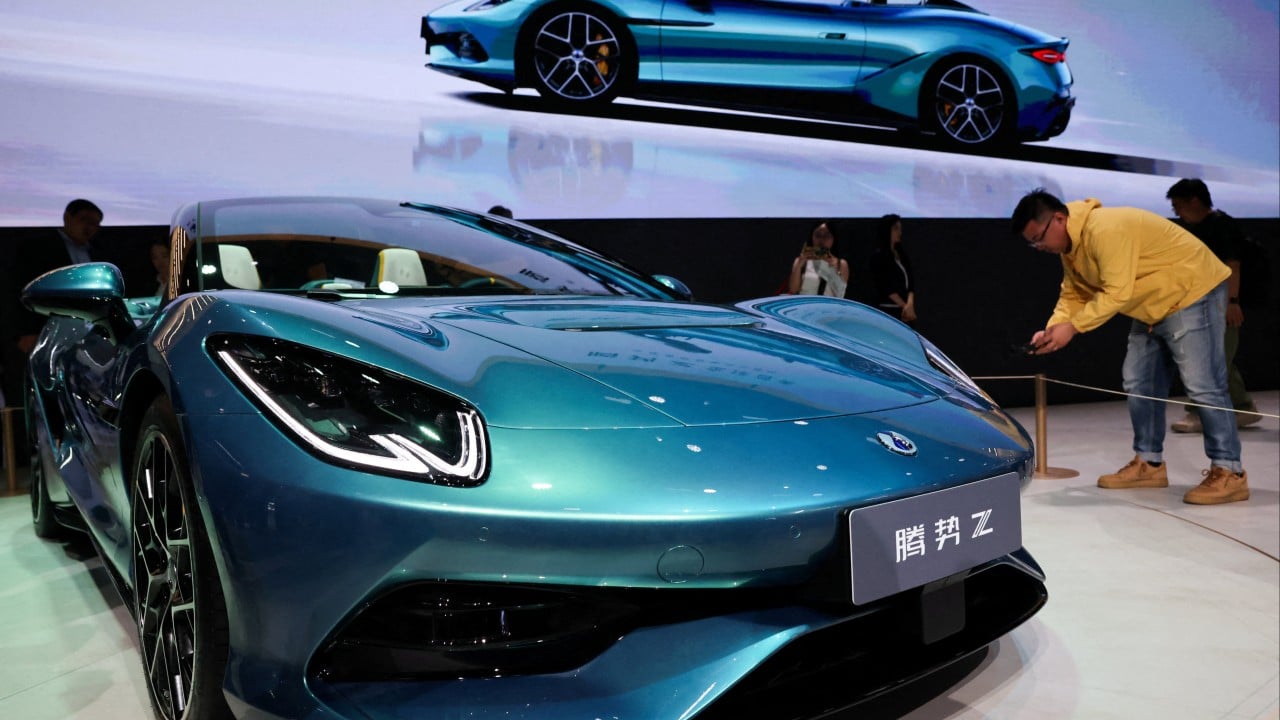
The automotive press is lazy. Give them a sleek silhouette, a 0-60 mph time under three seconds, and a price tag north of $200,000, and they will immediately copy and paste the same tired narrative: X brand is coming for Porsche.
The latest victim of this superficial analysis is the BYD Yangwang U9. With its European debut, commentators are breathlessly proclaiming that the Chinese automotive giant is mounting a direct assault on the Porsche 911. In other developments, read about: The Price of Peace in Cupertino.
It is a neat, click-ready storyline. It is also completely wrong.
To compare a quad-motor electric supercar weighing nearly 3,800 pounds to a 911 is to fundamentally misunderstand why people buy sports cars, how brand equity functions in the ultra-luxury segment, and the physics of performance driving. BYD is not launching a 911 killer. They are launching a moving technological showcase designed to sell mass-market hatchbacks and family crossovers. The Wall Street Journal has provided coverage on this critical subject in great detail.
If you think this is a true head-to-head matchup, you are asking the wrong questions entirely.
The Spec-Sheet Trap
Automotive writers love spec sheets because numbers are easy to compare. The U9 boasts 1,287 horsepower. It utilizes a sophisticated DiSus-X active suspension system that allows it to dance, jump, and drive on three wheels. It rockets to 62 mph in 2.36 seconds. On paper, it looks like a spaceship compared to a standard 911 Carrera.
But spec sheets are a hiding place for companies that cannot replicate driving dynamics.
I have spent two decades analyzing automotive supply chains and vehicle dynamics. Here is the reality: horsepower is cheap in the electric era. Anyone can slap four electric motors onto a chassis and generate four-figure power outputs. What you cannot do overnight is erase the penalty of mass.
The Yangwang U9 is a heavyweight. Packing a massive lithium iron phosphate (LFP) Blade battery, it carries immense inertia. In contrast, the genius of the Porsche 911 has never been pure horsepower; it is tactical weight distribution, steering feedback, and thermal management. A 911 GT3 RS handles track abuse all day because it is light and mechanically efficient.
Imagine a scenario where you take both cars to the Nürburgring. The BYD will accelerate like a bullet on the straightaways. By lap two, the extreme thermal load on the battery and the massive strain on the tires from managing that much weight will force the electronics to pull back power. Meanwhile, the 911 will keep lapping until the fuel tank runs dry.
Challenging Porsche requires beating them in the corners, not just the drag strip.
Dismantling the Luxury Illusion
Why do people buy a Porsche 911?
The lazy consensus says it is about performance metrics. If that were true, everyone would buy modified Corvettes or Caterhams. People buy Porsches because of a sixty-year lineage of engineering consistency and social signaling.
BYD has conquered the global EV market by mastering vertical integration, scaling battery production, and offering unbeatable value in the entry-level and mid-tier segments. They make excellent everyday transport. But luxury is built on scarcity, heritage, and emotional resonance—the exact opposites of high-volume manufacturing efficiency.
When a buyer drops a quarter-million dollars on a car, they are purchasing entry into an exclusive club. They want the heritage of Le Mans. They want the meticulous customizability of Porsche Exclusive Manufaktur. They do not want a car built by the same company that manufactured the electric taxi they took from the airport.
BYD’s decision to bring the U9 to Europe is not a serious attempt to capture the sports car market share. It is a halo car strategy. By showing European consumers they are capable of engineering a hypercar, they lift the brand perception of their entire lineup. The U9 exists so that a buyer feels better about purchasing a BYD Seal or Atto 3. It is a marketing expense, not a genuine commercial threat to Zuffenhausen.
The Flawed Premise of "The EV Supercar"
We need to address the broader structural lie underlying this entire discussion: the idea that electric supercars are a viable commercial segment right now.
Look at the data. Rimac makes the Nevera, an absolute pinnacle of EV engineering. It is a masterpiece. Yet, they have openly admitted that the market for electric hypercars is stagnant because ultra-high-net-worth buyers still prefer the mechanical theater of internal combustion engines—the noise, the gears, the vibration. Rimac is pivotally shifting focus toward battery tech supply rather than banking entirely on standalone hypercar sales.
If Rimac is struggling to move electric hypercars, a mass-market brand like BYD face an even steeper uphill battle.
The PAs (People Also Ask) across search engines are already asking: Is BYD better than Porsche? The question itself is flawed. "Better" at what? If the goal is to commute efficiently with advanced infotainment, BYD wins on price-to-performance every day. If the goal is sports car purity and value retention, the comparison is laughable. A 911 depreciates slower than almost any other vehicle on earth. An unproven electric supercar from a mass-market brand face an unknown, potentially brutal depreciation curve.
The Real Threat Nobody Is Talking About
If you want to look at where BYD actually threatens European premium brands, look down-market.
Do not look at the U9. Look at their plug-in hybrid platforms and their mid-tier luxury SUVs like the Denza brand. That is where the real disruption is happening. BYD can build a highly competitive premium crossover for 30% less than their German counterparts because they own their entire battery supply chain. They do not rely on external suppliers for the most expensive component of the car.
German automakers are terrified of BYD, but they are not worried about losing 911 buyers. They are worried about losing the volume sellers—the Macan buyers, the Cayenne buyers, the Audi e-tron buyers. By focusing the narrative on the U9 vs. the 911, the media is looking at a magic trick while the real action happens off-stage.
To beat Porsche at the sports car game, you have to build something that appeals to the soul of a driver. BYD has built a magnificent rolling laboratory. It is packed with processing power, incredible actuator systems, and jaw-dropping straight-line speed. It is a triumph of modern industrial engineering.
But it is not a 911 rival. Stop pretending it is.