Mathematics is often described as a universal language, a realm of absolute truths where a proof holds the same weight in a dusty chalkboard room in Hanoi as it does in the sleek, glass-encased corridors of Princeton. But for the human beings who solve those equations, the variables are never that simple. Geography carries a weight that no formula can fully account for.
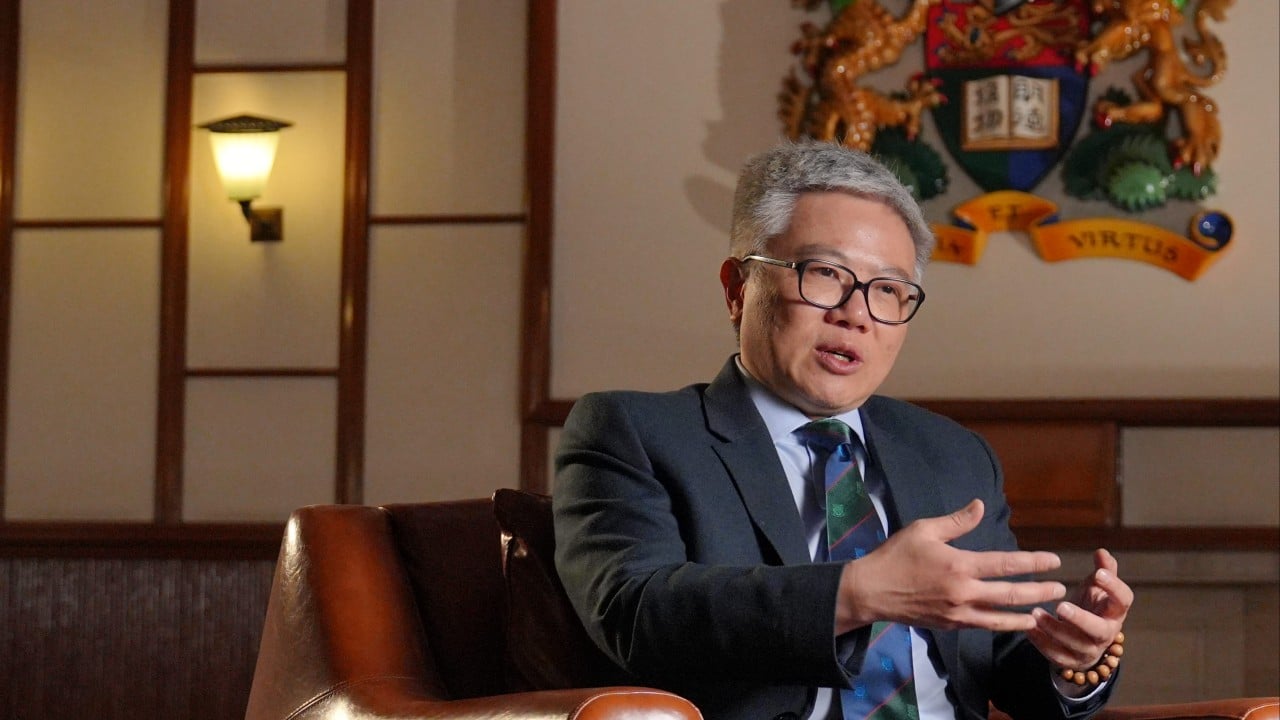
Ngo Bao Chau knows this weight intimately. In 2010, he reached the summit of his field, winning the Fields Medal—the "Nobel Prize of mathematics"—for proving the Fundamental Lemma of the Langlands Program. It was a feat of mental endurance that bridged disparate worlds of geometry and group theory. At the time, he was a fixture of the American academic elite, a professor at the University of Chicago. He had the prestige, the tenure, and the intellectual resources that most scholars spend a lifetime chasing.
Then, he walked away.
He didn't leave because of a lack of funding or a dispute over departmental politics. He left because of a feeling. A collection of "things I do not like" that began to outweigh the benefits of the American dream. His transition to Hong Kong, joining the Chinese University of Hong Kong (CUHK), isn't just a story about a career move. It is a story about the invisible friction of culture and the search for a place where the air feels easier to breathe.
The Friction of the West
Imagine a brilliant mind trying to work while a low-frequency hum vibrates through the floorboards. You can ignore it for an hour. You can ignore it for a day. But after a decade, that hum becomes a roar. For many Asian scholars in the West, that hum is a composite of subtle isolations, cultural disconnects, and a growing sense of being a perpetual outsider despite every professional accolade.
In the United States, the academic environment is often celebrated for its rigor and its "publish or perish" dynamism. But for Chau, the environment had begun to sour. He spoke candidly about a certain social and professional rigidity that he found increasingly stifling. There is a specific kind of American individualism that, while productive for some, can feel profoundly lonely for those raised in more communal or socially fluid cultures.
The decision to quit the U.S. was a slow burn. It wasn't a sudden explosion of anger but a quiet realization that his life was being lived in a minor key. When he looked at the landscape of his future in Chicago, he saw a repetitive loop. He saw a society that, despite its diversity, often struggled to truly integrate the perspectives of those who didn't fit the standard Western mold of the "extroverted leader."
The Magnetic Pull of the East
Hong Kong offered a different equation.
To the outside observer, Hong Kong might seem like an odd choice for a man seeking peace. It is a city defined by its density, its frantic neon energy, and its complex political tightrope. But for a mathematician from Vietnam who spent his formative years in France, Hong Kong represents a middle ground. It is a bridge.
At CUHK, Chau found a different rhythm. There is a shared cultural vocabulary in East Asia that eliminates the need for constant translation—not of language, but of intent. In the West, you often have to explain why you are quiet, why you value certain hierarchies, or why you approach a problem with a specific kind of patience. In Hong Kong, those things are understood. They are the baseline.
The stakes here are more than personal comfort. There is a massive tectonic shift happening in the global intellectual landscape. For decades, the flow of talent was strictly one-way: East to West. The best minds of Hanoi, Beijing, and Seoul fought for a seat at the table in Boston or Palo Alto. But the gravity is shifting. When a mind like Chau’s decides that the "things I do not like" in the West are no longer worth the trade-off, it sends a signal to an entire generation of younger researchers.
The Myth of the Cold Scientist
We like to pretend that scientists and mathematicians are cold, logical machines who care only about data and discovery. We think they are immune to the tug of home or the sting of social discomfort. This is a lie.
A mathematician's work is deeply tied to their emotional state. To solve a problem like the Fundamental Lemma, one must be able to sink into a state of deep, uninterrupted focus for years. If the world around you feels discordant—if you are worried about the rising tide of anti-Asian sentiment in the West, or if you simply feel like a ghost in your own neighborhood—that focus fractures.
Chau's move was a reclamation of focus. By choosing Hong Kong, he was choosing an environment where he could be a "top mathematician" without also having to be a "cultural bridge" or a "representative of his race" every time he stepped off campus. He wanted the freedom to just be.
The Invisible Stakes
Why does this matter to someone who doesn't know a derivative from a divisor?
It matters because we are witnessing the end of an era of unchallenged Western academic hegemony. When the U.S. makes itself "unlikeable" to the world's elite talent—whether through visa restrictions, social alienation, or a general atmosphere of exclusion—it loses its primary engine of innovation.
Chau’s departure is a data point in a much larger trend. Other researchers are looking at his move and doing their own mental math. They are weighing the prestige of a Western Ivy League title against the quality of life, cultural resonance, and the massive investment currently being poured into Asian universities.
Consider the "Chilling Effect" often discussed in scientific circles. It’s a term used to describe how a hostile environment can stop people from speaking or acting. For Chau, the chilling effect wasn't a policy; it was a vibe. It was the realization that he was tired of navigating a world that didn't quite know what to do with him once the math was finished.
A New Geometry of Life
In Hong Kong, Chau is not just a trophy hire. He is part of a deliberate effort to build a world-class center of excellence that rivals anything in Europe or North America. He is teaching students who see themselves in him. He is walking through streets where the smells, the sounds, and the social cues feel like a homecoming.
The "things I do not like" list is a powerful tool for self-discovery. Often, we focus on what we want: more money, a better title, more fame. But Chau focused on what he couldn't stand. He realized that no amount of professional glory could compensate for a daily life that felt like wearing a suit three sizes too small.
He didn't just move across the world. He recalculated his life's value. He proved that even in a world governed by hard numbers, the most important variables are the ones we can’t see—the sense of belonging, the ease of a shared joke, and the simple, profound relief of being understood without having to say a word.
The chalkboard in Hong Kong looks much like the one in Chicago. The chalk dust still clings to the fingers. The symbols for infinity and integration remain unchanged. But as Ngo Bao Chau picks up the chalk, his hand is steadier. The hum has stopped. The equation finally balances.