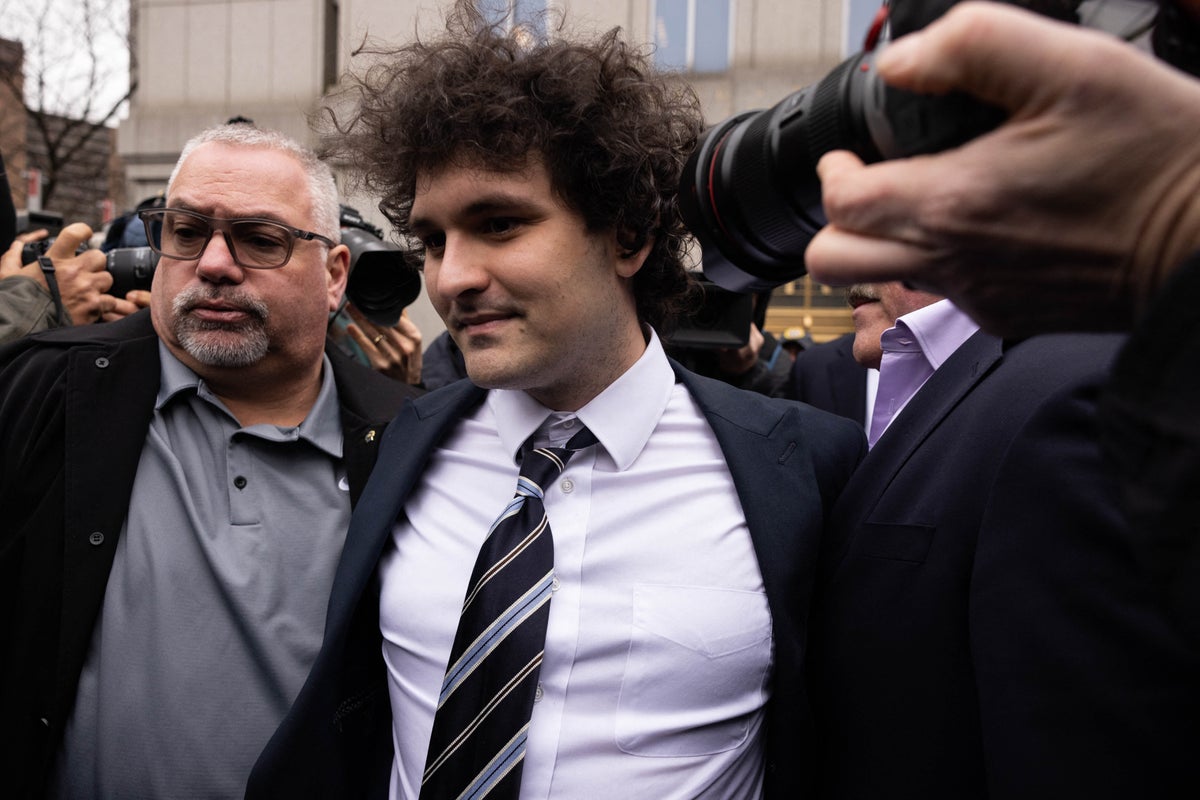
The air inside a federal appeals courtroom is different from the humid, chaotic heat of a trading floor. It is cooler. It smells of old paper, polished mahogany, and the quiet, crushing weight of finality. For a long time, Sam Bankman-Fried lived in a world where numbers were fluid, where risk was just a variable to be massaged, and where any bad bet could be traded out of if you just had enough leverage.
But the law does not trade on margin.
Three appellate judges recently sat in review of the fallen crypto king’s twenty-five-year sentence. They did not look at him as a visionary who flew too close to the sun, nor did they view him as a misunderstood genius caught in a liquidity crunch. They looked at the ledger of his actions. The math, as it turned out, was devastating. The evidence against him wasn't just substantial; it was an avalanche of his own making.
While Bankman-Fried sits in his cell, pinning his remaining scraps of hope on the whims of a political pardon from Donald Trump, the legal machinery has ground to a halt. His appeal did not just fail. It collapsed under the weight of his own hubris.
The Illusion of the Digital Oasis
To understand how we arrived at this courtroom, we have to look past the complex jargon of blockchain technology and look at the ancient, human flaw that drove the whole enterprise: the desire to play god with other people's money.
Imagine a local banker in a small, dusty town a century ago. Let's call him Thomas. Thomas takes the life savings of the local blacksmith, the baker, and the schoolteacher, promising to keep it safe in a steel vault. Instead, Thomas sneaks out the back door every night to bet those savings on the horse races, convinced he has a foolproof system. When the horses lose, he takes more money from the vault to cover his bets, certain the next race will bring the windfall that fixes everything.
That is not innovation. That is a baseline betrayal of trust.
Bankman-Fried did exactly this, just with cooler branding. He built FTX into a shiny, digital oasis. He wore cargo shorts, sat on beanbag chairs, and spoke with a rapid-fire intensity that convinced sophisticated venture capitalists that he was operating on a higher intellectual plane. He made people feel safe putting their hard-earned capital into his hands.
But behind the scenes, a secret trapdoor connected FTX to his private hedge fund, Alameda Research. The money ordinary people deposited to buy bitcoin or ethereum wasn't sitting securely in a digital vault. It was being funneled directly into Alameda to fund high-risk trades, luxury real estate in the Bahamas, and massive political donations.
When the crypto market dipped, the trapdoor swung wide open. The money was gone.
The Searing Weight of the Evidence
When the case reached the appellate court, Bankman-Fried’s legal team tried to spin a narrative of a chaotic but well-intentioned founder who simply got overwhelmed by a fast-moving market crisis. They argued that the trial judge had been unfair, that the defense had been hamstrung, and that the jury hadn't seen the full picture.
The appellate judges were entirely unmoved.
The problem with trying to outsmart a federal prosecution is that digital footprints do not lie, and they do not forget. The government didn't just have theories; they had the receipts. They had internal spreadsheets with fabricated numbers. They had Signal messages set to auto-delete that were saved by co-conspirators. They had the direct, devastating testimony of his closest confidants—the very people who sat in the room with him while the empire burned.
Consider what happens when your own inner circle turns off the music. Caroline Ellison, Gary Wang, and Nishad Singh didn't just point fingers; they provided the roadmap of the fraud. They showed exactly how Bankman-Fried ordered the creation of a special code that allowed Alameda to maintain a virtually limitless negative balance on FTX.
The appellate court noted that the trail of evidence was overwhelming. Every defense argument was picked apart, not with emotion, but with the cold, sterile logic of the law. The judges made it clear that the original trial was fair, the sentence was justified, and the legal avenue for a comeback was officially closed.
The Long Gamblers Wait
With the legal door slammed shut, Bankman-Fried’s reality has shrunk to the dimensions of a prison cell. Yet, reports suggest he isn't entirely resigned to his fate. Instead, he is playing one final, desperate card: the hope of an executive pardon.
During his rise, Bankman-Fried poured tens of millions of dollars into the political ecosystem, trying to buy influence and shape regulation. Now, his eyes are fixed on the White House, hoping that Donald Trump might view his case through a lens of disruption or political theater and issue a commutation.
It is the ultimate gambler’s mindset. When you have lost every chip at the table, you don't accept defeat; you look for someone to flip the table over.
But relying on a political savior is a volatile strategy. A pardon is not a legal vindication. It is a political calculation. For a president, pardoning the poster child of financial fraud—a man whose actions wiped out billions of dollars belonging to everyday retail investors—carries a heavy public cost. Bankman-Fried is no longer a powerful donor; he is a liability wrapped in an orange jumpsuit.
The tragic irony of his current state is that he remains trapped in the same cognitive loop that ruined him. He is still looking for a loophole, still trying to trade his way out of a deficit, still refusing to look in the mirror and face the destruction he left behind.
The Human Cost Left in the Wake
It is easy to get lost in the billions of dollars, the political drama, and the spectacle of a fallen billionaire. We look at the charts, the court transcripts, and the political rumors as if they are part of a high-stakes fiction.
But the real tragedy of the FTX collapse isn't found in a Washington boardroom or a Manhattan courtroom. It is found in the quiet living rooms of people who believed the lie.
Think of the retired construction worker who put his life savings into FTX because he thought it was safer than traditional banks that offered zero interest. Think of the young parent trying to build a modest safety net for their child's college education, who watched their digital portfolio vanish into thin air over a single weekend. These weren't institutional day traders looking to get rich quick. They were ordinary people who trusted a system that promised them a future.
When Bankman-Fried diverted those funds to Alameda, he wasn't just risking numbers on a screen. He was risking those lives. He was spending the sweat, time, and anxiety of hundreds of thousands of individuals to fund his own ego and his own vision of how the world should run.
The appellate court's decision to uphold his sentence is a stark reminder that accountability eventually comes for everyone, no matter how smart they think they are. The digital world can create the illusion of lawlessness, a sense that if you move fast enough and use enough jargon, the old rules don't apply to you.
But the old rules always apply.
The cell door does not care about your theories on effective altruism. The prison walls do not expand based on your net worth. As the twilight deepens over the federal penitentiary, Sam Bankman-Fried is left with nothing but time, the echo of his own voice, and the slow, agonizing realization that some debts can never be repaid with a trade.


