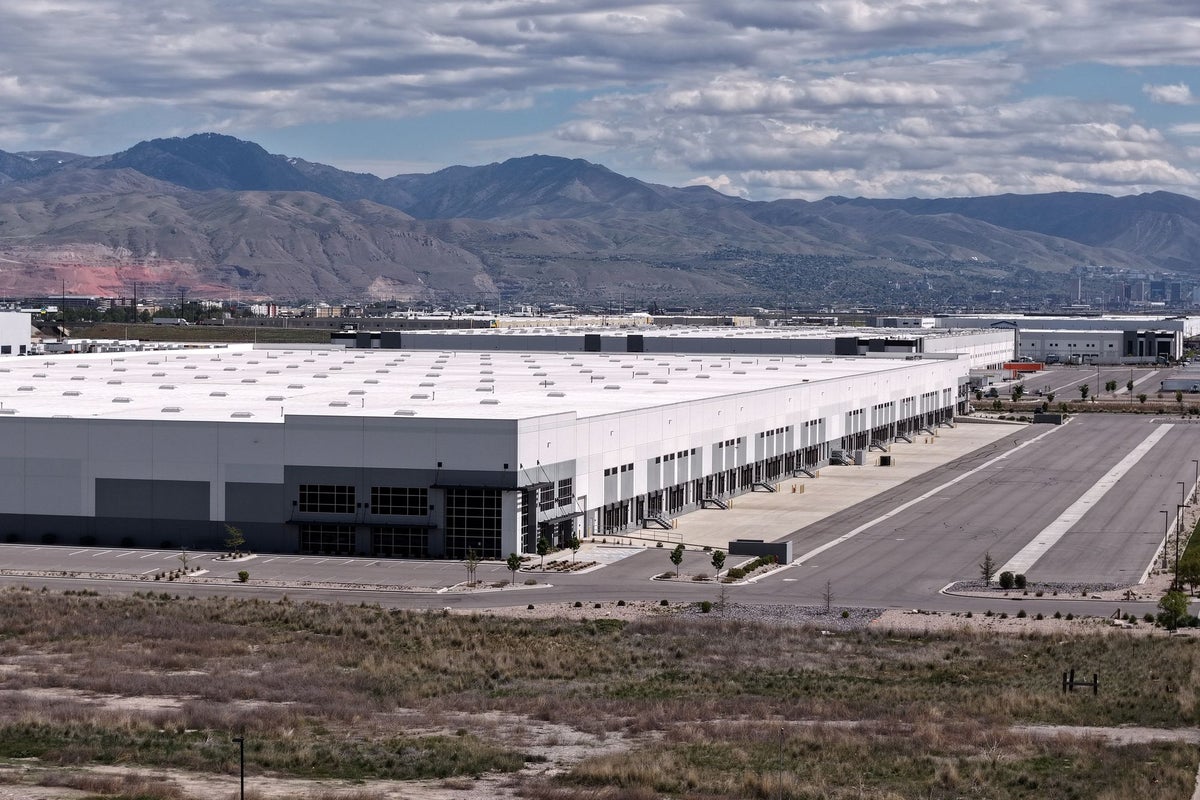
The Department of Homeland Security's decision to divest from a newly acquired portfolio of industrial real estate marks a critical turning point in federal asset management. Under newly appointed Homeland Security Secretary Markwayne Mullin, Immigration and Customs Enforcement (ICE) is moving to liquidate or transfer at least seven of eleven commercial warehouses originally purchased for over $700 million. This structural pivot highlights a fundamental friction between rapid infrastructure acquisition and long-term operational feasibility.
Analyzing this divestment reveals a mismatch between real estate acquisition speed and the statutory, logistical, and localized constraints of federal execution. When large-scale procurement bypasses standard operational underwriting, the resulting capital inefficiencies force severe strategic corrections.
The Anatomy of the Detention Reengineering Initiative
The initial acquisition strategy—internally designated as the "Detention Reengineering Initiative"—was designed to replace temporary, vulnerable "tent city" tactical structures like the Camp East Montana facility in El Paso with hard-sided, permanent corporate real estate. The financial architecture of this initiative relied on a high-velocity capital deployment model, purchasing massive logistics warehouses to achieve rapid economies of scale.
The structural composition of the purchased portfolio split into two facility models:
- Large-Scale Detention Hubs ("Mega-Centers"): Industrial footprints spanning 800,000 to 1,000,000 square feet, engineered to hold 7,000 to 10,000 individuals.
- Rapid Processing Centers: Intermediate properties measuring roughly 400,000 square feet, scaled for localized, high-throughput processing capacities of 1,000 to 1,500 beds.
The core vulnerability of this procurement strategy lay in its assumption that industrial storage facilities could be seamlessly converted into highly regulated institutional environments. Industrial real estate is valued based on cubic volume, clear heights, and freight throughput. Conversely, institutional civil infrastructure requires intensive sub-systems for human occupancy, including advanced HVAC filtration, high-occupancy plumbing lines, specialized medical wings, and segregated cellblock zoning.
The Three Pillars of Facility Underwriting Failure
The decision to abandon the majority of these properties stems directly from a failure to pass basic operational underwriting criteria. Three distinct operational bottlenecks destroyed the viability of the converted warehouse model.
1. The Civil Engineering Bottleneck
Industrial warehouses are constructed as shell environments designed for minimal human density, usually limited to shift workers and automated equipment. Converting these spaces to safely hold thousands of permanent occupants introduces exponential utility demands.
For instance, the planned mega-center in Social Circle, Georgia, required the engineering of an entirely self-contained, custom-built wastewater treatment facility just to manage the projected municipal load. This level of retrofitting drives retrofitting costs per square foot far past the initial asset purchase price, fundamentally changing the underlying economic assumptions.
2. Legal Jurisdictional Volatility
The federal government frequently underestimated the regulatory tools available to state and local municipalities intent on blocking these conversions. While federal supremacy protects core operations, local governments and state attorneys general successfully deployed environmental and civil litigation to halt progress.
Litigation in Maryland (Maryland v. Mullin) and Michigan created prolonged operational delays. By leveraging environmental justice legal frameworks and strict local zoning rules, municipal actors created an extended, capital-intensive legal holding pattern. This friction eroded the core benefit of the strategy: speed.
3. Supply Chain Disruption and Corporate Attrition
The conversion model relied heavily on the cooperation of institutional private markets. Because the government targeted top-tier industrial developments, it entered direct competition with commercial logistics users.
This friction triggered severe corporate counter-pressures. Community pushback led institutional real estate investment firms to unilaterally back out of high-profile conversion contracts. For example, Platform Ventures cancelled a deal for a 1-million-square-foot warehouse in Kansas City, Missouri, which was slated to hold 7,500 individuals. This pullout removed an anchor node from the federal regional strategy, creating a major gap in the planned logistical network.
The Cost Function of Liquidation versus Transfer
With seven facilities now designated as surplus assets, the Department of Homeland Security faces a highly constrained optimization problem. Liquidating specialized commercial real estate acquired via premium federal procurement processes requires balancing maximum capital recovery against speed of disposal.
The agency's exit strategies fall into two primary paths:
Inter-Agency Property Transfer
The federal government can utilize the General Services Administration (GSA) disposal framework to transfer the assets to other federal entities at book value, avoiding a direct market loss. Potential assignees include the Department of Defense for logistical staging or the United States Postal Service for regional distribution centers.
The structural limitation here is geographic alignment. A warehouse purchased because of its proximity to a specific border transit corridor or regional transportation hub rarely aligns with the domestic logistical requirements of other federal agencies.
Open-Market Liquidation
If no federal buyer emerges, the properties must be sold via public auction to commercial buyers. This path carries a high risk of capital loss.
ICE purchased these facilities at the peak of the industrial real estate cycle, often paying premiums to secure massive, empty facilities quickly. Selling them back into a market aware of the government's urgent divestment mandate invites heavily discounted institutional bids. Furthermore, any partial retrofitting or demolition work already started inside these shells reduces their value to standard commercial tenants, who require unobstructed floor space for automated sorting racks.
The Corrected Tactical Blueprint
Rather than continuing to chase centralized mega-facilities, future federal infrastructure policy must shift toward a distributed, asset-light operational model.
The focus should pivot away from direct real estate ownership and toward short-term, variable-capacity service contracts with private operators who already hold approved, fully certified institutional facilities. This approach protects capital, shifts conversion and compliance risks to the private sector, and allows capacity to scale up or down dynamically based on actual demand rather than fixed real estate holdings.