The British government has hit a wall in its attempt to offload the Chagos Islands. What was supposed to be a diplomatic victory—a strategic handover of the Indian Ocean archipelago to Mauritius while securing the future of the Diego Garcia military base—has instead collapsed into a legislative mess. The decision to shelve the Chagos bill isn't just a scheduling conflict in Parliament. It is a symptom of a deeper, more volatile friction between international law, domestic political survival, and the cold realities of global defense logistics.
The deal was simple on paper. The UK would recognize Mauritian sovereignty over the islands, ending decades of legal battles and international condemnation. In exchange, the United Kingdom would secure a 99-year lease for the base at Diego Garcia, the "unsinkable aircraft carrier" vital to US and British operations in the Middle East and Indo-Pacific. But the simplicity ended there. The moment the treaty hit the light of day, it became a lightning rod for critics who argue the UK is effectively paying to give away its own territory while leaving the door open for Chinese influence in the Indian Ocean.
The Strategic Trap of Diego Garcia
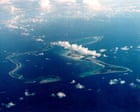
To understand the delay, you have to look at the map. Diego Garcia is the crown jewel of the British Indian Ocean Territory (BIOT). It is one of the few places on earth where the US can launch long-range bombers and coordinate naval logistics without the immediate oversight of a host nation that might get cold feet during a conflict. By handing sovereignty to Mauritius, the UK is essentially trading a hard asset for a promise.
Critics within the security establishment are worried about the fine print. Mauritius has close economic ties with China. There is a very real fear that once the flag changes, the surrounding islands—some only a short boat ride from the high-security base—could become sites for Chinese "research stations" or commercial ports. This isn't paranoia; it is the modern reality of maritime competition. The legislative pause reflects a sudden realization that the 99-year lease might not be the ironclad guarantee the Foreign Office promised.
A Legal Crisis Disguised as a Policy Shift
The UK didn't decide to give the islands back out of the goodness of its heart. The pressure came from every corner of the international legal community. The UN General Assembly, the International Court of Justice, and the International Tribunal for the Law of the Sea have all lined up to tell London that its occupation of the islands is illegal. For a nation that prides itself on the "rules-based order," being labeled an illegal occupier is a bad look.
However, the internal politics of the UK have shifted the ground under the government's feet. The "sovereignty" argument has become a potent weapon for the opposition. They argue that if the government can’t protect the integrity of a remote archipelago, how can it be trusted with more pressing border issues? This political vulnerability turned a technical handover into a toxic asset. The government realized that pushing the bill through now would mean a bloody floor fight they aren't prepared to win.
The Human Cost of Geopolitics
While London and Port Louis argue over maps and leases, the actual victims of this saga remain in the margins. The Chagossians, the descendants of the people forcibly removed in the 1960s and 70s to make way for the base, are not a monolith. Some want to return at all costs. Others want compensation and the right to live as British citizens.
The shelved legislation failed to adequately address the "right of return" for the islands surrounding Diego Garcia. Mauritius has promised a resettlement program, but the logistics are a nightmare. There is no infrastructure. No power. No water. The cost of making the outer islands habitable would be astronomical, and neither the UK nor Mauritius has stepped up with a definitive budget. The delay in the bill is, in many ways, a delay in facing the bill.
The Financial Burden of Exit
Money is the quiet driver behind the pause. The proposed treaty included a "financial support" package for Mauritius—essentially a rent payment for land the UK currently claims to own. In an era of tight budgets and domestic austerity, the optics of sending millions to Mauritius to lease back a base you already operate are horrific.
The Treasury is looking at the long-term liabilities. If the UK remains the sovereign power, it is responsible for the environmental protection and the massive costs of any future resettlement. If it hands over sovereignty but maintains the base, it becomes a tenant. Tenants have less control and more expenses. The government is currently caught in a mathematical trap where every exit strategy looks more expensive than simply sitting tight and weathering the international criticism.
The Problem with International Precedent
There is a broader fear that the Chagos handover would set a precedent for other British Overseas Territories. Gibraltar and the Falkland Islands are watching closely. If London admits that a long-standing territorial claim is invalid because of a 1960s-era decolonization error, what does that mean for other disputed lands?
The argument that Chagos is "unique" doesn't hold much water in international law. Lawyers in Madrid and Buenos Aires are already sharpening their pens. By shelving the bill, the UK is buying time to figure out how to frame the Chagos exit without accidentally triggering a domino effect across its remaining global outposts.
The Defense Intelligence Gap
The most stinging criticism comes from the intelligence community. They point out that the base at Diego Garcia relies on a massive exclusion zone. If Mauritius takes over the outer islands, that exclusion zone shrinks. You cannot run a top-secret submarine refit station if there are commercial fishing vessels and "tourist" yachts anchored ten miles away.
The security protocols required to harden Diego Garcia against a change in sovereignty are not yet in place. The legislation was shelved because the Ministry of Defence couldn't guarantee that the base would remain functional under the new terms. They need more than a lease; they need an operating environment that hasn't existed since the Cold War ended.
The Washington Factor
Nothing happens in the Indian Ocean without a nod from Washington. While the US initially supported the deal to "clean up" the legal mess, the tone has changed. The US is increasingly wary of any shift that gives Mauritius—and by extension, its economic partners—a foothold in the BIOT.
The Pentagon is likely asking for more than just a 99-year lease. They want a status-of-forces agreement that looks more like sovereign control than a rental. The UK is stuck in the middle, trying to satisfy a US ally that wants total security and an international community that wants total decolonization. It is an impossible balance.
The Illusion of a Clean Break
The government hoped the Chagos issue would be a "one-and-done" legislative fix. They were wrong. Every layer of the agreement, from the environmental protections of the world’s largest marine reserve to the citizenship rights of the displaced, is a potential legal minefield.
Shelving the bill isn't a cancellation; it's a retreat to a defensive position. The UK is waiting for a more favorable political climate or a way to rewrite the treaty to satisfy the hardliners in the defense and intelligence sectors. But time is not on London's side. The longer the delay, the more the international courts will tighten the screws.
The Indian Ocean is becoming more crowded, more contested, and more expensive. Britain’s attempt to walk away from its colonial past without losing its strategic future has stalled because, in modern geopolitics, you cannot have both. You either hold the ground or you lose the influence. There is no middle path that doesn't involve a massive check and a significant loss of face.
The bill sits on a shelf because the government has finally realized that the price of leaving is just as high as the price of staying. They are paralyzed by the reality that in the 21st century, sovereignty isn't just about who owns the dirt; it's about who controls the water around it.
Until the UK can answer the China question and the cost question, the Chagos Islands will remain in a state of legal and political limbo. The flags won't change anytime soon because the risk of changing them has become too great to ignore.
The legislative process didn't fail; it accurately reflected a nation that no longer knows how to balance its imperial hangovers with its future security needs.