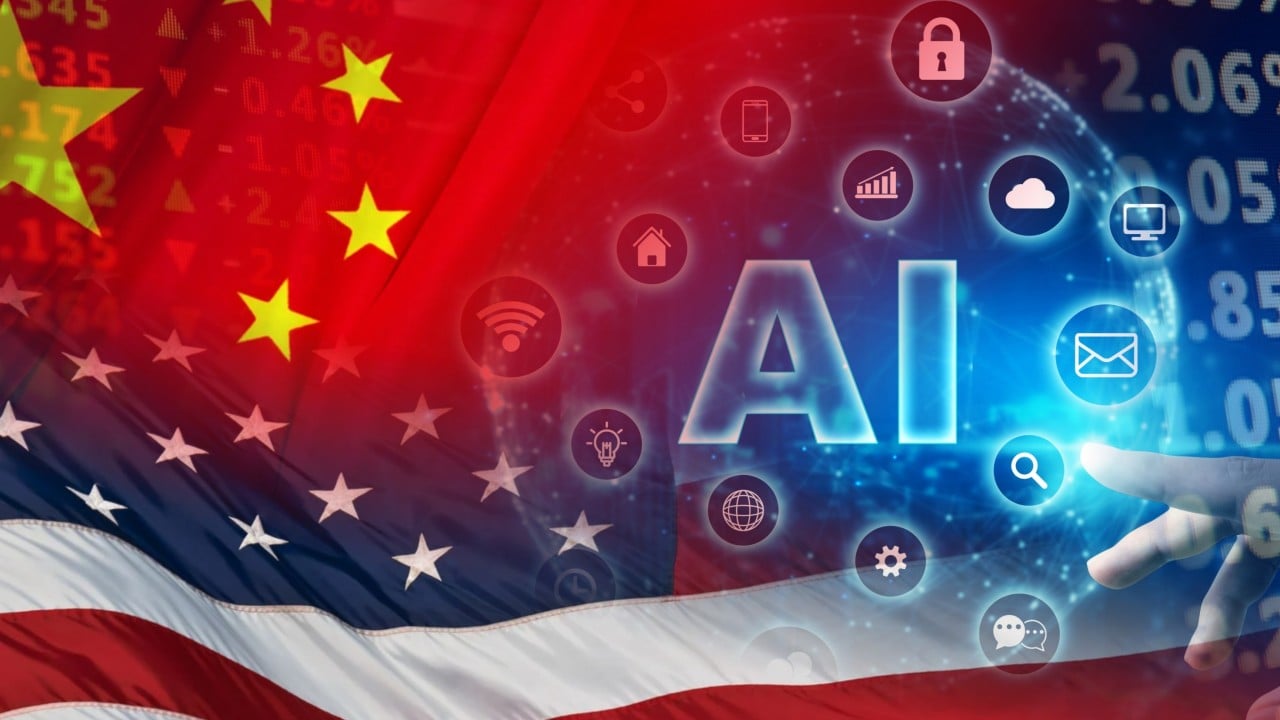
Everyone in Washington and Beijing loves talking about a unified rulebook for artificial intelligence. It sounds mature. It sounds diplomatic. It sounds like the adults are finally stepping into the room.
It is also complete nonsense.
The standard narrative claims that Washington and Beijing must avoid a rigid "us versus them" split on AI governance, lest we stumble into a cold war of algorithms. Analysts nod sagely, warning that fractured standards will break global supply chains and stall safety research.
They have it backwards. The push for a harmonized global governance framework is not a noble pursuit of peace. It is a strategic weapon designed to lock in incumbents and neutralize asymmetric advantages. Beijing does not need a compromise with Washington on AI standards. Beijing needs to build a completely separate gravity well.
The Consensus Trap
Let us look at the lazy consensus. The argument goes like this: AI is a global public good with existential risks. Therefore, superpowers must cooperate to draft shared guardrails, ethical baselines, and safety thresholds.
I have watched enterprise tech boards burn millions of dollars trying to comply with overlapping regulatory frameworks that change every six months. The compliance theater is deafening. But when applied to geopolitics, this desire for neat, tidy international agreements ignores the fundamental reality of state competition.
Technology is not neutral, and governance is never objective. Every rule etched into an international treaty reflects the domestic vulnerabilities and industrial priorities of the power that wrote it.
When Western institutions preach about universal AI alignment, they are smuggling specific values into global code. They want transparency mandates that expose proprietary training data. They want copyright protections that preserve legacy economic models. They want guardrails that enshrine Western notions of speech and safety.
If Beijing accepts this framework, it accepts a handicap. It agrees to fight a ground war with its hands tied behind its back, using a rulebook written by its primary competitor.
The Reality of Divergent Stacks
The tech world loves to talk about interoperability, but fragmentation is where the real leverage lives. Look at the physical and digital stacks emerging across the globe.
We do not have a single internet anymore. We have a splinternet characterized by distinct regional firewalls, payment rails, and cloud architectures. AI governance is following the exact same trajectory, only faster and with higher stakes.
China has already chosen a different path, prioritizing algorithmic security, content control, and state-directed industrial application over Western-style open-ended experimentation. The Generative AI Service Management Interim Measures issued by the Cyberspace Administration of China made this explicit. The state requires models to adhere to core socialist values and maintain social stability.
To Western commentators, this looks like censorship stifling innovation. That is a naive read. It reflects a fundamental difference in objective. Washington optimizes for individual expression, corporate agility, and market-driven disruption. Beijing optimizes for social cohesion, national security, and state-directed resource allocation.
You cannot harmonize these objectives. Trying to find a middle ground between them creates a regulatory Frankenbeast that satisfies nobody and slows everyone down.
The Myth of the Global Safety Standard
A common talking point among international relations experts is that without cooperation, rogue actors or unchecked labs will unleash dangerous foundational models. This assumes that safety is a universal mathematical constant that can be codified into law.
It is not. Safety is context-dependent.
A model deployed to manage automated power grids in industrial provinces requires a different risk matrix than a model generating marketing copy in Silicon Valley. By forcing a global standard, regulators are trying to fit square pegs into round holes.
Worse, safety standards are routinely weaponized as non-tariff trade barriers. When the European Union passes sweeping compliance laws or US lawmakers float stringent compute thresholds, they are protecting domestic giants from nimble foreign competitors. Compliance costs act as a moat. If Beijing plays the game of harmonizing with these standards, it is willingly walking inside that moat and locking the gate from the outside.
Why Divergence Wins
Smart strategists embrace structural divergence. Instead of wasting diplomatic capital trying to bridge an unbridgeable chamonix of political ideology, both sides should accept that they are building two distinct technological ecosystems.
Let them split.
When you stop worrying about a unified global standard, you unlock actual velocity. Chinese AI labs do not need to spend years lobbying international bodies or watering down their model architectures to clear Western bureaucratic hurdles. They can optimize for domestic hardware constraints, alternative silicon supply chains, and localized use cases that matter for industrial automation, smart manufacturing, and logistics optimization.
The real battleground isn't who writes the best rulebook for a shared global market. The battleground is whose ecosystem the rest of the developing world adopts.
Countries across the Global South are not waiting for Washington and Beijing to sing kumbaya. They are looking for functional infrastructure. They want tools that solve local problems, whether that is agricultural yield forecasting, vernacular language processing, or public health logistics. They will plug into whichever stack offers the highest utility with the fewest strings attached.
If Beijing tries to play the game of multilateral consensus-building, it gets bogged down in bureaucratic paralysis. If it instead exports a robust, self-contained, high-utility technological stack, it builds permanent spheres of influence.
The Strategic Playbook
Stop chasing alignment. Alignment is a euphemism for submission to the incumbent framework.
If you are running strategy in Beijing, your move is not to find common ground with Washington's regulatory paranoia. Your move is to double down on sovereign technological independence, secure your own silicon pipelines, and build governance frameworks that prioritize speed, industrial integration, and domestic resilience.
Let the West choke on its own compliance committees. Let them spend the next decade debating the philosophical nuances of synthetic data while your industrial base automates its supply chains at terminal velocity.
The future does not belong to the regulators who compromised on a universal standard. It belongs to the builders who stopped asking for permission to run a different race.