Capital flows like water through a breached dike, and the old neighborhoods of Bucharest take the brunt of the flood. Concrete mixers grind through dawn hours in districts where centuries-old masonry once settled in quiet decay. Cafes serving single-origin espresso at inflated prices replace small storefronts that survived four decades of communist planning and three decades of chaotic post-revolution capitalism. Yet amid the glass-fronted boutiques and real estate prospectuses sits an unexpected barricade. A greasy, salted cheese pastry wrapped in greaseproof paper holds the line.
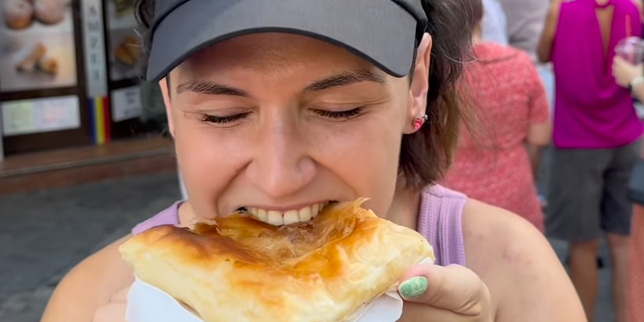
Known locally as merdeneaua, this heavy square of laminated dough stuffed with telemea cheese is more than a calorie-dense breakfast for commuters. It functions as an edible archive of a city losing its architectural and social memory. While urban planners write white papers on community displacement and neighborhood preservation, residents eat merdeneaua on street corners as an act of everyday resistance. The pastry represents a price point, a taste memory, and a physical presence that capital cannot easily gentrify out of existence without triggering open revolt.
The Anatomy of a Resistance Commodity
To understand why a snack food became a symbol of anti-gentrification struggles, one must look closely at what constitutes the Bucharest food economy. The city operates on stark dualities. On one side stands the burgeoning sector of specialty bakeries, artisan sourdough shops, and brunch spots catering to remote tech workers and returning diaspora. On the other side persists the traditional covrigărie, a ubiquitous street-level bakery format centered on cheap, fast, high-carbohydrate sustenance.
The merdeneaua anchors the covrigărie ecosystem. It costs a fraction of a specialty croissant. It requires no marketing agency, no minimalist interior design, and no brand story printed on recycled kraft paper. The recipe is brutally functional. Layers of flour and fat encase a core of sharp, salted sheep or cow milk cheese. It bakes into a dense, flaky square that leaves a film of oil on the fingers and provides sustained energy for a twelve-hour shift.
When neighborhoods transform, the first casualties are affordable daily goods. Rents skyrocket, landlords evict legacy tenants, and traditional bakeries shutter because their profit margins cannot absorb commercial real estate hikes. Yet the demand for the merdeneaua remains stubborn. Real estate developers might tear down interwar houses to erect glass apartment blocks, but the construction workers building those blocks eat merdeneaua for breakfast. The pastry exposes the absurdity of rapid gentrification by feeding both the victims of displacement and the foot soldiers of transformation at a price point that defies the neighborhood index.
Urban Renewal or Social Erasure
București is changing faster than its infrastructure can metabolize. Neighborhoods like Cotroceni, Dorobanți, and parts of Sector 2 have undergone aggressive transformations over the past decade. Historic villas, built in the eclectic neo-Romanian style, face demolition or abandonment by owners waiting for permits to build high-density offices. The municipality struggles to enforce heritage laws against well-connected developers.
In this climate, urban struggle rarely takes the form of massive street barricades. Instead, it plays out in micro-economies. The survival of traditional corner shops and bakeries serves as a barometer of working-class survival. When a neighborhood loses its last covrigărie, it loses its public square. The bakery counter acts as a democratic equalizer where students, pensioners, taxi drivers, and construction workers interact on equal terms.
Gentrification thrives on homogenization. It replaces the messy, textured reality of an old European capital with sanitized corridors designed for consumption by a wealthy demographic. The merdeneaua resists homogenization through its very imperfection. It is messy, greasy, unapologetically heavy, and deeply tied to local agricultural supply chains. The cheese used inside comes from local dairies that supply traditional markets rather than corporate supermarket chains. By consuming the pastry, locals actively finance an alternative economic circuit that bypasses the corporate landlords buying up the block.
The Economics of Survival
Behind every warm square of pastry lies a precarious supply chain. Bakers working in these independent shops face grueling night shifts, operating aging ovens in damp basements or cramped storefronts. The margins are thin. Every rise in utility prices, flour tariffs, or dairy costs threatens to push these small businesses over the edge.
Municipal authorities offer little protection. Local administrations often view traditional street-level commerce through the lens of sanitation and aesthetic compliance rather than cultural heritage. Sweeping modernization campaigns target informal kiosks and small vendors under the guise of cleaning up the urban landscape. Yet these policies disproportionately punish local enterprises while rolling out red carpets for international chains and franchise coffee shops.
Consumers recognize this dynamic. Buying a merdeneaua from an independent shop on Calea Moșilor or near Obor market is an intentional choice. It communicates a refusal to surrender the public realm entirely to venture capital and real estate syndicates. It says that the city belongs to those who live in it, work in it, and find comfort in its greasy, salt-heavy traditions.
Beyond the Nostalgia Trap
Romanticizing working-class food carries inherent risks. Critics argue that focusing on a cheap pastry trivializes structural socio-economic violence. Nostalgia for greasy street food cannot stop evictions, nor can it reverse the systematic financialization of housing. Condemning modern cafes while praising traditional bakeries risks sliding into an unhelpful romanticism of poverty, where the working class is expected to remain frozen in time for the aesthetic pleasure of onlookers.
The resistance embodied by the merdeneaua is not about preserving a museum piece. It is about economic survival and the right to the city. People do not buy these pastries out of sentimental historical reflection; they buy them because they are hungry, broke, and pressed for time in a city where wages have failed to keep pace with the cost of living. The political weight of the pastry arises precisely from its mundane necessity.
As cranes continue to dot the skyline and old masonry falls to make way for subterranean parking garages, the smell of baking dough and salted cheese remains constant. It lingers in metro stations, spills onto sidewalks from narrow doorways, and feeds a populace determined to maintain its footing on rapidly shifting ground. The merdeneaua does not defeat gentrification on its own, but it ensures that the people resisting displacement do not go hungry while they stand their ground.