Every major financial publication recently ran the exact same breathless headline celebrating China crossing another historic threshold in installed solar power capacity. Wall Street analysts popped metaphorical champagne. Environmental NGOs declared total victory over carbon. The lazy consensus is deafening: gigawatts on paper equal absolute energy security in the physical world.
It is a comforting bedtime story for people who have never had to balance a grid at two in the morning when the wind stops blowing and the sun sets.
I have watched corporate boards and state energy ministries blow millions on nameplate capacity metrics that hide a brutal physical reality. Raw installation totals are vanity metrics. They tell you nothing about dispatchability, curtailment, grid congestion, or the terrifying thermodynamics of intermittency.
China building terawatts of panels is an industrial marvel, but treating that milestone as the finish line of the energy transition is a category error of historic proportions.
The Nameplate Capacity Fraud
Let us start with the core deception poisoning every energy debate today: nameplate capacity.
When a press release states a country has hit a massive threshold of solar power, it refers to DC peak output under laboratory test conditions. That has roughly as much to do with real-world energy delivery as a sports car's speedometer reading has to do with its average speed in rush-hour traffic.
Solar capacity factors rarely cross twenty-five percent globally. A gigawatt of solar is not a gigawatt of coal or nuclear power. You need roughly four to five times the nameplate capacity of solar, plus massive overbuilding of storage, just to match the baseload output of a single thermal plant.
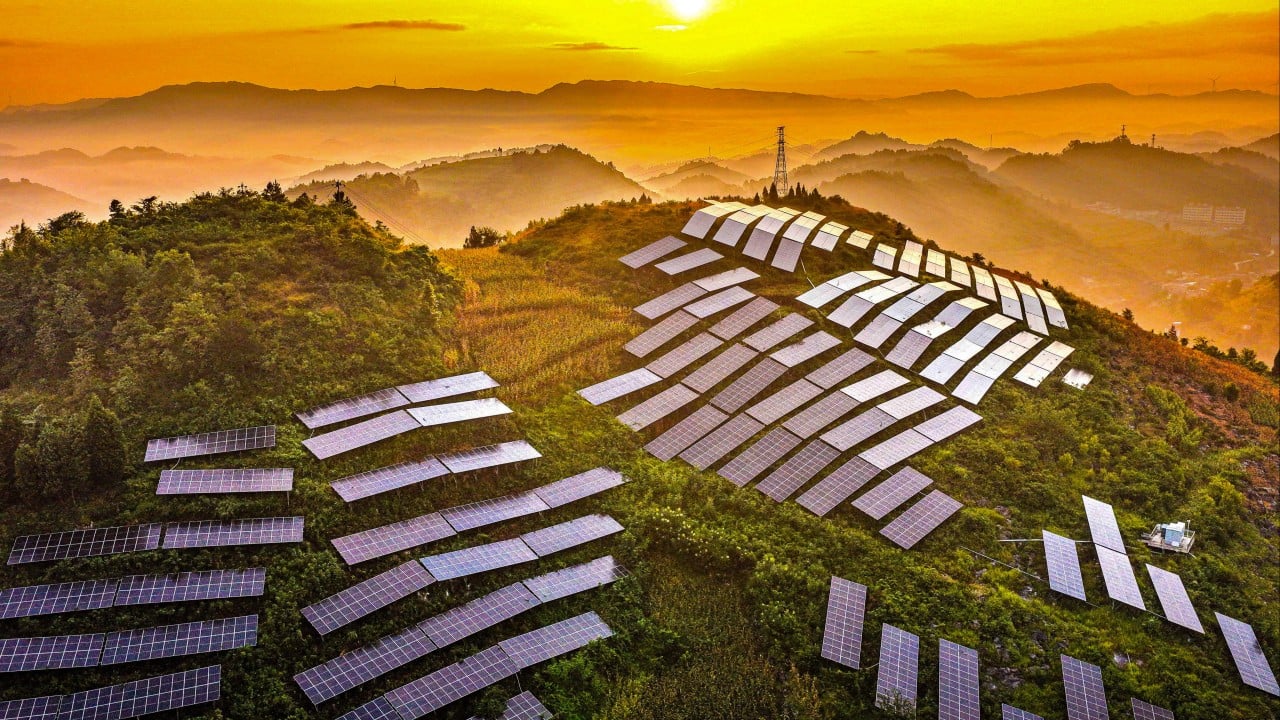
When you look at China's massive interior provinces, the mismatch gets worse. Vast tracts of solar farms are sitting in remote western deserts like Xinjiang and Inner Monogolia, far away from the industrial load centers on the eastern seaboard. The transmission lines cannot carry the load.
Curtailment rates are climbing fast. Billions of kilowatt-hours of clean electricity are being thrown away because the system cannot absorb the power when the sun actually shines. We are manufacturing hardware faster than physics allows us to consume it.
The Manufacturing Trap
The standard narrative paints China's industrial dominance in solar supply chains as a masterstroke of long-term planning. It is undeniably an industrial triumph, but it is also a massive economic trap.
Solar manufacturing is a commodity race to the bottom. Margins are razor-thin, capital expenditure requirements are astronomical, and overcapacity is a permanent state of being. Companies do not survive on high profits; they survive on state-directed credit and heavy subsidies.
When you flood the globe with cheap panels, you create an illusion of abundance while starving the rest of the supply chain of real pricing signals. Western competitors who tried to match the volume without state backing went bankrupt by the dozen.
I have spoken with project developers who bought cheap modules during the recent price crash, only to watch their balance sheets bleed out because the true cost was shifted downstream to mounting systems, land acquisition, labor, and interconnection delays.
The hardware is cheap. The system is expensive. Focusing on the panel cost while ignoring the balance-of-system cost is like buying a Ferrari for fifty dollars and realizing you have to pay a million dollars a year for custom tires.
What the Grid Actually Cares About
Ask any grid operator what keeps them awake at night. It is never a shortage of nameplate capacity on a sunny Tuesday afternoon. It is the ramp rate.
As the sun sets and industrial demand peaks, fossil fuel generators have to ramp up with terrifying speed to fill the void. This is called the duck curve, and it is eating power markets alive.
To manage this, coal plants are forced to run at low, inefficient part-load conditions, chewing up equipment and burning fuel inefficiently just to stay warm and ready. Alternatively, gas peaker plants are fired up, undermining the carbon reduction math that justified the solar buildout in the first place.
Building more solar does not solve the duck curve. It deepens the belly of the duck. It makes the evening ramp steeper, faster, and more violent.
Without storage capacity that can scale to multi-day or seasonal durations—storage that does not currently exist at the required scale or economic price point—every new solar panel installed past a certain grid penetration percentage increases systemic fragility.
The Uncomfortable Downsides
A truly contrarian take has to admit its own flaws. The solar revolution is not a scam; it is an incredible engineering achievement that has driven the cost of generation down to historic lows.
Distributed solar has given factories and remote communities a degree of autonomy that was unimaginable twenty years ago. In localized microgrids, it works brilliantly.
However, scaling that microgrid logic to a continental industrial economy is where the math breaks down. Proponents of 100 percent renewable grids love to wave away the mineral constraints, the land-use conflicts, and the recycling liabilities.
Silver, silicon, copper, aluminum, and glass extraction have heavy environmental footprints. When you require five times the land area for energy collection compared to fossil fuels, you run straight into ecological pushback from conservationists and local communities who do not want their horizons covered in glass and steel.
Pretending these trade-offs do not exist does the clean energy movement no favors. It creates a brittle consensus that shatters the moment a major grid failure occurs and the public realizes that cheap energy is useless if it is not reliable energy.
The Right Question
Stop asking how many gigawatts of solar capacity a country has installed. It is a vanity metric designed for politicians eager for ribbon-cutting ceremonies.
Ask instead: What is the total system cost of delivered, dispatchable energy during a multi-day winter low-wind, low-sun weather pattern?
Until our metrics reflect physical reality rather than marketing wishful thinking, we will continue celebrating milestones while sleepwalking toward systemic grid instability. Turn off the press releases, look at the transmission bottlenecks, and start accounting for the physics of the dark.