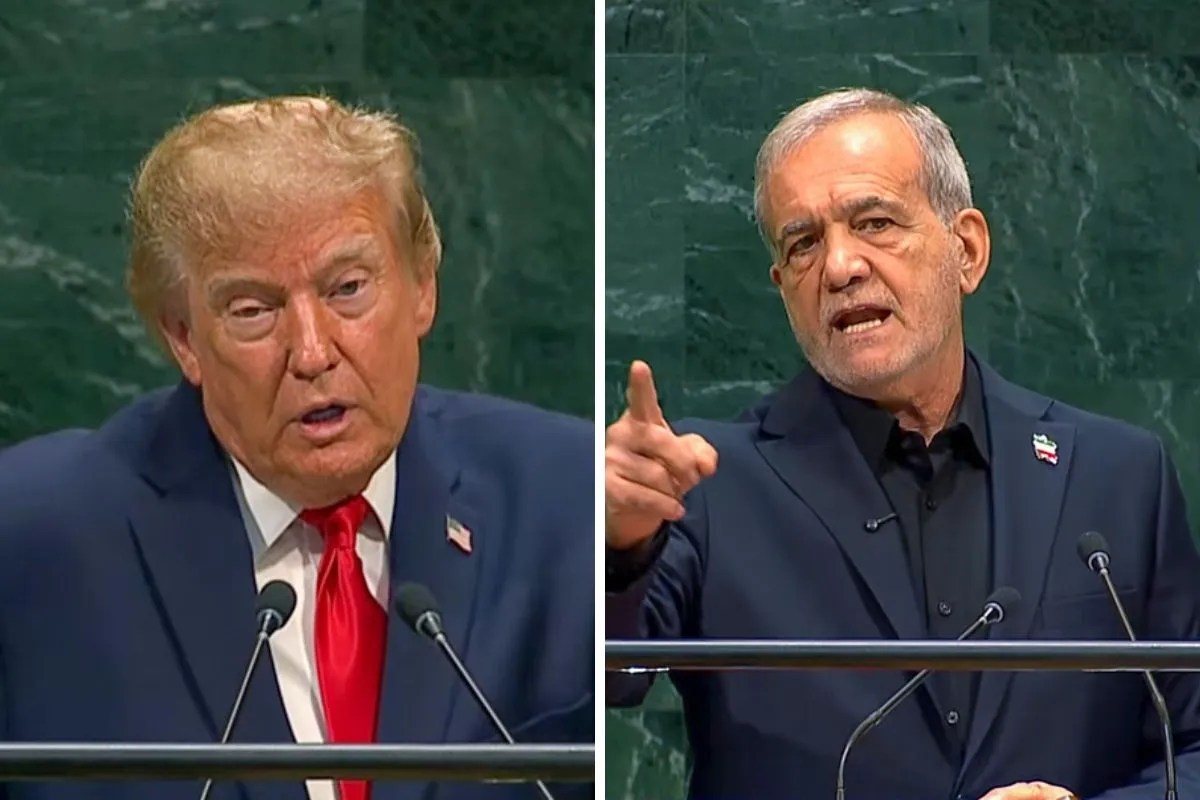
Calling the nuclear file a mere pretext sounds sharp at a press briefing. It is lazy analysis in print.
When Iranian diplomats and commentators frame the nuclear dispute as Washington's convenient cover story while pointing to domestic military readiness as the real deterrent against American force, they hand commentators an easy binary. Either the nuclear program is the core problem, or it is a smokescreen hiding an appetite for pressure and regime coercion. Both versions flatten how crisis bargaining actually works.
Here is the contrarian truth nobody wants to sit with: treating the nuclear issue as a "mere excuse" underestimates how dangerous the nuclear file itself is, while treating conventional military readiness as a neat shield against US escalation overestimates what readiness can prevent.
The Wrong Question Everyone Keeps Asking
Most coverage around statements from figures like Abbas Araghchi asks a binary question: Is the nuclear program the real issue, or is it just an excuse for broader hostility?
That is the wrong question. In international politics, "pretext" and "substantive driver" are rarely opposites. A state can care deeply about preventing nuclear proliferation—or extracting maximum diplomatic leverage from a threshold program—while simultaneously using that leverage to push back against sanctions, regional containment, and military pressure. Pretending the nuclear file is only a distraction ignores why adversaries build enrichment capacity and breakout options in the first place. You do not spend years mastering centrifuge cascades, fuel enrichment, and technical know-how just to hand over a prop.
I have watched policy teams and analysts misread high-stakes standoffs for decades because they fell in love with a single master narrative. Some treat every diplomatic objection as pure bad faith. Others treat every military posture signal as an ironclad guarantee of restraint. Both habits get people blindsided when calculations shift.
To read this standoff accurately, we have to separate three distinct mechanisms that get lumped together in soundbites:
- Deterrence by denial and cost: Raising the expected price of an attack through air defenses, dispersed assets, missiles, and regional proxy networks so an attacker fears casualties, prolonged entanglement, or economic shock.
- Escalation dynamics: The risk that a limited strike, cyber operation, or maritime clash spirals into something neither side fully budgeted for.
- Bargaining leverage: Using unresolved disputes—nuclear, regional, or economic—to extract concessions or prevent total isolation.
Deterrence is not a light switch that is either "on" or "off." It is a sliding scale of perceived costs, timelines, and political tolerance for risk.
Why "Readiness Deters Aggression" Is Only Half a Story
Pointing to military readiness as proof that US aggression is deterred captures a real piece of the equation. Major military action carries steep costs: regional retaliation, shipping disruptions, political blowback, and the risk of a wider war. Any serious strategist in Washington or anywhere else has to weigh those costs before pulling a trigger.
Yet readiness does not create an automatic forcefield. History is crowded with armed states that believed their preparations made an adversary think twice—right up until the adversary chose a narrower, calibrated, or indirect form of pressure instead.
Thomas Schelling, whose work on coercive diplomacy and bargaining remains foundational in strategic studies, made a crucial distinction between brute force and the pain and risk that shape decisions. Robert Jervis similarly emphasized how misperception and security dilemmas distort how each side reads the other's defensive preparations as offensive threats. Readiness can deter a full-scale invasion while failing to stop covert sabotage, sanctions enforcement, cyber operations, or limited strikes aimed at specific targets.
Deterrence works best when both sides agree on where the tripwires sit—and breaks down fastest when one side thinks it holds a veto and the other thinks it is managing a contained risk.
Consider a thought experiment. Imagine a scenario where a country builds an impressive array of missiles and air defenses, confident that the sheer cost of retaliation deters direct attack. An outside power decides a massive ground campaign is off the table, yet still concludes that targeted strikes on specific infrastructure or supply chains carry manageable blowback. Both sides can look at the same military balance sheet and walk away with opposite conclusions about what is "deterred."
That is why claiming readiness deters aggression proves too little if you mean it stops all forms of coercion, and proves too much if you treat past restraint as a permanent guarantee. Restraint in one month is data, not destiny.
How the "Excuse" Framing Backfires on Its Own Side
There is an irony in arguing that the nuclear issue is merely an excuse. If you convince audiences—at home or abroad—that the nuclear question is mostly theater, you unintentionally weaken the case for treating nuclear restraint or diplomacy as urgent on its own merits.
Hardliners on the other side love that framing just as much, for the opposite reason. If hawks believe diplomacy over enrichment or inspection limits is just stalling or cover anyway, they argue there is little point in patient negotiation. Both camps end up validating a cynical loop where every offer looks like a trap and every threat looks like posturing.
Let us be clear about the terms. Sovereignty is a state's legal and practical authority over its territory and policy choices. Deterrence is the credible threat of punishment or cost that persuades another actor not to take an unwanted action. Leverage is the ability to impose costs or withhold benefits to shape an outcome.
Confusing those three terms leads to bad bets. Having leverage in a negotiation is not the same as having airtight deterrence against military strikes. And asserting sovereignty over a program does not erase the security reactions that program triggers among neighbors and rival powers.
What People Actually Get Wrong in Everyday Questions
"Is the nuclear issue just an excuse to pressure Iran?"
That question smuggles in a false choice. It can be both a genuine strategic concern for states that oppose nuclear proliferation and a convenient focal point for broader geopolitical pressure. Reducing it to "just an excuse" is like calling the brakes on a car "just an excuse" to slow down. Sometimes the mechanism itself is the whole point.
"Does military readiness stop the US from attacking?"
It raises the cost and narrows the menu of plausible options, which is no small thing. It does not make every form of military action impossible. Leaders rarely launch wars they think will be cheap and easy, yet they do sometimes accept higher costs when they believe inaction carries an even higher price—or when they miscalculate how far the other side will go.
"Why do officials keep repeating that readiness deters aggression?"
Because domestic and regional audiences are part of the message. Public confidence is a currency in high-stakes standoffs. Projecting strength signals resolve, reassures allies or supporters, and tries to convince rivals that backing down is off the table. Treating public rhetoric as a literal, complete account of military risk is a mistake every seasoned analyst warns against.
Where My Own Contrarian Take Has Blind Spots
A sharp contrarian view has real weaknesses if you push it too far, and pretending otherwise would be dishonest.
First, focusing on nuance and structural incentives can sound bloodless when real people and economies are absorbing the strain of sanctions, isolation, and constant crisis footing. Analytical detachment is useful for clarity, not as a substitute for human cost.
Second, emphasizing the limits of readiness can slide into fatalism if a reader concludes that preparation never matters. It does matter. Costly deterrence shapes calculations every single day, even when it does not produce a neat, permanent peace.
Third, outside observers always face an information gap on intent. What looks from the outside like calculated restraint might actually be internal debate, operational caution, or shifting priorities behind closed doors.
How to Read Headlines Like This Without Getting Played
If you want to cut through the noise the next time you see a headline pitting "excuse" against "readiness," run it through four practical checks:
- Separate the grievance from the goal. Ask what concrete concession, boundary, or behavior change each side is actually trying to force—not just what label it puts on the dispute.
- Watch actions over adjectives. Words like readiness, aggression, and excuse carry heavy emotional weight. Track force posture, diplomatic channels, economic moves, and escalation thresholds instead.
- Price in the middle ground. Most moves in prolonged standoffs sit between full-scale war and warm reconciliation. Look for calibrated pressure, signaling, and face-saving off-ramps.
- Check who benefits from the binary. Whenever a story tells you there are only two sides—and one is pure truth while the other is pure bad faith—assume someone is trying to do your thinking for you.
Stop falling for slogans that pretend complex standoffs run on a single motive. Look at the costs, watch the leverage, and judge every claim by what it actually explains.