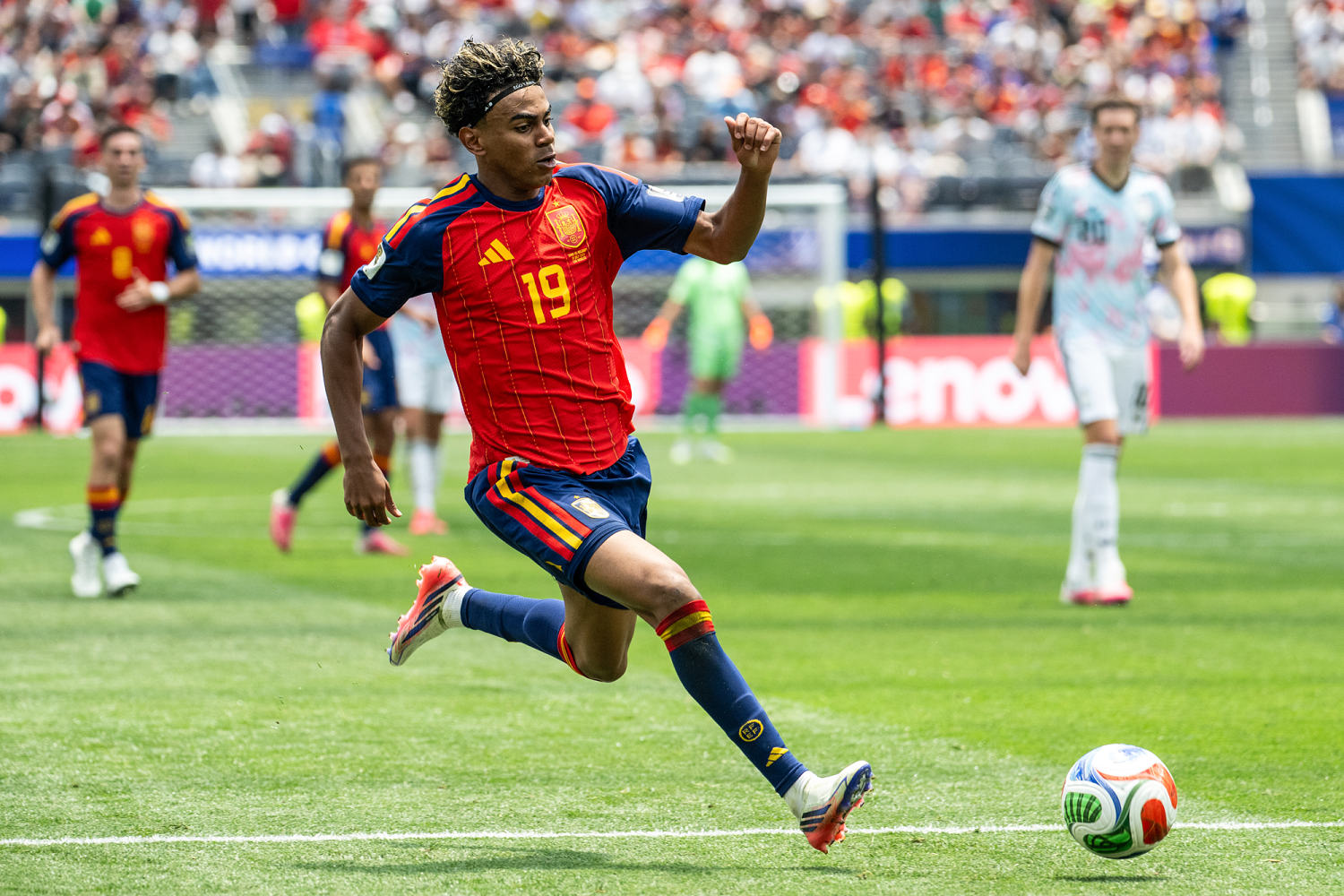
The upcoming World Cup semifinal between Spain and France is not just a meeting of twenty-two elite athletes. It is a war for the very soul of modern football. While casual observers focus on the glittering roster of stars, the real story lies in the profound ideological divide between two nations that have dominated the global game for a generation. This match will decide who plays for the trophy, but more importantly, it will validate one of two fiercely competing blueprints for how football should be played at the highest level.
Spain represents the unwavering commitment to collective geometry and possession. France represents the brutal efficiency of individual athleticism and structural pragmatism. It is the ultimate collision of system versus superstar. The winner of this tactical chess match will establish the dominant template for national team structures heading into the next decade.
The Illusion of Spanish Domination
Spain’s journey to this semifinal has been characterized by their trademark suffocating possession. They pass teams into submission, stretching the pitch until gaps inevitably open. On paper, it looks flawless. Beneath the surface, however, Spain's reliance on positional perfection masks a glaring vulnerability that a team like France is uniquely equipped to exploit.
The Spanish system requires absolute synchronization. When a single gear slips, the entire machine grinds to a halt. In previous tournament exits, we saw this manifest as "sterile possession"—thousands of passes with zero penetration. While the current squad has injected more verticality through dynamic wingers, they still lack the raw, unpredictable individual brilliance that can bail a team out when a tactical plan fails.
Spain's defensive line plays high up the pitch to compress the playing space and win the ball back immediately upon losing it. This counter-pressing is highly effective against mid-tier opposition. Against world-class transition players, it is a high-wire act without a net. One misplaced pass in the middle third, and Spain’s central defenders are left isolated in fifty yards of open space. It is a gamble they choose to take, believing their offensive stranglehold will minimize these transition moments.
The Grim Efficiency of Didier Deschamps
To watch France under Didier Deschamps is to watch a masterclass in risk mitigation. France does not care about style points. They do not care about dominate possession statistics or satisfying the purists. They care about winning.
Deschamps has constructed a side that is comfortable suffering. They will happily defend in a compact low block for seventy minutes, letting the opposition pass side-to-side, waiting for the precise moment to strike. It is a reactive, almost cynical brand of football, but its success is undeniable.
The French blueprint relies on structural defensive solidity paired with absolute freedom for their attacking superstars. When France wins the ball deep in their own half, they do not build up patiently. They launch vertical missiles. The speed with which France transitions from defense to attack is unmatched in international football. It takes them three passes to travel eighty yards, turning an opponent's corner kick into a French goal in the span of twelve seconds.
This approach minimizes the physical toll on the players over a long tournament. By letting the opposition run themselves ragged chasing the ball, France stays fresh for the moments that actually matter. It is cold, calculated, and incredibly difficult to beat.
The Tactical Fault Lines
The outcome of this semifinal will be decided in three specific zones on the pitch. These are not merely individual matchups; they are the pressure points where the two contrasting philosophies will directly collide.
The Half-Space Battleground
Spain creates their best chances by overloading the half-spaces—the channels between the opponent's center-backs and full-backs. They do this through intricate triangular passing sequences involving their central midfielders and inverted wingers.
France counters this by deploying an incredibly disciplined, narrow defensive shape. Their midfielders do not chase the ball; they protect the space directly in front of the penalty box. If Spain cannot penetrate these central corridors, they will be forced to cross the ball from wide areas. This plays directly into the hands of France’s physically imposing central defenders, who dominate aerial duels. Spain must find a way to drag the French center-backs out of position, or they will spend ninety minutes crossing into a brick wall.
The Counter-Press vs. The Long Release
The moment Spain loses possession is the most dangerous phase of the game for both teams. Spain will immediately swarm the ball-carrier with three or four players, attempting to win it back within five seconds.
If France's midfielders can bypass this initial wave of pressure with a quick, first-time pass to their outlets on the flanks, Spain will be exposed. If Spain’s counter-press succeeds, they keep France pinned in their own defensive third, starving the French attackers of service. This sequence will repeat itself dozens of times throughout the match. Whichever team wins this specific transition battle wins the game.
The Physicality Deficit
International tournaments are physical grinds. Spain’s players rely on agility, quick scanning, and technical precision. France’s squad is built on elite athleticism, strength, and recovery speed.
As the match wears on into the second half, the physical disparity will become more pronounced. If Spain has not broken the deadlock by the sixty-minute mark, the physical fatigue of constantly chasing transitions and trying to break down a low block will begin to show. France excels at punishing tired minds and legs in the final third of matches.
The Existential Stake
The implications of this match stretch far beyond a spot in the final.
For the last fifteen years, football academies worldwide have attempted to replicate the Spanish model of possession-based play. It became the gold standard of footballing education. Yet, if Spain falls to a pragmatic, counter-attacking French side, it will further cement the narrative that possession football is a luxury of the past, unsuited for the hyper-athletic reality of the modern international game.
A French victory reinforces the idea that tournament football is won by defensive solidity and individual moments of genius, rather than elaborate collective systems. It suggests that the role of the modern manager is not to implement a complex philosophy, but to create a stable defensive platform and get out of the way of the superstars.
Conversely, a Spanish victory would prove that a well-drilled collective system can still dismantle the most expensive assembly of individual talent on earth. It would be a triumph for the theorists and the purists, proving that control is still the ultimate weapon in football.
The tactical battle lines are drawn. Spain will have the ball. France will have the space. The team that blenches first under the weight of their own philosophy will find themselves watching the final from the sidelines.