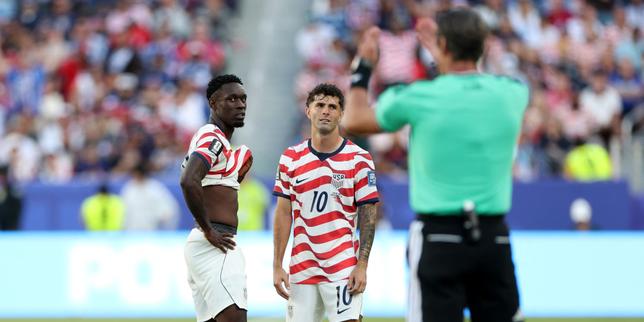
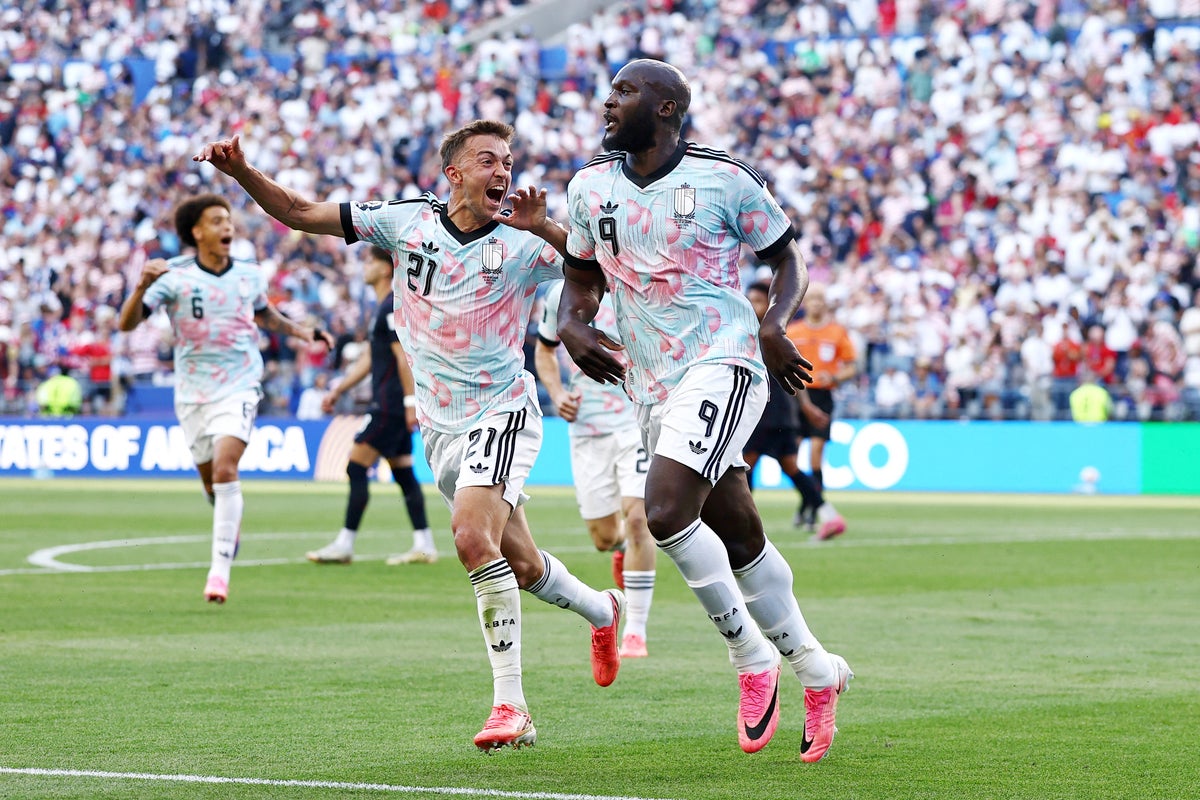
External political commentary directed at national athletic teams introduces a quantifiable operational tax that degrades performance by shifting organizational bandwidth from technical execution to crisis mitigation. When a head of state or high-profile political figure publicly critiques a national squad during a major tournament like the World Cup, the intervention disrupts the insulated environment required for elite athletic execution. This phenomenon operates through three distinct mechanisms: narrative inflation in the media ecosystem, cognitive load accumulation within the squad, and institutional friction inside the governing federation.
Analyzing these vectors reveals that political intervention functions as a performance-degrading variable rather than a mere public relations challenge. The standard sports commentary often attributes squad failures under political scrutiny to vague notions of distraction or lack of patriotism. A structural analysis demonstrates that the breakdown occurs because the inputs required for high-stakes athletic victory are fundamentally incompatible with the chaotic feedback loops of modern political polarization.
The Mechanics of Narrative Inflation
The primary vector through which political commentary impacts a national team is the immediate distortion of the media environment. In an ordinary tournament cycle, the press core focuses on tactical setups, squad rotation, injury recovery, and opponent analysis. This football-centric focus aligns the external narrative with the internal objectives of the coaching staff.
When an executive political figure enters the discourse with a highly critical or polarizing stance, the media architecture undergoes an immediate structural shift.
- Topic Displacement: The ratio of tactical questions to political questions in press conferences shifts dramatically. Media outlets that do not traditionally cover sports enter the press room, looking for cultural or political soundbites rather than athletic analysis.
- Forced Binary Positioning: Athletes and coaching staff are forced into a binary position. They must either validate the political critique, challenge the political figure, or attempt a neutral evasion. Each option carries distinct risks.
- Feedback Amplification: The domestic audience fractures along political lines, turning match broadcasts and social media interactions into proxy battlegrounds for broader cultural debates.
This narrative inflation changes the nature of the information the players consume. Instead of analyzing film or reviewing tactical adjustments, the squad is forced to navigate a media environment where every statement is scrubbed for political alignment. The administrative staff must reallocate time to draft media guidelines, brief players before press appearances, and manage corporate sponsors who become skittish when associated with highly polarized public debates.
The Cognitive Load Model in Elite Athletics
Elite athletic performance relies on the optimization of cognitive reserves. At the World Cup level, physical capabilities across competing squads are largely normalized. The differentiating factor is executive function under extreme pressure—specifically, rapid decision-making, spatial awareness, and emotional regulation.
Political critique introduced from an external authority source imposes an uncompensated cognitive load on the athletes. This load operates across two psychological dimensions.
Identity Conflict and Performance Anxiety
National team athletes operate under a collective identity framework where they represent an entire geopolitical entity. When the leadership of that entity publicly disavows the squad or conditions its support on ideological alignment, the psychological contract of representation breaks down. The athlete is no longer just competing against an opposing team; they are performing under the scrutiny of an internal judge who has primed a segment of the domestic population to root for their failure.
This introduces an acute form of evaluation apprehension. The fear of failure is no longer confined to sports-specific consequences, such as elimination from a tournament or dropped market value. It expands to include the prospect of targeted public hostility, career-threatening boycotts, and prolonged digital harassment.
Attentional Narrowing and Decision Fatigue
Under normal conditions, an athlete’s focus during a match is directed outward toward the game state: ball trajectory, opponent positioning, and tactical cues. High cognitive load shifts attention inward. The athlete begins to consciously monitor automated movements and worry about the consequences of errors.
This internal focus slows down processing times by milliseconds. In international soccer, a delay of 200 milliseconds in identifying a passing lane or executing a defensive transition changes an effective action into a turnover or a conceded goal. The constant need to process external political noise during the hours leading up to a match drains the finite mental stamina required to maintain peak focus over 90 minutes.
Institutional Friction and Structural Bottlenecks
The damage caused by external political commentary is not limited to the minds of the players; it introduces severe operational bottlenecks within the governing sports federation. National federations are built to manage sporting logistics, youth development, and commercial partnerships. They are poorly equipped to act as political shield organizations.
The second limitation of these organizations becomes apparent when they are forced to manage an active political crisis during a live tournament.
[Political Critique Launched]
              │
              ▼
[Federation Leadership Shifted to Crisis Management]
              │
              ▼
┌─────────────────────────────┴─────────────────────────────┐
│                                                           │
▼                                                           ▼
[Reallocation of Media Staff]              [Sponsor Stabilization Protocols]
│                                                           │
└─────────────────────────────┬─────────────────────────────┘
              │
              ▼
[Slowing of Sport-Specific Technical Support Systems]
This structural bottleneck removes the logistical agility required to support an elite team. If the federation's executive leadership is preoccupied with holding emergency meetings with nervous corporate partners or issuing clarifying statements to national media networks, their primary function is compromised. Resources that should be directed toward optimizing travel recovery, sports science interventions, and scouting intelligence are instead consumed by defensive public relations.
Frameworks for Managing External Polarity
To prevent external commentary from degrading performance, sports organizations must treat political noise as an environmental hazard, similar to high altitude or extreme humidity. It must be quantified, prepared for, and mitigated through structured operational protocols.
The Information Sanction Protocol
The most direct method to combat narrative inflation is the implementation of a strict information sanction during the tournament window. This protocol requires a complete decoupling of the squad from the domestic media ecosystem.
- Media Distancing: Restricting player press obligations to the absolute minimum mandated by the tournament organizers (FIFA). Replacing individual player interviews with highly managed, single-spokesperson press conferences led by a trained media relations officer.
- Digital Decoupling: Enforcing a collective hiatus from personal social media platforms for the duration of the competition. This eliminates the direct delivery mechanism for external political critique and public hostility.
- Local Environment Insulation: Securing the team hotel and training facilities to ensure that non-sporting media and political actors cannot gain physical or visual access to the squad.
The Tactical Anchor Method
To counteract the cognitive load of external criticism, coaching staffs must implement a coaching philosophy that anchors the player's focus exclusively to measurable, objective performance metrics. When the external world introduces ambiguous, emotionally charged narratives, the internal environment must offer absolute clarity.
Coaches must replace subjective performance goals with highly specific, non-negotiable tactical metrics. Instead of instructing a squad to "play for the country" or "prove the critics wrong," the technical staff must define success through structural indicators: maintaining a compact 4-4-2 defensive block within a 30-meter vertical window, achieving a 75% success rate on counter-pressing sequences within five seconds of a turnover, or maximizing post-shot expected goals ($xG$) through specific zone penetrations.
These metrics give the brain a concrete, technical problem to solve, effectively crowding out the anxiety generated by external political actors.
The Strategic Outlook for National Programs
The intersection of politics and international sport is a permanent feature of the modern global entertainment economy. Expecting political figures to refrain from using national teams as rhetorical tools is strategically naive. National federations must accept that political variance is a permanent risk factor in every tournament cycle.
The future readiness of national teams will be determined by their capacity to build institutional resilience against narrative warfare. Programs that treat political critique as an unpredictable surprise will continue to see their squads rattled and eliminated early. Federations that integrate political risk mitigation directly into their high-performance blueprints will successfully preserve their athletes' cognitive bandwidth, ensuring that match outcomes are decided by tactical superiority on the pitch rather than rhetorical posturing from the capital.