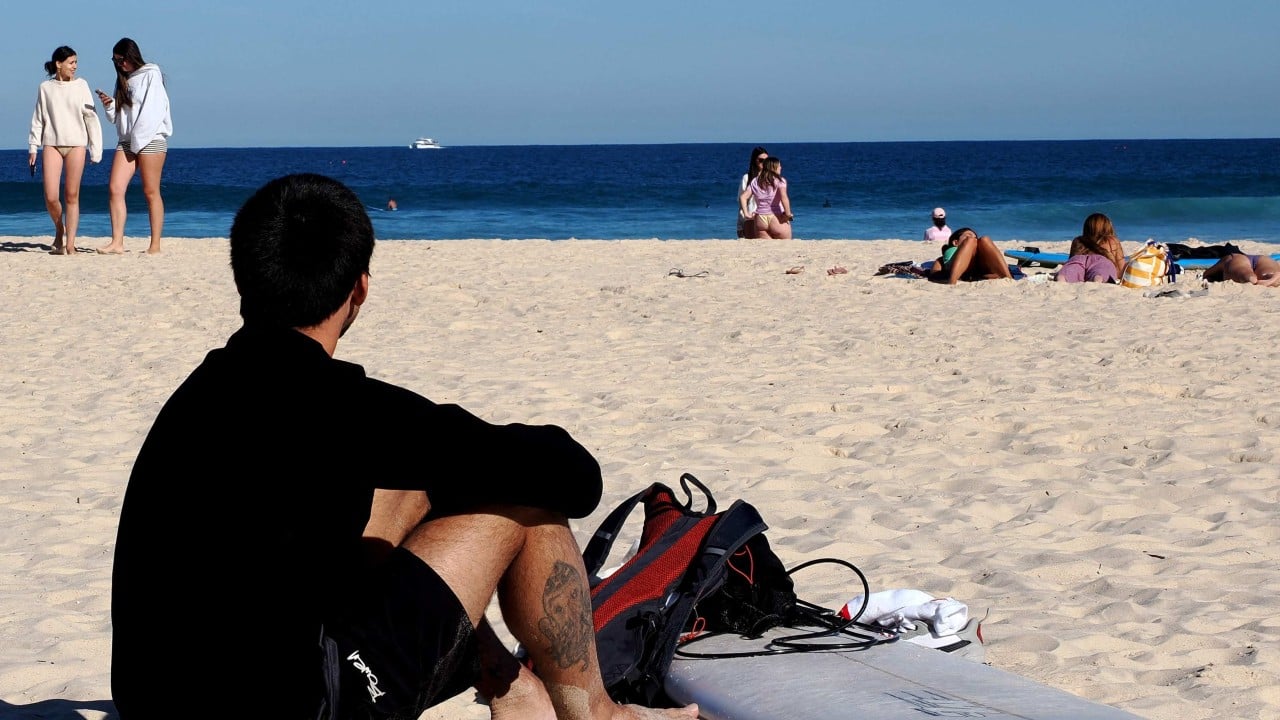
The air in the hostel kitchen smells of burnt toast, cheap instant coffee, and the sharp, anxious sweat of twenty-something ambition. Outside, the Sydney sun is burning the morning mist off the asphalt, turning the harbor into a sheet of hammered silver. Inside, the blue light of a laptop screen illuminates twenty-two-year-old Liam’s face. He has saved for three years in Leeds, working double shifts at a fulfillment center, packaging parcels he could never afford to buy, all for a single, luminous promise: the Australian working holiday.
He stares at the notification. Visa application fees have climbed again. The mandatory proof of funds requirement has ballooned. The rules governing regional work—the grueling months of picking fruit under a furnace-like sky that grant access to a second year—have tightened into a bureaucratic labyrinth designed more to filter out the weary than to support the fields.
Liam closes the lid. The silver reflection of his own tired eyes stares back.
He is not alone. Across oceans and time zones, hundreds of thousands of young travelers are running a silent, desperate calculation. They are asking themselves a question that governments in Canberra seem entirely blind to: At what point does an adventure become a luxury item reserved only for the privileged?
To understand what is happening to the Australian working holiday visa, you have to strip away the glossy tourism campaigns of koalas dozing in eucalyptus trees and golden stretches of sand untouched by footprints. You have to look at the ledger. But more than that, you have to look at the human cost of treating youth mobility as an economic valve to be squeezed whenever inflation pinches or housing markets groan.
Every year, generation after generation of twenty-somethings arrives in Australia with oversized backpacks, battered passports, and a specific kind of courageous naivety. They arrive broke in spirit from post-industrial towns in the UK, expensive European capitals, or sleepy North American suburbs. They want what humans have always wanted when they are young: space to breathe, distance from expectation, and the terrifying thrill of total independence.
For decades, the Working Holiday Maker program—spanning the Subclass 417 and Subclass 462 visas—has functioned as an unwritten social contract. Australia offered open horizons, minimum wage protections, and a chance to fund your own wandering by picking fruit, pouring pints in remote pubs, or cleaning hotel rooms in tourist enclaves. In return, the travelers offered their youth, their sweat, and an immediate injection of foreign capital directly into regional economies that would otherwise wither on the vine.
It was a brilliant, messy, symbiotic ecosystem.
Until the math stopped working.
Consider what happens in a place like Stanthorpe or Griffith when the political wind shifts. Row upon row of apple trees bend under the weight of ripening fruit. The soil is rich, iron-red, and ancient. But the orchardist, a man named Arthur whose family has worked this stubborn earth for three generations, walks the rows with a heavy heart. The fruit is ready. The market is waiting. But the hands are missing.
Arthur is not an economist. He does not talk about net overseas migration figures or housing supply elasticities during parliamentary debates in Canberra. He talks in pounds of discarded fruit, in rotting crops, in thousands of dollars evaporating into the stifling Queensland air because the bureaucratic barriers to entry for seasonal labor have grown too high.
When visa application fees rise steeply—pushing past six hundred dollars before a single flight is booked—it weeds out the exact demographic the scheme was built for. It does not deter the wealthy trust-fund traveler from Zurich or London; it locks out the working-class kid from Glasgow or Dublin who had to scrape together every penny just to afford the plane ticket. It turns a rite of passage into an exclusionary club.
And then there is the regional work mandate. To secure a second or third year in the country, backpackers must complete specified work in regional areas. For years, this meant the iconic "farm work"—a grueling initiation rite involving sunburns, blistered palms, sore backs, and shared rentals in overcrowded country houses where five people sleep in a caravan.
Many backpackers accepted the hardship because the reward at the end was tangible: more time in a country that felt like freedom. But as oversight lagged, stories of exploitation multiplied. Unscrupulous employers pocketed cash wages, underpaid sub-contractors skirted labor laws, and housing conditions in remote shacks sparked national scandals.
Instead of fixing the enforcement mechanism—instead of cracking down on the bad actors who exploit vulnerable foreign workers—the policy response has often been blunt and heavy-handed. Visa pathways have been restricted, fees raised, and regulatory hoops multiplied. The message sent across the globe, intentional or not, is clear: You are welcome to spend your money here, but we are going to make it exceptionally difficult, expensive, and stressful for you to earn it back.
The consequences ripple outward in concentric circles, touching corners of the economy that bureaucrats in suits never visit.
Drive three hours inland from the coast, past the great dividing range where the green gives way to the sun-baked gold of the bush. You will find small towns whose pulse is entirely synchronized with the arrival and departure of transient youth. The backpacker is not just a farm hand; they are the tenant who keeps the local caravan park afloat during the off-season. They are the customer who buys a second-hand Toyota hatchback from a departing traveler, keeping local mechanics employed. They are the volunteer who helps set up the annual agricultural show, the face behind the bar at the local bowls club, the vibrant, chatty energy in communities that are slowly graying as their own youth drift toward the capital cities.
When backpacker numbers contract due to visa cuts, fee hikes, and hostile rhetoric, these towns feel it immediately. It is a slow, quiet bleeding. The pub closes an hour earlier because there aren't enough staff to stay open. The fruit rots on the branch. The local council struggles to find enough hands for tourism and hospitality roles that domestic workers, concentrated in major urban centers hundreds of kilometers away, have no interest in filling.
Governments often frame these policy adjustments around the housing crisis. The narrative is neat, tidy, and politically potent: young foreigners are taking up rental properties that belong to locals.
Yet, scratch beneath the surface of this populist talking point, and the reality fractures. Backpackers do not typically compete for the long-term family rentals in suburban capitals where the housing crunch is most acute. They live in hostels, share-houses, regional caravan parks, and seasonal farm quarters—spaces that domestic renters rarely occupy. Blaming international youth mobility for systemic failures in urban housing policy is a convenient political sleight of hand, substituting a visible scapegoat for structural inaction.
Meanwhile, other nations are watching Australia slam its doors with undisguised opportunistic glee.
Canada, New Zealand, and parts of Europe have recognized that the global battle for young, mobile talent is intensifying. They are streamlining their working holiday programs, offering digital nomad visas, and marketing themselves as welcoming havens for adventurous youth. A twenty-year-old sitting in a bedroom in Berlin weighing their options now looks at the mounting fees, the complex tax structures, and the bureaucratic friction of an Australian visa, and clicks on a competitor's website instead.
They choose Vancouver over Melbourne. They choose Auckland over Brisbane.
And with them goes more than just labor. They take their curiosity, their future tourism dollars, their lifelong cultural affinity for the country, and the irreplaceable vitality they inject into a nation built by immigrants and travelers.
Think of Maya. She made it to Australia last year, landing in Perth with a backpack heavier than her worldly possessions. She spent three months picking stone fruit in the scorching heat of the Riverland, her hands stained with peach juice and calloused by wooden crates. She didn't complain. She loved the vast, indifferent sky, the red dirt that clung to her sneakers like iron filings, and the nightly campfire chats with Germans, Koreans, and Brits who were all trying to figure out who they were before the world demanded answers.
When her visa conditions came up for review, she faced a maze of certified document translations, health checks, and escalating fees that threatened to wipe out her savings entirely. She stayed, but she left with a bitter taste. The country that had marketed itself as a sun-drenched paradise had treated her like a bureaucratic inconvenience at every border crossing and tax office window.
She will tell her friends back home not to bother. She will remember the exorbitant fees, the endless waiting times, and the pervasive sense that she was viewed not as a human being seeking adventure, but as a potential compliance risk.
That is the true cost of these visa restrictions. It is not just measured in unpicked fruit or short-staffed cafes. It is measured in the erosion of goodwill. A nation's greatest asset is its international reputation—the intangible warmth that makes people halfway across the globe dream of its shores, sing its praises, and feel a sudden, inexplicable tug at their hearts when they see a photograph of its coastline.
You cannot quantify that warmth on a spreadsheet. You cannot tax it, regulate it, or legislate it into existence. But you can extinguish it very easily, one fee hike, one restriction, and one closed door at a time.
The sun continues to rise over the Sydney harbor, indifferent to policy papers and parliamentary debates. In hostels from Cairns to Hobart, new arrivals still unpack their bags, breathing in the scent of adventure mixed with instant coffee. But the margin for error is shrinking. The dream is becoming more fragile, guarded by gates that grow higher and heavier with every passing legislative session.
If the trend continues, the wide brown land will find itself increasingly isolated, not by geography, but by design. And the silence in the orchards, when the fruit falls unpicked to the earth, will be deafening.



