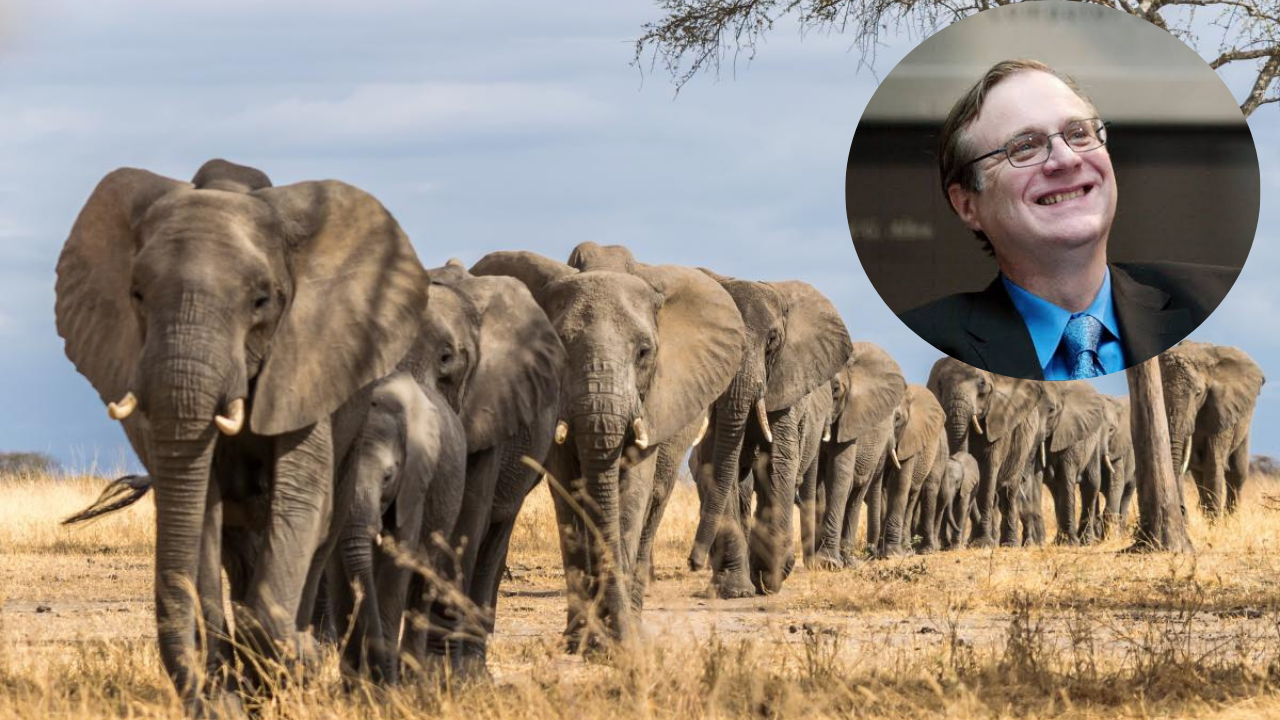
Wildlife conservation suffers from a chronic data deficit, forcing policy decisions to rely on anecdote rather than empirical inventory. When tech executive Paul Allen financed the Great Elephant Census at a cost of seven million dollars, the initiative attempted to resolve a fundamental market failure in conservation economics: pricing assets accurately. By deploying standardized aerial surveys across eighteen African countries, the project mapped 352,271 savanna elephants and established that populations had contracted by 30 percent between 2007 and 2014.
This contraction represents an annual attrition rate of 8 percent, driven primarily by illegal ivory extraction and systemic governance gaps. Deconstructing this capital loss requires analyzing the variables governing wildlife population dynamics, the economics of anti-poaching enforcement, and the structural flaws in habitat management. Meanwhile, you can find other events here: Why Ottawa Is Dropping Millions on Nova Scotia Businesses Facing U.S. Tariffs.
The Economic Mechanics of Poaching and Carcass Ratios
Evaluating wildlife depletion requires moving beyond raw mortality counts to analyze the carcass ratio—the proportion of dead elephants observed relative to total population counts. Conservation science dictates that a natural annual mortality baseline sits below 5 percent. When the carcass ratio crosses 8 percent, populations enter a steep trajectory toward local extinction.
The Great Elephant Census documented carcass ratios exceeding this critical threshold across multiple monitored zones, with extreme outliers like northern Cameroon registering ratios as high as 83 percent. This metric functions as an operational indicator of enforcement failure. To see the bigger picture, check out the recent report by CNBC.
[Poaching Pressure] --> [Carcass Ratio > 8%] --> [Negative Population Growth] --> [Local Extinction]
The supply chain of illicit ivory operates on high margins and low perceived risk for local actors, contrasting sharply with the high fixed costs of protection. Poachers capture immediate liquidity, while conservation agencies bear recurring expenditures for aerial surveillance, ranger salaries, and intelligence networks. This cost asymmetry ensures that traditional enforcement units are perpetually underfunded relative to transnational criminal syndicates.
Spatial Distribution and the Myth of Protected Areas
A critical finding of the continent-wide survey was the spatial distribution of survival rates. Approximately 84 percent of all enumerated savanna elephants resided within legally designated protected zones. Conventional conservation theory assumes that legal status provides an effective shield against anthropogenic mortality. The empirical data refutes this assumption.
High carcass ratios inside legally protected areas indicate that paper boundaries fail to translate into operational security. Parks operate as open-access resources when state budgets cannot sustain perimeter defense.
- Resource Diffusion: Anti-poaching units spread thinly across vast geographical expanses cannot maintain deterrent visibility.
- Institutional Corruption: Weak governance structures within specific jurisdictions allow transit corridors for contraband to bypass checkpoints.
- Border Permeability: Wildlife movements cross sovereign lines where enforcement capacity drops abruptly, exposing herds to localized hunting pressure.
Consequently, legal protection status functions as a weak proxy for actual security. Protection depends entirely on the density of active patrolling and real-time intelligence infrastructure rather than governmental decrees.
Divergent Regional Trajectories
The continental contraction of 30 percent masks significant regional variance. Aggregated metrics obscure micro-economic and localized political conditions that dictate whether a herd grows or collapses.
The Collapse Zones
Angola, Mozambique, and Tanzania experienced catastrophic contractions that vastly outpaced historical models. In these areas, institutional breakdown, widespread corruption, and inadequate ranger deployment converged to create high-yield environments for commercial poaching networks.
The Stability Hubs
Conversely, populations in southern Africa—specifically Botswana, Zimbabwe, and parts of South Africa—remained stable or exhibited modest growth. Botswana alone accounted for over 37 percent of all savanna elephants counted during the survey. These divergent outcomes demonstrate that population stability correlates directly with centralized resource allocation, disciplined institutional management, and sustainable utilization frameworks that align local economic incentives with conservation outcomes.
Capital Reallocation and Intervention Strategy
Solving the structural decline of large mammalian populations requires shifting from reactive philanthropic funding to proactive asset management. Deploying capital into periodic censuses identifies the scale of loss, but stopping the trajectory demands continuous operational expenditure.
Governments and international bodies must transition from broad-scale preservation to targeted asset defense. Intelligence-led enforcement targeting high-level trafficking syndicates rather than low-level poachers optimizes capital efficiency. Simultaneously, economic models that return direct value to communities coexisting with wildlife must replace top-down restrictions that alienate local populations. Without aligning the economic incentives of local stakeholders with the survival of the asset, conservation budgets will continue to subsidize a managed decline.