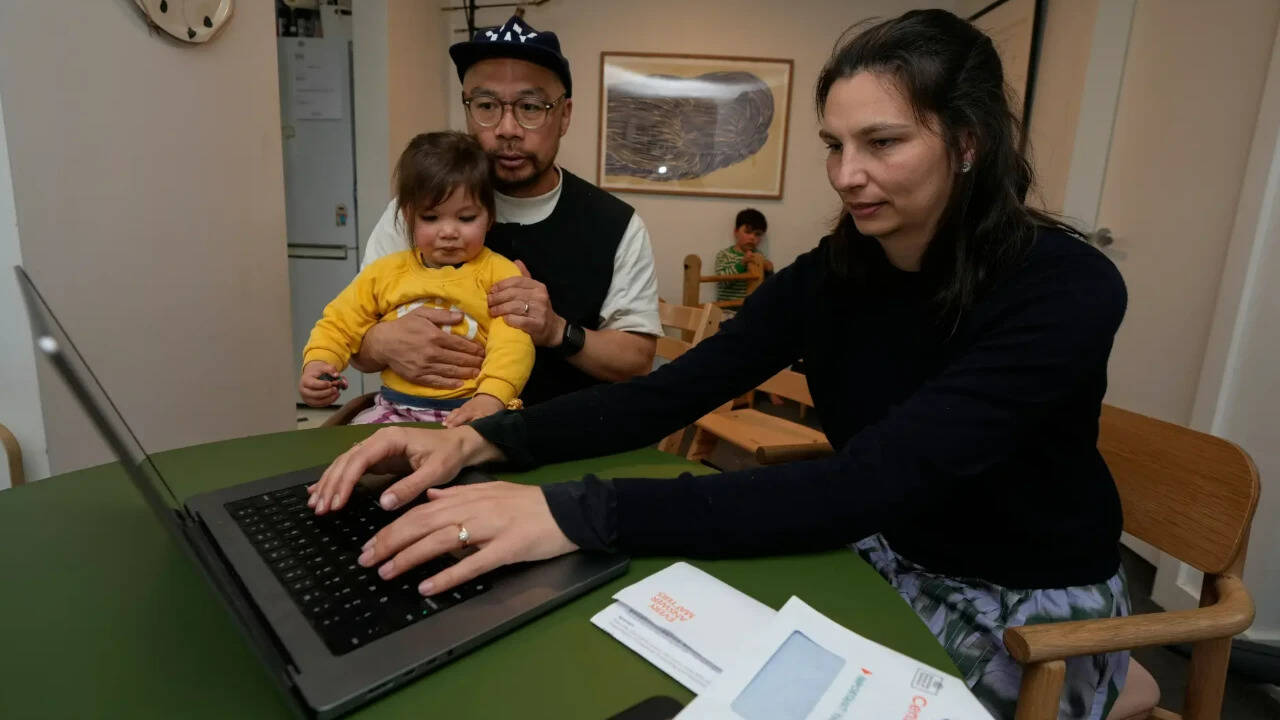
For generations, official paperwork has operated on a quiet assumption. It assumes that human lives fit neatly into standard boxes, that families are built from predictable blueprints, and that identity is something easily summarized by a single, narrow glance. But paperwork has a memory made of ink, and ink can only record what it is told to see.
For millions of Australians, official forms have long functioned like a blurry mirror. You stand in front of them, filling out the required details for a national census, yet the reflection staring back at you misses the contours of your actual existence. You check a box because it is required, knowing full well it erases the truth of who you share your life with, or how you move through the world.
That silence is finally breaking.
In a historic shift, the Australian census is officially asking about sexual orientation and gender identity for the very first time. It is a modification so simple on its face that it feels overdue, yet its implications cut straight to the core of how a modern society acknowledges its own people.
To understand why this matters, you have to step away from the abstract realm of government policy and look at what happens in an ordinary living room on a quiet Tuesday night.
Imagine Julian and Marcus. They have lived together in a modest brick home in Melbourne for eight years. They share a mortgage, two rescue greyhounds, and an endless debate over who makes better sourdough bread. When the previous census forms arrived in the mail, Julian sat at the kitchen table holding a black pen. He looked at the question regarding relationship status and marital definitions. Because they were not legally married, the official categories offered by the state offered two choices: pretend their household did not exist in its truest form, or check a generic box that lumped them in with unrelated roommates sharing a lease.
It felt small. But small cuts accumulate over time. When a government fails to count you, it inadvertently signals that your struggles do not warrant resources, that your community health needs do not require funding, and that your family structure is an administrative afterthought.
Data is not just a collection of cold numbers stored on government servers. Data is visibility. Data is the foundation upon which hospitals build specialized support programs, schools design inclusive policies, and aging services prepare for populations that do not have traditional family safety nets.
When a nation refuses to ask certain questions, it chooses a convenient form of blindness. It can look at its populace and declare that everything is uniform, orderly, and uncomplicated.
Critics of the change often raise predictable concerns. They worry about privacy, administrative burden, or the government collecting information that feels overly personal. These are valid anxieties in an era where digital surveillance is a constant hum in the background of daily life. Nobody wants their private identity weaponized or carelessly exposed.
Yet, participation in these specific questions is voluntary. The intent is not to pry, but to protect. Consider what happens when local health authorities try to allocate funding for targeted mental health initiatives or preventative care for LGBTQ+ communities. Without accurate demographic data, they are flying blind. They rely on guesswork, estimates, and academic extrapolation. Guesswork does not secure hospital funding. Guesswork does not build safe spaces for elderly citizens who spent decades hiding who they were.
To make this tangible, think about the way a city maps its roads. You do not design a transportation network by guessing how many cars drive down a dirt path. You count the traffic. You measure the weight of the commute. You look at where the bottlenecks form. Only then do you pave the highway.
For decades, queer and gender-diverse Australians have been navigating a highway built without proper measurements.
The inclusion of these questions marks a transition from administrative invisibility to active acknowledgment. It is a recognition that a nation is strongest when it has the courage to look at itself honestly, without filtering out the parts that complicate the traditional narrative.
Change of this magnitude rarely happens overnight. It is the result of years of tireless advocacy by community leaders, researchers, and ordinary citizens who refused to accept that their stories did not belong on official records. They wrote letters, pushed for pilot studies, and explained patiently to skeptical bureaucrats that counting people does not change who they are—it simply ensures they are not forgotten.
When the next census forms land in letterboxes across the country, millions of Australians will pick up their pens. Some will check boxes that have always been there. Others will pause, hover their pens for a fraction of a second, and make a mark that has never been permitted before.
That brief pause represents something profound. It is the sound of a silent population stepping into the light. It is the moment an entire country stops guessing at who its people are, and finally has the grace to ask.