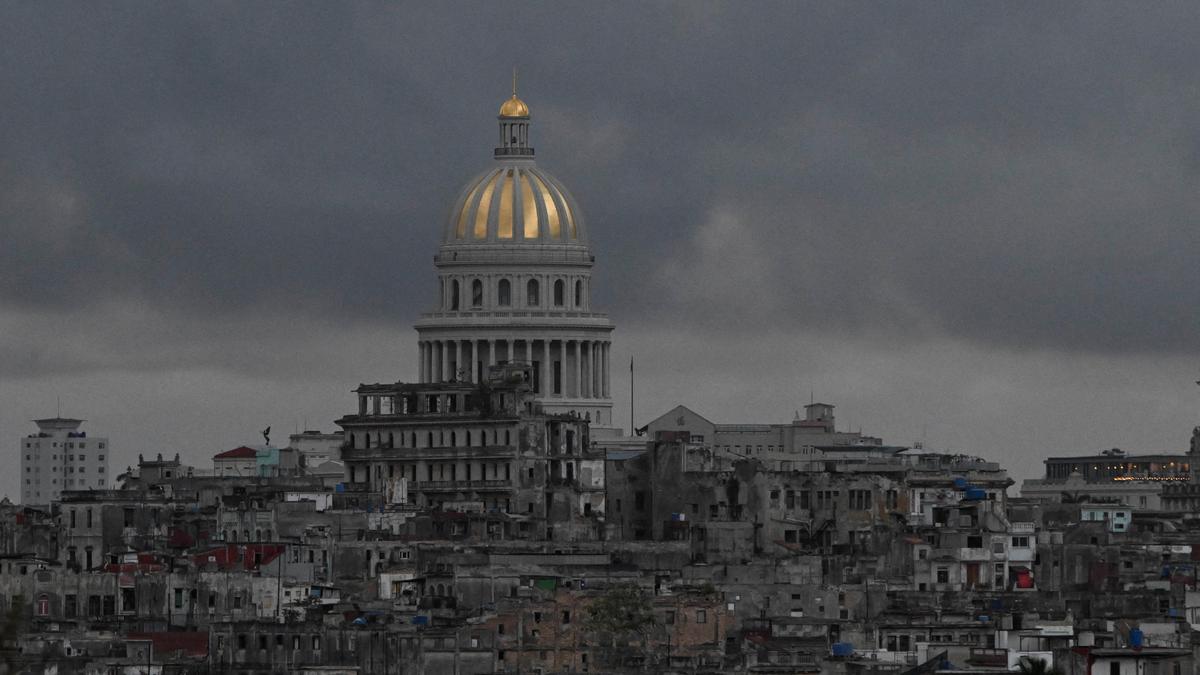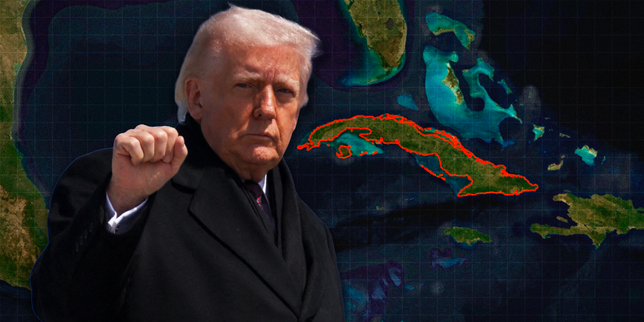
Donald Trump did not always want to crush the Cuban economy. In fact, for a long stretch of his career as a private developer, he wanted to build on it. The shift from a mogul eyeing the "Monte Carlo of the Caribbean" to a president wielding "maximum pressure" as a blunt instrument is not a story of ideological conversion. It is a calculated pivot where Florida electoral math met a decades-old real estate grudge.
The primary driver behind the current hardline stance is the belief that the path to the White House runs through the 305 area code. By systematically dismantling the Obama-era "thaw," Trump secured a grip on the Cuban-American vote in South Florida that transformed the state from a perennial toss-up into a reliably red stronghold. However, beneath the stump speeches about "fighting socialism" lies a more complex web of influence involving hand-picked hardliners like Marco Rubio and a history of frustrated business ambitions that predate his political rise.
The Mogul Who Wanted Havana
Before he was the champion of the embargo, Donald Trump was a businessman looking for an opening. In the late 1990s and again in the mid-2010s, the Trump Organization actively scouted the island. Internal documents and investigative reports have shown that his associates explored hotel and golf course opportunities, sometimes in direct conflict with the very sanctions he now champions.
In 1998, Trump’s company reportedly paid consultants to travel to Havana to find investment leads. Later, as Barack Obama began opening the door to American travel and commerce in 2014, Trump’s executives were back on the ground. They weren't there to protest the Castro regime; they were there to see if a Trump Tower Havana was feasible. When the political winds shifted and it became clear that the Republican base—and specifically the powerful exile lobby in Miami—would never tolerate a "deal" with the Communist Party, the business strategy died so the political strategy could live.
The Architects of Pressure
The transformation of U.S.-Cuba policy into a weapon of domestic politics was finalized by a small, dedicated circle of advisors. Marco Rubio, once a bitter rival nicknamed "Little Marco," became the "shadow Secretary of State" for Latin America. Alongside Mauricio Claver-Carone, a former pro-embargo lobbyist, they engineered a return to Cold War-era isolationism.
This team did not just revert to old rules. They invented new ones. They triggered Title III of the Helms-Burton Act, a provision previously suspended by every president since 1996, which allows U.S. citizens to sue companies "trafficking" in property confiscated by the Cuban government decades ago. This move was a tactical nuke aimed at European and Canadian investors, effectively chilling foreign investment on the island.
The goal was simple: create such intense economic misery that the system would collapse. While the collapse has yet to happen, the "maximum pressure" campaign successfully achieved its secondary, perhaps more important goal: convincing Florida's Republican voters that Trump was their only true ally.
The Florida Math
The electoral reality is undeniable. In 2016, Trump won roughly half of the Cuban-American vote in Florida. By 2020, after years of aggressive anti-Havana rhetoric and the designation of Cuba as a State Sponsor of Terrorism, that number surged. He didn't just win Florida; he dominated the Hispanic precincts of Miami-Dade, a feat previously thought impossible for a modern Republican.
For the Trump campaign, Cuba is a low-cost, high-reward lever. Unlike the complex wars in the Middle East or the high-stakes trade standoff with China, squeezing Cuba carries almost no political risk at home. There is no powerful "pro-Cuba" lobby in Washington to rival the well-funded and organized exile groups in Miami. Every new sanction is a headline in the Diario Las Américas, and every headline translates to votes in Hialeah.
A Legacy of Scarcity
The human and economic cost of this obsession is measured in more than just election data. The return to a hardline stance, combined with the global pandemic, sent the Cuban economy into its worst tailspin since the collapse of the Soviet Union. Shortages of fuel, medicine, and food have become chronic.
The strategy assumes that desperation leads to uprising. Instead, it has largely led to migration. The 2022-2024 period saw a historic exodus of Cubans fleeing to the United States—ironic, given the administration's simultaneous focus on border security. By crushing the Cuban economy to win votes in Miami, the policy inadvertently fueled the very migration crisis that dominates the rest of the political agenda.
The obsession with Cuba is a closed loop. It is a policy designed by Miamians, for Miamians, executed by a president who understands that in American politics, perception of strength is often more valuable than actual diplomatic results. As long as Florida remains the crown jewel of the electoral map, the "Havana poker game" will continue, regardless of whether the cards being played actually lead to a change in government on the island.
Would you like me to analyze the specific economic impact of the Helms-Burton Act's Title III on European investments in Cuba?