The rain in Zamboanga City does not fall so much as it presses down, thick and warm, smelling of salt, diesel, and wet concrete. If you stand near the port at dusk, watching the wooden jungkong boats rock against the pilings, you realize how porous a border really is. Water does not respect lines drawn on diplomatic maps. Neither do the men who slip across the Sulu-Sulawesi seas under the cover of a moonless squall, carrying rusted rifles wrapped in oilcloth and ideologies forged ten thousand miles away.
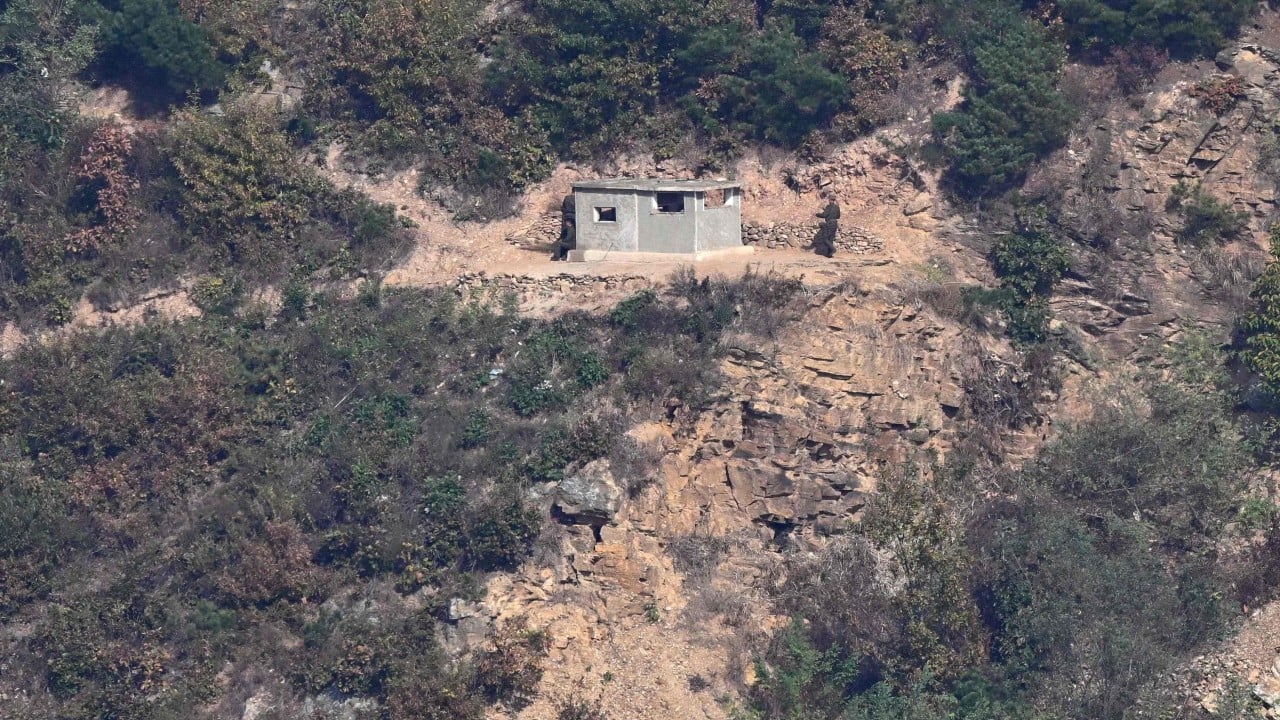
Three thousand miles to the west, in the arid scrubland along the Line of Control in Kashmir, the air tastes entirely different. It is sharp with woodsmoke, high-altitude dust, and the metallic tang of snowmelt. Here, the threat does not arrive by outrigger canoe. It moves through mountain passes at twelve thousand feet, backed by state-sponsored logistics, thermal imaging, and heavy artillery.
Two worlds. Two entirely different anatomies of violence.
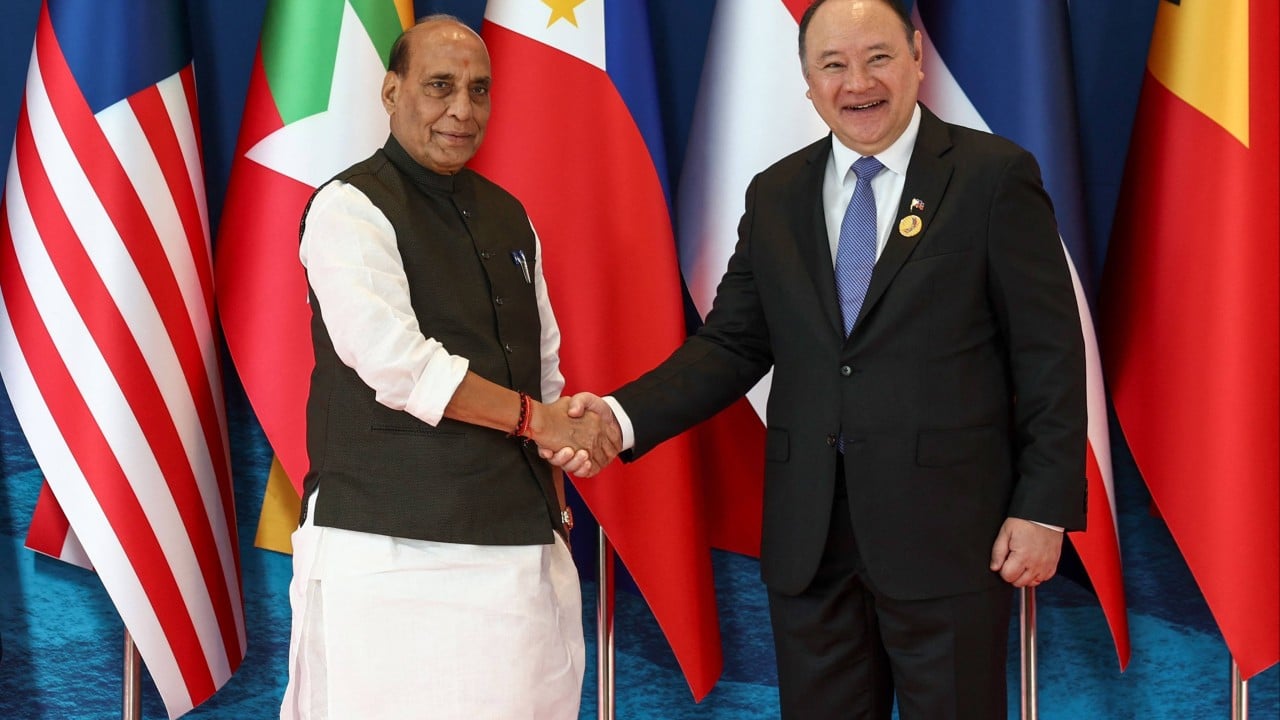
Yet, in the quiet, air-conditioned conference rooms of New Delhi, Jakarta, and Manila, a seductive idea has taken root. India, hardened by decades of brutal insurgency and cross-border militancy, is stepping forward as a security mentor to Southeast Asia. Through joint naval patrols, intelligence-sharing pacts, and specialized training academies, New Delhi is offering its counterterrorism playbook to the ten nations of ASEAN.
On paper, the logic looks airtight. Why shouldn't a rising power with battle-tested experience help its neighbors fortify their gates?
Because security is not software. You cannot simply download a patch written for the Himalayas and expect it to run smoothly in the archipelagos of the South China Sea. When nations mistake shared anxiety for shared reality, they build walls that look terrifying from the outside—and crumble at the first quiet knock from within.
The Weight of the Scar
To understand why India’s offer carries so much gravitational pull, you have to sit with the sheer scale of what the country has endured. I remember standing outside the Taj Mahal Palace hotel in Mumbai years after the 2008 attacks, running my fingers over the repaired stone facade. Even decades later, the air around Colaba carries a subtle, unspoken vigilance. You see it in the way guards check the undercarriage of every sedan with mirrors on long poles, and in the practiced, unblinking gaze of commuters scanning unattended bags at Chhatrapati Shivaji Terminus.
India did not learn counterterrorism from textbooks. It learned it in blood.
Following the sixty-hour siege of Mumbai—where ten gunmen armed with assault rifles, grenades, and satellite phones paralyzed a megacity and killed 166 people—New Delhi overhauled its entire security architecture. They created the National Investigation Agency, stitched together fragmented state police forces into the Multi-Agency Centre, and transformed their coastal radar networks from blind spots into an electronic tripwire. Before 2008, an intelligence officer in Delhi might sit on a warning that a local constable in Maharashtra desperately needed. Today, that pipeline is pressurized, centralized, and relentless.
When Indian diplomats sit across the table from their counterparts in ASEAN, they bring the quiet authority of survivors who rebuilt the house while the storm was still raging.
Consider a hypothetical defense attaché—let us call him Colonel Arjun—sitting in a briefing room in Singapore. Arjun has spent twenty years tracking militants through the dense forests of Chhattisgarh and the frozen ridges of Kupwara. When he speaks to officers from Indonesia, Malaysia, and the Philippines about signal interception, biometric border tracking, and cutting off terror financing, they lean in. They have seen the wreckage in Bali, in Jakarta, and in the shattered concrete skeleton of Marawi City in the southern Philippines, where Islamic State-linked militants held an entire urban center hostage for five months in 2017.
Both regions face the specter of radicalized networks exploiting porous borders and disaffected youth. Both understand that a single failure of intelligence can unravel years of economic progress in an afternoon.
So, when New Delhi extends its hand—offering everything from BrahMos supersonic cruise missiles to counter-radicalization workshops and joint military exercises like SIMBEX—ASEAN listens. The region is caught in a vice between escalating maritime tensions in the South China Sea and the persistent, shapeshifting threat of domestic extremism. Having a democratic heavyweight like India in their corner feels like buying insurance from the only broker who has actually survived a hurricane.
The Geography of Ghosts
But the real problem lies elsewhere.
Walk away from the diplomatic communiqués and step into the lived reality of Southeast Asia, and India’s hard-edged doctrine begins to hit invisible walls. To see why, you have to understand how terror actually breathes in the Malay Archipelago versus the Indian subcontinent.
Think of counterterrorism like medicine. India’s approach is akin to high-dose trauma surgery—designed for acute, external punctures. For decades, New Delhi’s primary challenge has been state-sponsored cross-border infiltration. When militants cross from outside your borders with military-grade hardware, the state responds with overwhelming kinetic force, hardened perimeters, and centralized federal control. The enemy is clearly demarcated. The state’s monopoly on violence is fiercely asserted.
Now, picture a hypothetical intelligence analyst in Jakarta—let’s name her Sari.
Sari is not looking for battalions crossing a mountain ridge. She is looking at a twenty-two-year-old university dropout in Surabaya who works at a cell phone repair kiosk by day and moderates three encrypted Telegram channels by night. This young man has never held an assault rifle. He does not take orders from a foreign intelligence agency. His radicalization happened entirely inside a digital echo chamber, fueled by local grievances, economic stagnation, and algorithms that reward outrage. When he finally acts, he does not storm a parliament building; he builds a pressure-cooker bomb in his mother’s kitchen using fertilizer bought at a neighborhood hardware store.
How do you use a centralized, military-heavy playbook against a ghost who lives down the street?
You don't. In fact, if you apply India’s heavy-handed kinetic tactics to Southeast Asia’s hyper-localized insurgencies, you risk pouring gasoline on the very fire you are trying to extinguish.
Look at the southern Philippines. For fifty years, Manila tried to bomb, patrol, and legislate its way out of the Moro insurgency in Mindanao. Every time the military flattened a village to flush out twenty fighters, two hundred angry brothers and cousins picked up rifles the next morning. Peace only began to take root when the strategy shifted away from pure tactical suppression toward political autonomy, community-led policing, and addressing the generational poverty that made militant groups look like the only functioning welfare system in town.
India’s own experience in Kashmir and the Northeast shows how difficult it is to pivot away from a militarized posture once it becomes entrenched. Laws like the Armed Forces Special Powers Act (AFSPA), which grant security forces sweeping immunity in disturbed areas, have kept a lid on large-scale territorial loss, but they have also left deep, festering wounds of alienation among local populations.
For ASEAN nations—many of which are fragile, multi-ethnic democracies still negotiating the delicate balance between civil liberties and state power—importing a doctrine built on uncompromising state force is a dangerous gamble. What protects New Delhi could easily fracture Jakarta or Kuala Lumpur.
The Architecture of Hesitation
There is another, quieter friction at play here, one that rarely makes it into the official press releases after an India-ASEAN summit. It is the fundamental difference in how these two entities make decisions.
India is a unitary giant with a centralized security apparatus. When the Prime Minister’s Office decides that a threat requires immediate escalation, the machinery moves as one.
ASEAN, by contrast, is an orchestra without a conductor. Built on the bedrock principles of consensus and non-interference—often referred to as the "ASEAN Way"—the bloc moves at the speed of its most hesitant member. You cannot force a unified counterterrorism standard onto ten nations when one member is fighting an active Islamist insurgency in its southern islands, another is worried primarily about cybercrime and financial fraud, and a third is walking a diplomatic tightrope to avoid offending its largest trading partner, China.
Consider what happens next when intelligence sharing enters the room.
In theory, real-time intelligence sharing is the silver bullet of modern security. If a militant boards a ferry in Sandakan, Malaysia, headed toward Tawi-Tawi in the Philippines, and an Indian naval surveillance aircraft spots the vessel in the Sulu Sea, that information should travel across borders in seconds.
In reality, intelligence is currency, and nobody likes spending it in a crowded room.
Southeast Asian nations have spent decades nursing quiet, historical suspicions of one another. Maritime borders remain disputed. Sovereignty is treated less like a legal concept and more like a sacred relic. Even when two ASEAN neighbors agree to share data on militant networks, the information is often scrubbed, delayed, or filtered through bureaucratic layers until its tactical value has evaporated. Adding India—an external power with its own geopolitical rivalries—into that delicate trust ecosystem complicates the math even further.
When New Delhi pushes for deeper defense integration, some ASEAN capitals hear an invitation to build a security shield. Others hear the faint, unmistakable hum of great-power competition. They worry that aligning too closely with India’s security apparatus will inevitably pull them into New Delhi’s orbit against Beijing, violating the region’s cardinal rule of geopolitical survival: never choose a side until the house is actually on fire.
The Danger of the Hammer
I often think about a conversation I had with a retired police chief in Manila who spent his career dismantling kidnap-for-ransom syndicates in the south. We were sitting over lukewarm coffee in a noisy diner in Makati, watching traffic crawl through the afternoon gridlock. I asked him what the biggest mistake foreign military advisors made when they came to train his men.
He didn't hesitate. "They bring us better hammers," he said, tapping his spoon against the saucer. "They teach us how to kick down doors faster, how to track phones from space, how to clear a room in four seconds. And we need that. Truly, we do. But they never stay long enough to see that in our neighborhoods, the door you kick down belongs to the cousin of the mayor, the brother of the local imam, and the supplier of the town’s rice. If you break that door wrong, you don't just catch a terrorist. You create a war."
That is the blind spot at the heart of every standardized security doctrine.
Tactics are universal; context is sovereign.
India has genuinely valuable lessons to offer Southeast Asia, particularly in areas where geography and technology intersect. In the vast maritime chokepoints of the Malacca Strait and the Andaman Sea—where piracy, smuggling, and extremist transit blur into a single gray zone—India’s naval domain awareness is a massive asset. When New Delhi shares satellite imagery of dark vessels turning off their transponders near the Nicobar Islands, or helps train ASEAN coast guards in maritime interdiction, it is strengthening the region’s outer shell without meddling in its internal politics.
Similarly, India’s hard-won expertise in tracking illicit financial flows—the digital breadcrumbs of hawala networks, shell companies, and cryptocurrency wallets that keep terror cells funded—is a tool that translates cleanly across borders. Money behaves the same way in Mumbai as it does in Medan. Choking off the oxygen of capital requires technical precision, not cultural translation.
The danger arises when those technical tools are mistaken for a complete philosophy.
When security becomes overly reliant on surveillance, biometric databases, and preemptive detention—hallmarks of modern counterterrorism playbooks—it quietly reshapes the society it claims to protect. In nations where democratic institutions are still finding their footing, the machinery built to hunt extremists can easily be turned toward journalists, political dissidents, and minority communities. Once a state builds an all-seeing eye, it rarely agrees to blink.
The Unfinished Map
If you return to the waterfront in Zamboanga City early in the morning, the tension of the night before seems to dissolve in the glare of the tropical sun. Fishermen haul baskets of silver mackerel onto the docks. Women bargain loudly over mangoes and dried squid. Children in crisp white uniforms walk along the seawall toward school, laughing and swinging their backpacks.
This is what counterterrorism is actually supposed to protect. Not borders, not treaties, not the abstract prestige of defense ministries—just the fragile, ordinary miracle of a Tuesday morning where nothing explodes.
India’s willingness to step up as a security partner in the Indo-Pacific is a historic shift. For decades, New Delhi was content to watch from the sidelines, wrapped in the cautious detachment of non-alignment. Its newfound energy—offering training, hardware, and hard-earned wisdom to ASEAN—reflects a nation stepping into its weight class.
Yet the most profound lesson India could offer its neighbors is not found in its tactical manuals or its intelligence fusion centers. It is found in its scars. It is the quiet, humbling truth that even the most sophisticated security apparatus on earth cannot defeat an idea with a rifle alone.
True resilience does not come from importing someone else’s armor. It comes from the slow, unglamorous work of building communities where young men have more to live for than to die for, where local police are trusted rather than feared, and where the state understands the difference between a threat to be crushed and a grievance to be heard.
The boats will keep crossing the Sulu Sea under the cover of darkness. The wind will keep howling through the passes of Kashmir. No single blueprint will ever quiet both waters. And the moment any leader believes they have found one, the shadow in the doorway has already won.