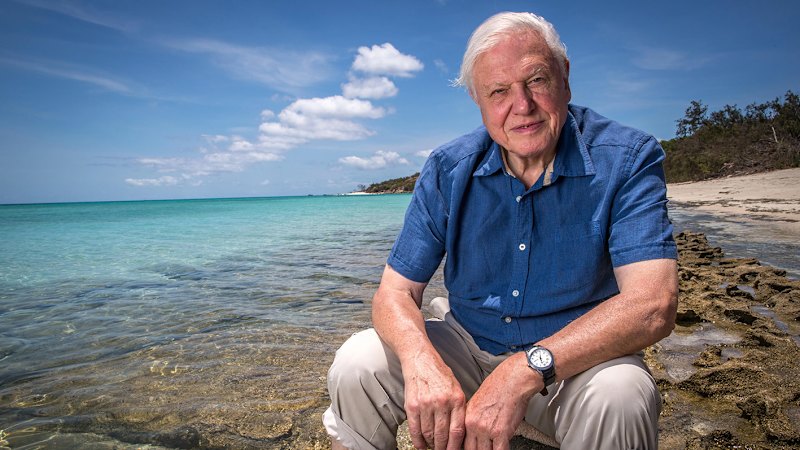
Most people think David Attenborough is just the guy with the soothing voice who talks about penguins. They’re wrong. Reducing a seven-decade career to a pleasant soundtrack for a Sunday nap misses the point entirely. Attenborough didn't just narrate the natural world. He basically invented the way we see it. Before he stepped in front of a camera, nature documentaries were dry, academic affairs often filmed in grainy black and white within the confines of a studio. He changed that. He took us to the mud, the ice, and the canopy.
I’ve watched his evolution from a young BBC controller to the world’s most effective climate diplomat. It’s a transformation that mirrors our own changing relationship with Earth. He started by showing us how beautiful the world is, and he’s spent the last twenty years screaming at us that we’re about to lose it. If you want to understand why he matters, you have to look past the "national treasure" label and see the relentless, slightly stubborn innovator underneath.
The gamble that changed television forever
In the early 1950s, the BBC didn't know what to do with nature. They had a "natural history" department that mostly focused on showing animals in cages. Attenborough thought that was rubbish. He teamed up with Jack Lester from the London Zoo for a show called Zoo Quest. The premise was simple but radical at the time: go to the animals' home instead of bringing them to ours.
It wasn't just about the animals. It was about the adventure. Seeing a young, sweat-drenched Attenborough trekking through the tropics in Sierra Leone or Madagascar gave the British public their first real taste of the wild. He wasn't acting like an expert looking down from a pedestal. He was a curious observer, often looking just as surprised as the viewer at what he found. This approachability is exactly what made him a star. He broke the fourth wall before it was cool.
By the time he became the Controller of BBC Two in 1965, he was already shifting the culture. People forget he was the one who introduced color television to the UK. He didn't do it just because it looked fancy. He did it because he knew that seeing the vibrant greens of a jungle or the deep blues of the ocean would connect people to the planet in a way black and white never could. He chose to broadcast the Snooker and Wimbledon in color first to prove the tech worked, but his heart was always in the wild.
When Life on Earth rewrote the rules
If you really want to pinpoint the moment Attenborough became "The Naturalist," it was 1979. That’s when Life on Earth hit the screens. This wasn't just a TV show. It was a massive, three-year undertaking that spanned 30 countries and 13 episodes. It told the story of evolution with a scale and ambition never seen before.
Everyone remembers the gorillas. It’s the scene where he’s pinned down by a group of mountain gorillas in Rwanda. He’s whispering to the camera while a baby gorilla climbs on him. It’s iconic because it wasn't planned. The crew thought they were in danger. Attenborough, however, stayed calm. He turned a potentially terrifying encounter into a moment of profound connection. That scene did more for conservation than a thousand academic papers. It showed that these "monsters" were gentle, social, and tragically like us.
He followed this up with what I call the "Life" trilogy: The Living Planet and The Trials of Life. Each series pushed the technology of the time to its absolute limit. They used macro lenses to see inside ant colonies and high-speed cameras to catch birds in mid-flight. He wasn't just filming nature; he was revealing secrets that had been hidden for millions of years.
The shift from observer to activist
For a long time, critics hammered Attenborough for being too "soft." They complained that his documentaries showed a pristine world that didn't exist anymore. They argued he was ignoring the destruction caused by humans. For a while, that was a fair point. He preferred to show the beauty of the world, believing that you can’t ask people to save something they don't love.
But then things changed.
Around the time of The Blue Planet in 2001 and Planet Earth in 2006, the tone shifted. You started to see the ice melting. You saw the plastic in the stomachs of albatross chicks. By the time Our Planet landed on Netflix in 2019, the gloves were off. He stopped being the polite narrator and became a fierce advocate.
He’s been very open about his own late awakening to the severity of the climate crisis. He admits he was skeptical of some early data, but once the evidence became undeniable, he used his massive platform to sound the alarm. Watching a 90-year-old man stand before world leaders at COP26 and tell them their time is up was one of the most powerful moments in modern history. He’s not doing it for fame. He’s doing it because he’s spent more time in the wild than almost any other human being alive, and he can see the pulse of the planet slowing down.
Why his voice still cuts through the noise
We live in an age of influencers and 15-second clips. So why does a centenarian (nearly) still command the attention of millions? It’s because he has something most people lack: genuine authority. He’s been there. He’s seen the species that are now extinct. He’s walked on glaciers that are now puddles.
He also refuses to be a doomer. That’s his secret sauce. Even when he’s describing the sixth mass extinction, he provides a roadmap for recovery. He talks about "rewilding" and switching to renewable energy not as impossible dreams, but as necessary chores. He makes the massive, terrifying scale of climate change feel like something we can actually manage if we just stop being stupid.
Honestly, his stamina is terrifying. Most people retire at 65. Attenborough is in his late 90s and still traveling to remote locations, still recording voiceovers for hours on end, and still fighting for the "voiceless" creatures he spent his life documenting. He hasn't lost his sense of wonder. When you see him look at a rare orchid or a weird lizard, he still has the same look in his eyes he had in 1954. That’s not something you can fake.
How to actually follow his lead
If you’re inspired by Attenborough’s career, don't just sit there and feel bad about the planet. That’s the opposite of what he wants. He’s spent 70 years trying to get us to pay attention.
Start by changing how you consume media. Stop watching the 30-second "nature" clips on social media that strip away the context. Go back and watch A Life on Our Planet. It’s basically his witness statement. It lays out exactly what has happened to the wild since he started his career and what we need to do to fix it.
Support rewilding projects. He’s a huge proponent of letting nature take back the wheel in certain areas. Look at organizations like the World Land Trust or the Fauna & Flora International (where he’s been a member for decades). These aren't just charities; they’re the front lines of the battle he’s been fighting since the 50s.
Lastly, talk about it. One of Attenborough’s greatest strengths is his ability to simplify complex ecological systems so a five-year-old can understand them. Do the same. Don't preach, just share the wonder. The more people value the natural world, the harder it is for corporations and governments to destroy it for a quick buck. The man has done his part. Now it’s our turn to make sure his life’s work wasn't just a beautiful eulogy for a dying world.
Go outside. Look at something small. Realize that it’s part of a massive, interconnected system that keeps you alive. That’s the Attenborough way. It’s not just about watching TV; it’s about recognizing that we aren't separate from nature. We are nature. And we’re currently in a fight for our lives. Get involved. Stop waiting for someone else to save the day. Attenborough can't do it forever. He’s given us the tools and the knowledge. Use them. Keep the noise going until the people in power have no choice but to listen.