Silence.
That is the first thing you notice when a titan steps off the stage—not the roar of the stock tickers, not the frantic typing of financial analysts in Midtown Manhattan, and certainly not the panicked whispers in the glass-walled conference rooms of Taipei and Santa Clara, though all of those happen within milliseconds of the press release hitting the wire.
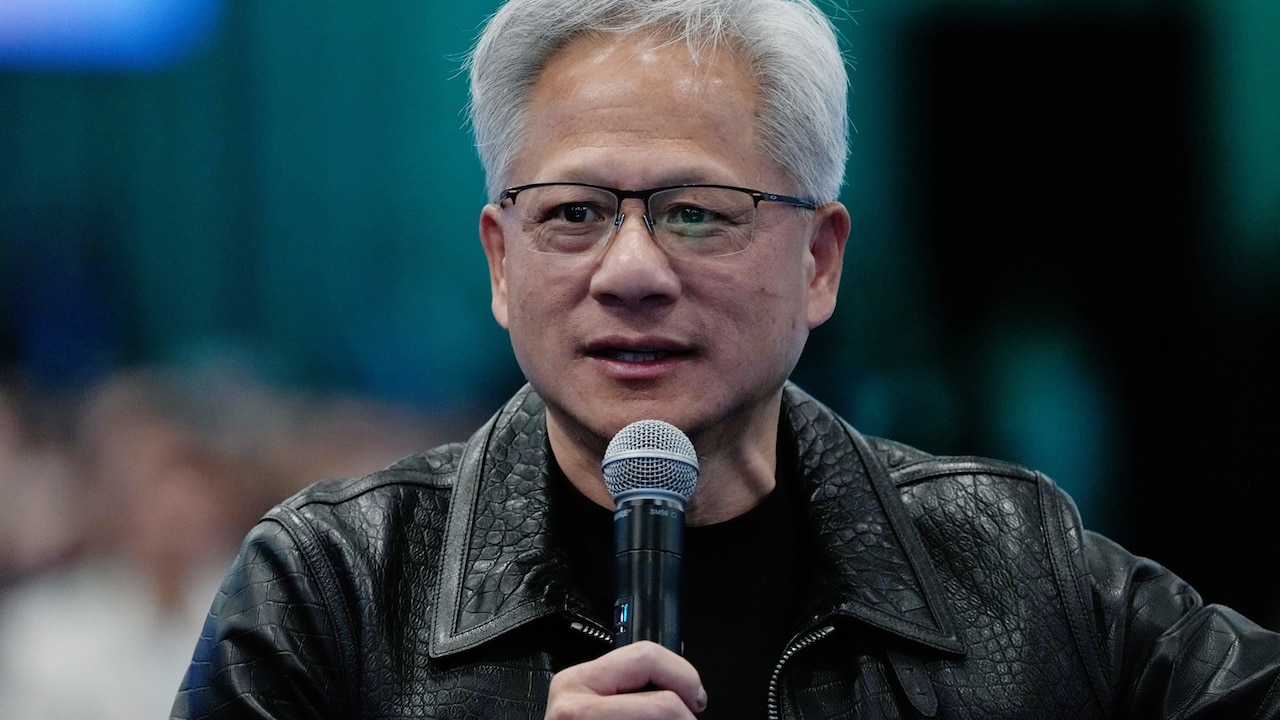
No, the first thing is a strange, heavy quiet. It settles over the server farms humming in the deserts of Nevada and the research labs tucked into the damp hills of Zurich. For over three decades, the modern computing revolution had a single, unmistakable silhouette: a man in a black moto jacket, standing under blinding stage lights, holding up a piece of silicon as if it were fire stolen from the gods.
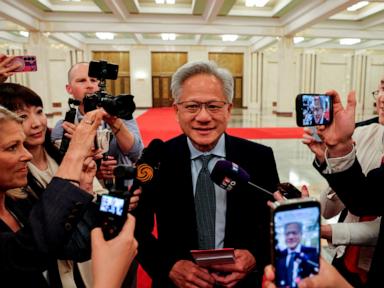
Now, consider the hypothetical—yet entirely inevitable—morning when the headline finally breaks across every terminal on earth: Jensen Huang resigns as Nvidia’s CEO.
Let us be completely transparent from the start. As of right now, we are stepping into a carefully constructed thought experiment, a rigorous stress-test of a future reality based on verified corporate architecture, historical precedent, and the cold math of semiconductor supply chains. Jensen Huang has not walked away today. Yet every institutional investor, every sovereign AI minister, and every engineer writing CUDA code at three in the morning has already run this exact simulation in the back of their minds. Because in the high-stakes theater of modern technology, the only thing more dangerous than ignoring a succession crisis is pretending a founder will live forever.
To understand what we actually know—and what terrifyingly little we can predict—about the moment Jensen Huang steps down, you have to stop looking at stock charts and start looking at a fictionalized engineer named David.
The Man Who Built His Career on a Single Compiler
David is a composite character, an amalgam of the thousands of senior machine-learning architects working across Austin, London, and Bengaluru. Let’s put him in a cramped apartment in San Jose on the morning the announcement drops. His coffee goes cold beside a monitor glowing with terminal windows.
For twelve years, David’s entire professional existence has rested on one assumption: Nvidia is not a chip company. It is an extension of one man’s relentless, terrifyingly specific willpower.
When a competitor’s dry news summary covers a CEO transition, it lists board committees, interim appointments, and quarterly guidance. It misses the visceral panic David feels in his chest. Why? Because David knows a secret that Wall Street often glosses over. Nvidia’s dominance—holding roughly eighty to ninety percent of the data center AI accelerator market during its historic ascent—was never just about raw silicon speed. Plenty of brilliant teams in labs from Boston to Beijing have designed fast chips.
Nvidia won because Jensen Huang forced a hardware company to think like a software empire, bleeding cash for over a decade to build CUDA—the proprietary programming layer that locked millions of developers into Nvidia’s ecosystem long before artificial intelligence became a household phrase.
Think of CUDA not as a piece of software, but as the electrical grid of an entire continent. You can build a slightly better toaster in your garage, and you can even build a shiny new power plant down the road, but if every outlet in every house is wired exclusively to the existing grid, nobody is unplugging their refrigerator to test your wires.
Huang built that grid by flatly refusing to compromise. He eliminated traditional corporate hierarchies, maintaining an astonishingly flat organization where sixty or more executives reported directly to him. There were no cozy layers of middle management to cushion bad news. There were no five-year strategic plans gathering dust in binders. There was only the "speed of light"—Huang’s famous benchmark for asking how fast a task could theoretically be accomplished if every bureaucratic obstacle vanished.
So when David stares at the resignation news, he isn't asking who gets the corner office. He is asking a much darker question: When the person who enforces the speed of light leaves the room, does gravity come rushing back in?
The Myth of the Seamless Transition
Boards of directors love the word "orderly." When a legendary founder steps aside, the official statement always arrives wrapped in soothing corporate anesthesia. It speaks of "long-planned succession," "deep bench strength," and "unwavering strategic continuity."
History tells a much messier story.
Look back at the brutal graveyard of founder-led technology giants. When Steve Jobs stepped down from Apple in August 2011, the world held its breath. Apple survived—and prospered financially—because Jobs had spent years grooming Tim Cook, a master of global supply chains who turned Apple into a logistical juggernaut. Yet even Apple’s fiercest defenders admit that the company’s capacity for wild, category-inventing leaps shifted into an era of disciplined, iterative refinement.
Now look at the cautionary tales. Look at Intel after Andy Grove, the paranoid visionary who built the microprocessor empire, handed over the reins. Over the subsequent two decades, layers of corporate caution slowly calcified the company’s arteries. Engineers stopped taking existential bets. Committees replaced conviction. By the time Intel realized mobile computing and parallel GPU processing were eating its lunch, the concrete had already set.
Look at Microsoft under Steve Ballmer after Bill Gates stepped back, or Disney during the turbulent handoffs of the Iger era. When a company’s entire nervous system is wired into the intuition of a single founder, removing that founder isn't like changing the driver of a car. It is like performing a heart transplant while the patient is running a marathon.
At Nvidia, this vulnerability is magnified by the sheer velocity of the company’s rise. Founded in 1993 over pancakes at a Denny’s in East San Jose—a detail so famous it has become Silicon Valley scripture—Nvidia spent twenty years fighting for survival in the cutthroat graphics card market before pivoting its entire existence toward accelerated computing.
Huang didn't just steer the ship; he was the hull, the engine, and the compass. He famously eschewed one-on-one meetings with his direct reports, preferring open, transparent forums where any junior engineer could hear the same strategic truth as a senior vice president. He read hundreds of emails a day from employees across every rung of the ladder, intervening directly when a project stalled.
You cannot simply hand that culture to an outside executive hired by a headhunting firm. An outsider trying to run Huang’s flat management structure without Huang’s institutional authority would be eaten alive within six months. Either the board promotes a lifelong insider who breathes the exact same air, or the entire organizational architecture has to be torn down and rebuilt with traditional guardrails—the very guardrails Huang spent thirty years smashing to pieces.
Inside the War Room: What Actually Happens Next
Let’s step inside the boardroom at Nvidia’s futuristic, triangular headquarters in Santa Clara—a building whose jagged, geodesic rooflines look like a spaceship paused mid-flight.
The moment a resignation becomes official, three distinct shockwaves move outward in concentric circles.
First comes the internal power vacuum. Nvidia has deliberately avoided naming a single "crown prince," a classic move among alpha founders who dislike creating rival centers of gravity. Instead, the company relies on a tight inner circle of veteran lieutenants—leaders overseeing hardware engineering, enterprise software, hyperscale data center deployments, and global operations.
In the immediate aftermath, the board will almost certainly appoint an insider CEO—someone deeply fluent in both silicon architecture and hyperscaler diplomacy—while potentially elevating Huang to Executive Chairman to calm the markets. Why? Because Nvidia’s top four or five customers—Microsoft, Meta, Google, Amazon—account for roughly forty to fifty percent of its data center revenue. Those relationships aren't managed through standard procurement contracts; they are negotiated at the highest levels of trust, with commitments stretching tens of billions of dollars into the future.
Second comes the supplier panic in Taiwan. Thousands of miles across the Pacific, in Hsinchu, the executives at TSMC—Taiwan Semiconductor Manufacturing Company—will immediately pick up the phone. Nvidia does not own its own factories; it designs the chips, and TSMC manufactures them using cutting-edge lithography machines pushed to the absolute limits of physics.
Huang’s personal bond with TSMC’s leadership, stretching back to the late 1990s when Nvidia was a tiny, struggling startup that TSMC’s founder Morris Chang took a personal gamble on, has secured Nvidia preferential access to the world’s scarcest wafer capacity and advanced packaging technologies like CoWoS. Without Huang’s personal diplomacy, TSMC’s board faces immediate, relentless pressure from Apple, AMD, Broadcom, and custom-chip teams at Google and Amazon demanding a larger slice of that manufacturing pie.
Third comes the blood in the water. Inside the headquarters of AMD in Santa Clara, inside the custom silicon labs in Seattle and Mountain View, and across the startups burning venture capital in Palo Alto, champagne corks won't pop—engineers are too superstitious for that—but Slack channels will light up with a single, electric realization: The moat just got shallower.
The Invisible Stakes Nobody Talks About
If you read standard financial commentary, the aftermath of a Jensen Huang departure is reduced to earnings-per-share projections and price-to-earnings multiples. That misses the human reality entirely.
I remember sitting in a cramped server room in Northern Virginia a few years ago, watching an infrastructure team try to migrate a massive recommendation engine off Nvidia GPUs onto a rival accelerator to save thirty percent on cloud compute costs. On paper, the rival chip looked brilliant. The specs were competitive. The benchmarks were promising.
Three weeks later, the migration was dead in the water.
Why? Because every time the engineers hit an obscure memory bottleneck or a subtle bug in how data moved between thousands of interconnected processors, there was no documentation to save them. On Nvidia’s stack, years of battle-tested libraries—cuDNN, TensorRT, NCCL—had already solved those nightmares. The rival hardware had the muscle, but it lacked the nervous system.
That nervous system exists because Huang insisted on building full-stack computing solutions—not just chips, but networking gear (acquired through the $6.9 billion Mellanox deal), servers, software frameworks, and industry-specific AI platforms—even when Wall Street screamed that he was bloating research and development budgets.
Here is the uncomfortable truth that keeps chief technology officers awake at night: Modern artificial intelligence runs on a fragile, hyper-concentrated monoculture.
When one company supplies the foundational engines for everything from protein folding in pharmaceutical labs to autonomous robotics in Munich factories, a leadership transition at that company ceases to be a private corporate event. It becomes a macroeconomic weather system.
If a post-Huang Nvidia grows cautious—if a new CEO decides to maximize short-term profit margins by slowing down the brutal, annual release cadence of new chip architectures (moving from the two-year rhythm of Ampere and Hopper to the relentless one-year sprint of Blackwell and Rubin)—the entire global pace of AI deployment slows down with it.
Conversely, if a new leadership team stumbles on software execution, hyperscalers like Amazon (with Trainium) and Google (with TPUs) finally get the opening they have spent billions trying to force open: a crack in the CUDA wall wide enough to break Nvidia’s pricing power forever.
The Vulnerability of the Machine
Let us pause and admit something most tech commentators are too proud to say: Nobody actually knows if Nvidia’s magic is institutional or personal.
That is the terrifying gamble baked into every share of the company and every data center blueprint drawn up today.
We like to believe that great companies become self-sustaining machines—that once the culture is encoded into the employee handbook and the software moat is dug deep enough, anyone with an MBA and a steady hand can keep the flywheel spinning. We tell ourselves this because the alternative is too unsettling. The alternative is admitting that trillions of dollars of global market value and the trajectory of twenty-first-century science rest heavily on the stamina, intuition, and obsessive curiosity of a single human being who still wears the same uniform because he doesn't want to waste brainpower deciding what to wear in the morning.
Look closely at how Huang actually operates, and you see why replication is nearly impossible.
He doesn't run Nvidia like a traditional CEO; he runs it like a university seminar crossed with a wartime command center. He spends hours dissecting white papers with junior researchers. He routinely tells employees that the company is "thirty days from going out of business"—a mantra born from the near-death experiences of the 1990s when a single flawed chip architecture nearly bankrupted them.
Imagine trying to deliver that speech as a newly appointed successor when the company is sitting on tens of billions of dollars in cash reserves and commanding the highest margins in semiconductor history. Nobody in the room would believe you. Fear cannot be faked. Survival instinct cannot be inherited through a board resolution.
What You Should Watch When the Day Arrives
When the announcement eventually comes—whether next year or a decade from now—ignore the stock price in the first forty-eight hours. Algorithms trade on headlines, and retail investors panic on rumors. Neither tells you whether the empire is intact.
Instead, watch four quiet signals over the following six months:
- The Architecture Cadence: Does Nvidia hit its promised annual release schedule for next-generation data center chips without delays? In semiconductors, a six-month slip in tape-out schedules is the first sign that internal decision-making has slowed down.
- The Open-Source Software War: Watch projects like PyTorch, Triton, and ROCm. When developers start complaining publicly that Nvidia’s newest software updates feel sluggish or overly locked-down, it means the post-Huang leadership is prioritizing margin protection over developer love—the exact mistake that killed previous tech monopolies.
- Executive Attrition: Look at the vice presidents who have been at Nvidia for fifteen or twenty years. These are multi-millionaires who stayed not for the money, which they ceased needing long ago, but for the thrill of building beside Huang. If three or four of those foundational architects quietly announce their retirements within nine months of the CEO transition, the institutional memory is draining out of the building.
- The Hyperscaler Tone: Listen to the earnings calls of Microsoft, Meta, and Alphabet. Notice how often their CEOs mention custom internal silicon versus Nvidia partnerships. Even a subtle shift in language—from "deepening our strategic co-engineering" to "diversifying our compute infrastructure"—signals that the giants smell vulnerability.
Back in San Jose
Return for a moment to David, our composite engineer sitting in his San Jose apartment, his coffee long since turned lukewarm.
By noon on the day of the resignation, the initial shock has worn off. His Slack channels have quieted down. Outside his window, traffic moves steadily along Interstate 280, indifferent to market capitalizations and boardroom succession plans.
David opens his terminal. He has a model training run scheduled to start at one o'clock across two thousand GPUs humming in a data center three hundred miles away. He types a single command, watches the familiar diagnostic text scroll cleanly across his screen, and hits enter.
The cluster lights up. Millions of floating-point operations begin firing in synchronized, silent harmony—driven by code architecture conceived in boardrooms twenty years ago, etched onto silicon by lasers in Taiwan, and bound together by the relentless will of a man who just handed back his badge.
The machine is still running. It is magnificent, terrifyingly fast, and built to outlast its creator.
The only question left—the question hanging in the air over every data center on earth—is how long a machine built at the speed of light can keep flying once the pilot steps out of the cockpit.