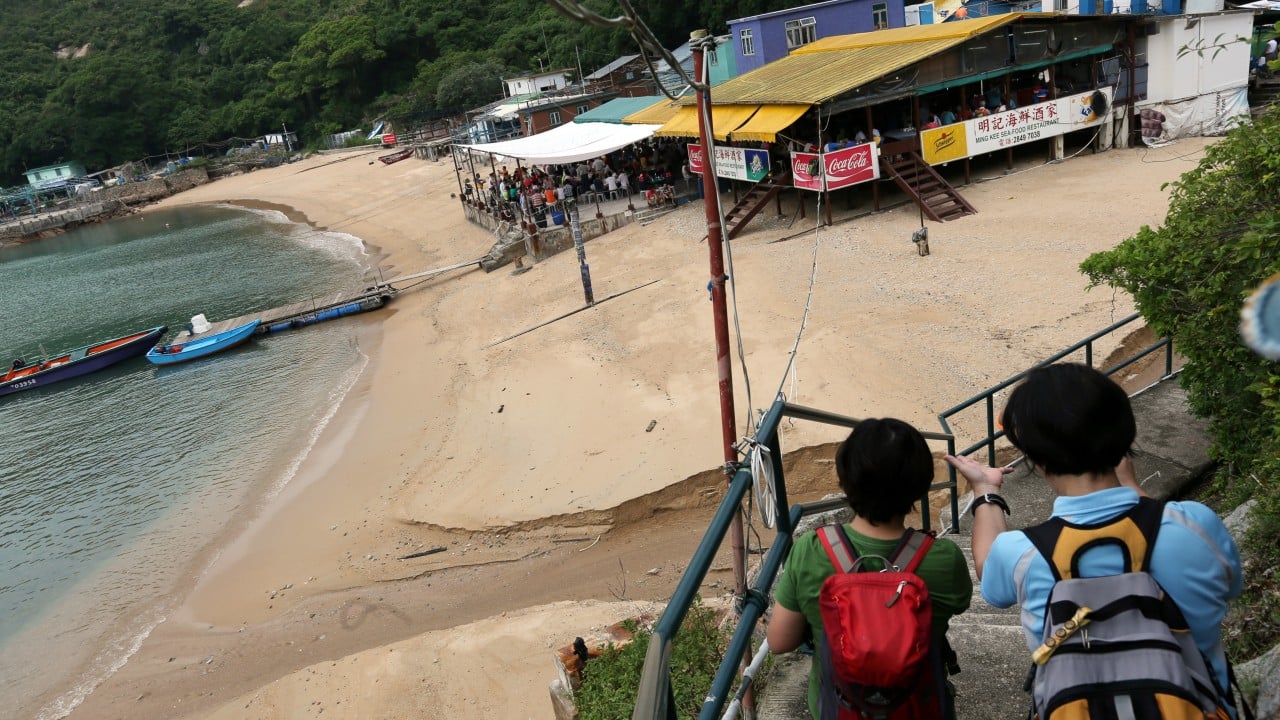
Ming Kee Seafood Restaurant has anchored the rocky shores of Po Toi Island for over five decades, serving as the solitary culinary outpost on Hong Kong’s southernmost tip. Now, the looming closure of this family-run institution signals more than just the loss of a place to eat fried squid. It marks the final collapse of a specific, rugged lifestyle that the city’s rapid modernization has spent forty years trying to erase.
The struggle to keep the doors open on Po Toi is not merely a story of rising costs or a lack of successors. It is a case study in the logistical impossibility of maintaining a traditional business in a territory that has prioritized high-density urban development over the preservation of its outlying rural heritage. While the government markets "Green Hong Kong" to international tourists, the reality for the people living on the edge of the map is a grinding battle against isolation and a total lack of basic infrastructure.
The Logistics of Loneliness
Running a restaurant on Po Toi is an exercise in tactical planning that would break most mainland business owners. The island has no connection to the government water mains and no electricity grid. Every drop of water used to wash a dish or steam a fish must be managed with extreme care, and every watt of power comes from expensive, loud, and polluting diesel generators.
When a refrigerator breaks down or a gas canister runs dry, there is no quick fix. You wait for the ferry, or you pay a premium for a private sampan. This hidden "isolation tax" eats into margins that are already razor-thin. For fifty years, the Leung family has absorbed these costs, but the math no longer adds up. The price of diesel has fluctuated wildly, and the labor required to haul supplies from the pier to the kitchen is physically demanding work that younger generations are increasingly unwilling to perform for such low returns.
A Governance Gap in the South China Sea
The local administration often speaks of supporting local tourism, yet Po Toi remains a ghost in the planning department’s eyes. While the nearby Lamma and Cheung Chau islands received significant investment in piers, paved paths, and public utilities, Po Toi was left to wither.
The Infrastructure Vacuum
- Fresh Water Scarcity: Residents still rely on mountain streams and private tanks. In dry seasons, the "business" of running a restaurant becomes a crisis management exercise.
- Energy Poverty: The reliance on generators means the restaurant’s carbon footprint is ironically high for a business located in a designated "area of high ecological value."
- Waste Management: Without a municipal sewage system, the costs of maintaining hygienic standards in a high-volume seafood kitchen are astronomical compared to a shop in Central or Tsim Sha Tsui.
Critics of the current land-use policy argue that the government’s inaction is a form of passive eviction. By refusing to provide the basic requirements for 21st-century life, the state effectively ensures that these remote communities will eventually vanish, leaving the land vacant for potential future development or "conservation" projects that exclude human habitation.
The Tourism Paradox
On weekends, Po Toi is swamped. Hikers and birdwatchers flock to the island to see the famous "Palm Rock" and the ancient rock carvings. They bring their own bottled water and plastic-wrapped snacks, often leaving behind trash that the few remaining elderly residents must then deal with.
Ming Kee Seafood has historically acted as the unofficial tourism bureau and safety net for the island. They provide the only toilets, the only shade, and the only reliable communication hub for visitors who find themselves in trouble. If the restaurant closes, the island becomes a dangerous place for the casual Sunday hiker. Without a commercial anchor, there is no one to monitor the trails or provide emergency assistance before the marine police arrive from Aberdeen.
The business model of "weekend-only" rushes is a recipe for burnout. A restaurant cannot survive on two days of profit when the overhead of maintaining a remote site runs 24/7. The surge of "hikertourism" brings foot traffic but often fails to bring the high-spend diners who used to charter private yachts to the island for multi-course banquets. The demographic shift from wealthy seafood aficionados to budget-conscious influencers has fundamentally altered the restaurant's revenue stream.
Cultural Erosion Under the Guise of Progress
Hong Kong is currently obsessed with "revitalization." Old police stations are turned into luxury malls; textile mills become art galleries. But these projects are almost always top-down and heavily commercialized. The organic, messy, and authentic culture represented by a 50-year-old seafood shack on a rock doesn't fit the sanitized aesthetic of a "World City."
The Leungs are not just chefs; they are the keepers of Po Toi’s history. They remember the island when it had a school, when the seaweed harvest was the primary economy, and when the population numbered in the hundreds rather than a dozen. When Ming Kee goes, that oral history loses its heartbeat. We are witnessing the intentional sun-setting of the "Siu Po Toi" identity.
The Economic Reality of the Succession Crisis
The most common refrain when a business like this faces closure is: "Why won't the children take over?"
It is an unfair question. Expecting a university-educated professional to move to a rock with no air conditioning and haul crates of beer up a pier in 34-degree heat is a romantic fantasy. The "succession crisis" is actually a rational economic choice. In a city where property is the only true currency, the labor-to-reward ratio of a remote restaurant is nonsensical.
The younger generation sees the writing on the wall. They see a government that provides no support, a customer base that wants "authentic" experiences but complains about "expensive" prices, and a physical environment that is becoming harsher due to extreme weather events and rising sea levels.
A Final Warning for the Outlying Islands
Po Toi is the canary in the coal mine. What is happening there today will happen to the remote corners of Lantau, the abandoned villages of Sai Kung, and the tiny outposts in the North District tomorrow.
The death of Ming Kee Seafood isn't just about a menu disappearing. It is about the loss of sovereignty over our own geography. When we lose the ability to inhabit the edges of our territory, we become a city of malls and high-rises, disconnected from the sea that defined us.
If there is to be a future for businesses like Ming Kee, it requires a radical shift in how Hong Kong views its rural assets. It requires treating infrastructure not as a reward for high-density living, but as a right for all citizens, regardless of how far south they choose to live. Without that shift, the "Seaweed Island" will soon be nothing more than a rock in the water, silent and served by no one.
Go to Po Toi now. Order the deep-fried squid with salt and pepper. Look at the horizon and realize that you are seeing the final curtain call of a Hong Kong that no longer has the patience to exist.