The narrative surrounding Lebanon’s current displacement crisis is dripping with a specific brand of hollow sentimentality. Media outlets are obsessing over the "tragedy" of families unable to bury their dead in ancestral village plots. They frame the inability to reach a specific coordinate of soil in Southern Lebanon or the Bekaa Valley as a spiritual catastrophe.
They are wrong. This isn't a spiritual crisis. It’s a logistical reality being romanticized by people who aren't currently dodging drone strikes.
The insistence that a body must return to a specific, war-torn patch of earth to "rest" is an archaic luxury that Lebanon can no longer afford. We are witnessing the forced evolution of mourning, and it’s about time we stopped pretending that the location of a grave is more important than the safety of the living who have to dig it.
The Ancestral Land Fallacy
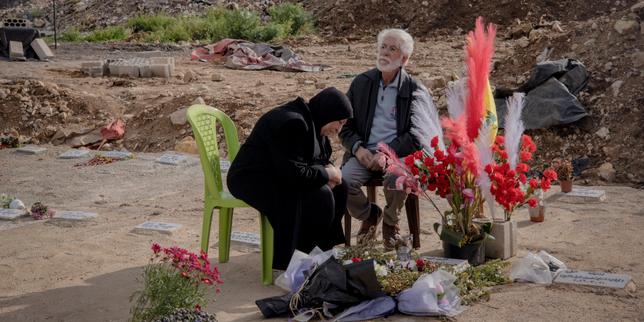
The "lazy consensus" argues that the Lebanese identity is uniquely tied to the village cemetery. Journalists love to interview grieving relatives who lament that their father or grandmother is buried in a "temporary" plot in a crowded Beirut suburb instead of the family vault. They treat this as a deep psychological wound.
Let’s look at the logic. Lebanon has spent the better part of a century in varying states of friction. The idea of a "permanent" resting place in a border region is a statistical anomaly, not a birthright.
When you prioritize the burial location over the immediate safety of the funeral procession, you aren't honoring the dead. You are risking the creation of more dead. I have seen families attempt to coordinate "safe passages" for hearses through active conflict zones, burning through political capital and risking the lives of Red Cross volunteers just for a symbolic gesture.
It is ego masquerading as piety.
The Geography of Grief is Overrated
The belief that a soul is restless because its physical shell is in a municipal plot in Sidon rather than a hilltop in Khiam is a superstition that complicates crisis management.
- Logistical Strain: Transporting remains through checkpoints and rubble diverts resources from the living.
- Security Risks: Large gatherings in targeted areas provide easy "targets of opportunity," regardless of the occasion.
- Economic Cost: The "repatriation" of a body within Lebanese borders during wartime costs three to five times the standard rate.
We need to dismantle the idea that a "temporary" burial is a dishonor. In reality, the most honorable thing a family can do in a war zone is survive. If that means burying a loved one in a communal trench or a rented plot in a city they never liked, so be it. The soil doesn't care.
Why "Return at All Costs" is a Failed Strategy
The competitor pieces focus on the "right to return." While that’s a noble political concept, applying it to the deceased during an active kinetic conflict is a strategic blunder.
I’ve watched municipal leaders in Beirut struggle to find space because everyone insists their stay is "temporary." This creates a "purgatory infrastructure"—shoddy, unplanned, and disorganized burial sites that become public health hazards.
If we accepted that displacement is, for many, a permanent shift in Lebanon’s demography, we would stop building "temporary" solutions and start building resilient ones. The fixation on the village cemetery prevents the development of proper urban mourning facilities. We are holding our breath for a return that, for many, will never happen in the way they imagine.
The Data of Displacement
The numbers don't lie. Over 1.2 million people are displaced. The casualty rates are climbing. If even 10% of those families insist on transporting their dead back to "the south" during active hostilities, the resulting traffic, security breaches, and resource drain would be catastrophic.
- Fuel Consumption: Every mile a hearse travels is fuel taken from ambulances.
- Manpower: Every soldier at a checkpoint checking a coffin is a soldier not monitoring for actual threats.
- Sanitation: Holding bodies in morgues while waiting for a "lull" in fighting is a recipe for disease.
Stop Asking "When Can They Go Back?"
People always ask: "When will the families be able to move their loved ones back home?"
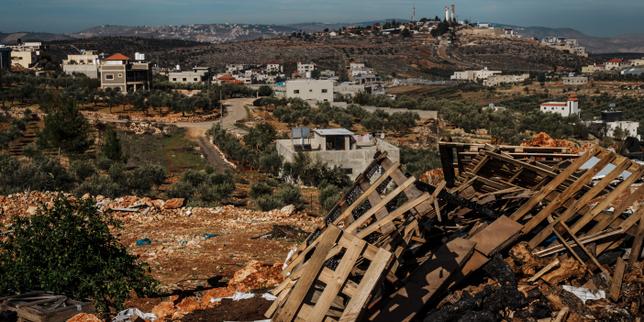
This is the wrong question. It assumes that the home they left still exists. It assumes the village hasn't been remapped by craters and unexploded ordnance.
The honest, brutal answer is that many of these "temporary" graves will become permanent. And that’s okay. The obsession with the where of death is a distraction from the how of living.
We should be asking: "How do we modernize Lebanese burial laws to allow for faster, safer, and more dignified local interments?"
The current system relies on sectarian quotas and village-specific permissions. It’s a bureaucratic nightmare designed for the 19th century. War should be the catalyst that breaks this. We need national, non-sectarian cemeteries that prioritize speed and hygiene over "blood and soil" mysticism.
The Counter-Intuitive Truth
The most "pro-Lebanon" stance isn't to weep over a lost village plot. It’s to build a new identity that isn't tethered to a specific square meter of dirt.
If you are waiting for the war to end to "properly" bury your dead, you are letting the conflict dictate your mourning process. You are giving the war power over your peace of mind.
I've talked to gravediggers in Beirut who are exhausted by families demanding "just a small space until we can leave." They are out of small spaces. The city is full. The ground is hard.
The High Price of Sentiment
There is a cost to this sentimentality. When we prioritize the "right to rest in the village," we ignore the fact that the village is currently a firing range.
- Myth: Burial in the village provides "closure."
- Reality: Closure comes from the absence of fear, not the presence of a headstone.
If you want to honor the dead, keep their children alive. Stop the convoys. Stop the dangerous treks into the "red zones." Stop the political theater of funeral processions that serve as little more than propaganda opportunities.
The soil in a Beirut cemetery is chemically identical to the soil in a southern village. The sanctity is in the memory, not the geology.
Lebanon is a country of migrants, both internal and external. We have spent decades dying in Brazil, Michigan, and West Africa. We didn't always make it back then, and we don't always need to make it back now.
Accepting the "temporary" as permanent isn't a defeat. It’s a survival mechanism. It’s time to stop romanticizing the logistics of death and start prioritizing the efficiency of life.
The dead are gone. The living are still here. Don't let the search for a "resting place" put more people in the ground.
Stop waiting for the village. Bury the dead where you are and move on. Survival doesn't have a GPS coordinate.