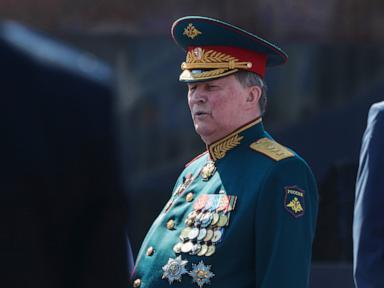
The man who almost ruled Russia is gone. Sergei Ivanov, the former Russian defense minister and close confidant of Vladimir Putin, passed away on June 26, 2026, at the age of 73. While his death marks the physical end of an era, his political trajectory explains everything you need to know about how modern Russia operates.
The Kremlin kept the announcement brief. They gave no cause of death, simply offering condolences to his family. To the casual observer, Ivanov was just another aging bureaucrat occupying a quiet post as a special envoy for the environment and transport. But anyone tracking modern Russian history knows better. Ivanov was once the most feared contender for the absolute top spot.
Understanding his rise and eventual sideline tells a fascinating story about loyalty, ambition, and survival in Moscow.
From KGB Comrades to the Top of the Kremlin
Ivanov didn't climb the political ladder through public charisma. He did it through the shadows. Like Putin, he was a veteran of the Soviet KGB. The two men formed a bond decades ago during their time in Leningrad, a partnership built on cold institutional loyalty.
When Putin ascended to the presidency, he brought his trusted inner circle with him. In 2001, he made Ivanov his minister of defense. It was a massive statement. Ivanov became the first civilian to ever hold that post in Russia. He wasn't there to be a figurehead; he was tasked with managing the brutal second war in Chechnya, crushing the region's separatist movement with absolute ruthlessness.
He held that defense portfolio until 2007, building deep ties within the military apparatus and the hardline siloviki faction—the network of security and intelligence veterans who control the Russian state.
The Fatal Mistake of Looking Like a Successor
By 2007, Ivanov looked unstoppable. Putin was facing strict constitutional term limits and needed a placeholder to sit in the presidential chair for four years. The choice came down to a fierce internal rivalry between two men: Sergei Ivanov and Dmitry Medvedev.
Most insiders bet heavily on Ivanov. He had the hardline security credentials. He had the trust of the military. But that strength became his downfall.
Putin eventually skipped over Ivanov and chose the younger, seemingly more compliant Medvedev to take the presidency in 2008. Why? Political analysts have long agreed that Ivanov made a fatal mistake in the Kremlin system: he looked too qualified. He was openly ambitious, independent, and possessed his own power base among the security services. In Putin's circle, being too capable of holding onto power is a threat. Medvedev was viewed as safe. Ivanov was viewed as dangerous.
Survival by Accepting a Golden Handshaking
Many politicians would have revolted or vanished after such a public snub. Ivanov chose survival. He accepted his role as deputy prime minister, and later, from 2011 to 2016, he served as the Kremlin chief of staff.
The real demotion came in 2016. Putin moved him to a newly created role as special envoy for environmental protection, ecology, and transport. It was a classic Kremlin tactic: a prestigious-sounding title that carried zero actual political weight. It was an honorable retirement in all but name, a way to keep a powerful ally close enough to monitor, but too far from the levers of hard power to plot. Ivanov quietly accepted the terms, stepping down from that position entirely earlier this year.
Even in his twilight years, his past actions kept him relevant on the global stage. Following the military actions in Ukraine, both the United States and the European Union slapped heavy sanctions on Ivanov, freezing his assets and restricting his travel. He died a pariah to the West, but a surviving titan of the post-Soviet Russian state.
To understand Russia today, keep an eye on how the state media covers his passing over the coming days. The level of state funeral honors will reveal exactly how much the current regime still values the old-school KGB network that built it. Look at the official statements from the Ministry of Defense and the Security Council. If the legacy media downplays his military role, it's a sign the Kremlin wants to bury the memory of a man who once possessed enough personal clout to rival the president. If they celebrate him as a hero, the old guard still holds immense sway over public memory.