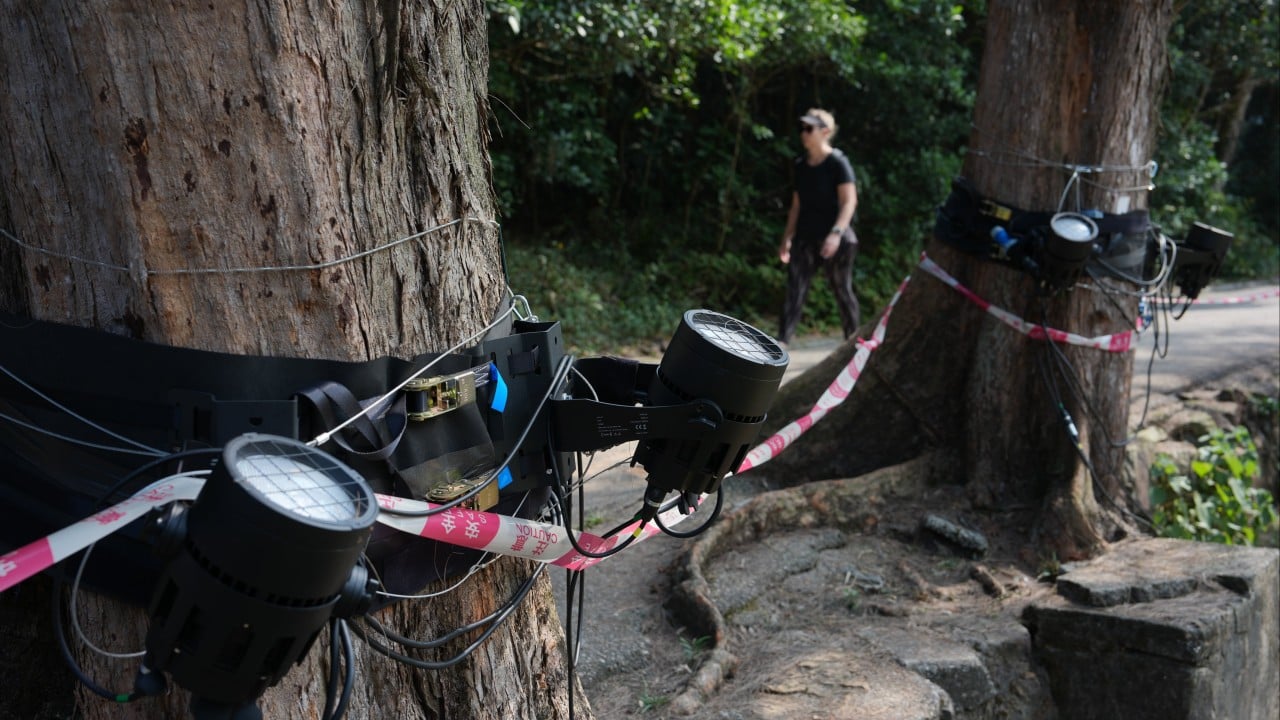
Call a walking trail "marred" because someone installed lights, and you have already lost the plot.
Outrage over a lighted route through Peak country follows a predictable script. Purists mourn the loss of untouched darkness. Campaigners warn of
That reaction rests on a lazy consensus. It assumes any artificial light along a walking trail is an assault on nature and heritage. It treats darkness as a pure, static good and every fixture as an act of vandalism.
Reality is messier. Most outrage targets bad lighting design while pretending the flaw is light itself. Worse, reflexively demanding total darkness on everyday walking routes leaves large parts of the public locked out for half the year. More journalism by Vogue highlights comparable perspectives on the subject.
You Are Asking the Wrong Question About Trail Lighting
People argue about whether trail lights ruin the Peak experience. That is the wrong question. The real question is which routes need safe evening passage, which habitats need sanctuary, and how light behaves when engineers stop treating the night like a stadium.
Walkers search for answers to familiar questions. Does artificial lighting scare away nocturnal animals? Does it ruin stargazing? Is a lighted path still a real walk?
Ask those questions loosely and you get sloppy answers. Wildlife does not react to "light" in the abstract. Bats, badgers, owls, and moths respond to specific wavelengths, brightness levels, glare, and continuous lit corridors. A poorly aimed floodlight on a hedgerow can disrupt foraging. A low-mounted, warm, shielded
The same goes for night skies. A narrow corridor of downward-directed trail light is not the same thing as unshielded town sprawl or high-wattage sports masts. Treating all outdoor illumination as identical is lazy thinking dressed up as environmental virtue.
I have watched municipal projects and rural access schemes burn through budgets because stakeholders argued over ideology instead of optics. One side wants a glowing suburban promenade across open moorland. The other wants zero lumens everywhere, even on commuter or winter utility links used by shift workers, dog walkers, and people without cars. Both sides end up miserable, and the path gets stuck in years of deadlock.
Darkness Is Not Always a Gift
Purists talk about the night as if it automatically welcomes everyone. It does not.
In high latitudes during late autumn and winter, night falls before the workday ends. A route that goes pitch-black at 4:30 p.m. is not an adventurous wilderness trek for most people. It is a closed door.
Fear of uneven footing, hidden steps, tree roots, mud, and isolated stretches is real. So is personal safety concern, especially for solo walkers, older residents, and anyone navigating unfamiliar terrain after dusk. Telling people who feel unsafe in unlit stretches that they simply lack appreciation for "authentic" darkness is elitist nonsense.
Imagine a scenario where a working parent finishes a shift at 5 p.m. in mid-November and wants a brisk 40-minute walk along a connecting path between two villages before dinner. Without safe, predictable footing, that route disappears from their life for four months. Keeping every single path unlit in the name of purity does not protect wildness; it concentrates human foot traffic into fewer, harder-edged spaces or pushes people into cars.
There is another blind spot in the anti-light reflex. Total darkness on every path does not automatically save wildlife if surrounding land use is fragmented, noisy, or starved of habitat. Focusing all moral energy on a single trail lighting scheme can become a convenient distraction from bigger ecological pressures—like agricultural runoff, habitat fragmentation, or unmanaged recreation pressure during peak daytime hours.
Why "Marred" Is Usually a Design Failure, Not a Lighting Crime
When a trail lighting project looks hideous, blinding, or out of place, critics blame the concept of lighting. Usually, they should blame the brief.
Bad trail installations fail in predictable ways:
- Wrong color temperature: Cool blue-rich white LEDs create harsh glare, wash out contrast in fog or mist, and attract insects and disturb wildlife far more than warm amber or low-kelvin light.
- Bad aiming and zero shielding: Light spilling sideways into trees or upward into the sky wastes energy and annoys neighbors without helping a walker see the ground three paces ahead.
- Always-on full blast: Running bright lights at 100 percent output at 2 a.m. when nobody is walking is pure waste.
- Treating rural terrain like a car park: Tall poles, harsh pools of brightness separated by black holes, and industrial housings clash with stone, grass, and timber.
Good outdoor lighting design has been documented for decades by organizations such as the Illuminating Engineering Society and DarkSky International. Researchers studying nocturnal ecology—from
In other words, light is a tool with sharp trade-offs, not a binary sin. A well-engineered path can guide feet safely with minimal spill, warm spectra, and adaptive dimming. A badly engineered path can ruin the mood even at dusk.
The Honest Trade-Offs of My Stance
Taking a pro-nuance, pro-selective-lighting stance comes with real risks, and pretending otherwise would be dishonest.
First, mission creep is a constant danger. Give some planners or developers permission to light one trail for safety or access, and the next proposal asks for brighter poles, longer stretches, or decorative uplighting where none is needed. Once infrastructure goes in, removing it is politically and financially hard.
Second, ecological harm is not zero. Even warm, low-level, shielded lighting can alter movement or behavior for sensitive species if placed along a vital wildlife corridor or sensitive edge habitat. "Less harmful than a floodlight" is not the same as "harmless."
Third, sense of place is fragile. In iconic uplands and scenic walking areas, visual restraint matters. Over-engineering a quiet trail with urban street furniture can erode the exact calm and remoteness people come to feel.
If you ignore those trade-offs, you become just as careless as the zero-light fundamentalists.
What Actually Works Instead of Knee-Jerk Outrage
If a walking trail faces a lighting proposal, ditch the slogans and force concrete standards onto the table.
- Separate core wilderness routes from everyday connector paths. Protect deep, remote, and ecologically sensitive stretches as dark sanctuaries. Stop pretending every link path near settlements or transport stops has to be an unlit obstacle course in winter.
- Mandate warm spectra and strict downward shielding. Demand low color temperatures, zero upward light, and optics that put light on the walking surface rather than surrounding scrub and sky.
- Use smart dimming and schedules, not static full power. Lower output late at night or tie brightness to presence sensors where appropriate, so the trail is not lit like a runway for empty air.
- Audit daytime impact alongside nighttime light. Compare the ecological footprint of a carefully lit, well-drained path against the real damage caused by crowded, muddy, braided trails and extra short car trips.
Stop fighting every light on principle. Start fighting bad lights with engineering standards.