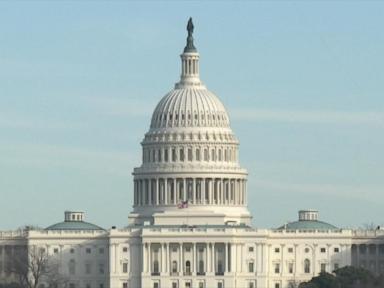
Every two years, cable news anchors hyperventilate over the same tired script. One party wins a slim majority on Capitol Hill, and suddenly the pundit class treats it like a regime change.
They are selling you a fantasy.
The standard media breakdown of a Democratic congressional takeover relies on a lazy consensus. It assumes that flipping the gavel in the House or Senate translates directly into sweeping legislative victories, dramatic economic shifts, and the immediate reversal of the opposing party’s agenda. If you look at the actual mechanics of Washington, that premise falls apart within five minutes.
Winning Congress in a polarized era is not a mandate to govern. It is simply a license to subpoena.
The Myth of the Legislative Juggernaut
When commentators ask what happens after Democrats take back control of Congress, they usually frame the answer around policy wish lists. They talk about tax code overhauls, sweeping healthcare expansions, or massive climate investments as if a simple majority is a magic wand.
It isn't. The American legislative system was explicitly engineered to prevent sudden bursts of majority rule.
Having worked on K Street and watched lobbying firms burn tens of millions of dollars trying to push "guaranteed" bills through razor-thin majorities, I can tell you where those campaigns go to die. They die in the gap between a campaign slogan and the Senate parliamentarian.
To pass major non-budgetary legislation, a party needs 60 votes in the Senate to overcome a filibuster. Winning control with 51 or 52 seats gives you committee chairmanships and floor scheduling power, not the ability to rewrite federal law at will. Even when a party uses budget reconciliation—a specialized parliamentary maneuver that allows tax and spending bills to pass with a simple majority—the Byrd Rule strictly prohibits any provision that does not directly alter federal outlays or revenues.
You cannot pass voting rights, minimum wage hikes, or regulatory overhauls through reconciliation. You are left with a narrow fiscal scalpel when voters were promised a sledgehammer.
The Veto Pen Reality Check
Even if a newly empowered Democratic Congress manages to herd its own moderate and progressive factions into passing a landmark bill, that legislation still has to survive the Resolute Desk.
In a divided government—where the opposition party holds the White House—a Democratic Congress passes zero transformative partisan laws. Every ambitious bill becomes a "messaging bill." It is drafted not to become law, but to force vulnerable opposition members to take a tough vote before the next election cycle, or to force a presidential veto that looks bad on a 30-second campaign ad.
Calling this "taking control" is generous. It is political theater with a multi-billion-dollar production budget.
What Actually Changes When the Gavel Flips
If you want to understand the real impact of a Democratic takeover, stop watching floor speeches and start watching committee schedules. Control of Congress is not about passing new laws; it is about weaponizing oversight and starving the executive branch of oxygen.
- The Subpoena Cannon Turns On. Committee chairs hold unilateral or near-unilateral authority to issue subpoenas. Overnight, cabinet secretaries, agency heads, and corporate CEOs spend half their workweeks preparing for televised depositions rather than running their operations.
- Judicial and Executive Confirmations Freeze or Accelerate. If Democrats control the Senate, the confirmation pipeline shifts entirely. Under a Democratic president, appellate judges and agency commissioners get fast-tracked. Under a Republican president, the Senate Judiciary Committee becomes a brick wall, forcing the White House to rely on temporary "acting" officials whose legal authority is constantly challenged in federal court.
- Appropriations Become Hostage Negotiations. Congress still has to fund the government every fiscal year. A Democratic majority uses the twelve annual appropriations bills to insert policy riders—defunding specific executive initiatives while padding favored domestic programs.
This is where the real power lies. It is slow, bureaucratic, and invisible to the casual news viewer, yet it dictates how federal agencies operate on the ground.
The Markets Do Not Care About Your Outrage
Retail investors routinely panic when control of Congress flips, dumping stocks in sectors they assume are doomed. Defense contractors, fossil fuel producers, and major banks usually take a short-term hit on election night headlines.
That panic is almost always a buying opportunity.
Historical market data compiled by firms like Vanguard and LPL Financial consistently shows that partisan control of Congress has a negligible long-term impact on S&P 500 returns. In fact, equity markets frequently perform better under a divided government. Institutional investors hate uncertainty, and gridlock guarantees predictability. When Congress cannot pass sweeping new regulations or alter corporate tax rates, corporations can forecast capital expenditures without worrying that the rules will change mid-quarter.
Imagine a scenario where a newly seated Democratic House passes a aggressive windfall profits tax on energy companies. The headlines scream about an impending collapse in oil and gas equities. Yet anyone who understands the legislative pipeline knows the bill is dead on arrival in a split Senate or destined for a presidential veto. The fundamentals of global energy supply and demand remain completely untouched.
Why Lobbyists Love Narrow Majorities
There is a dirty secret on Capitol Hill: narrow majorities are the single most profitable environment for the influence industry.
When one party holds a massive 40-seat majority in the House, individual members have zero leverage. Leadership dictates the terms, and a handful of defections do not matter. When the majority is three or four seats, every single centrist Democrat in a swing district becomes a kingmaker.
A single holdout can tank a trillion-dollar spending package. Consequently, trade associations and corporate PACs do not have to buy an entire party; they only have to convince five vulnerable moderates that a specific provision will cost them their seats in two years. The legislative product gets watered down until it satisfies the lowest common denominator.
Will Democrats Immediately Roll Back the Previous Administration's Policies?
No. Because they cannot.
A incoming congressional majority cannot unilaterally erase executive orders or undo finalized federal regulations issued by the executive branch. Under the Congressional Review Act (CRA), Congress can pass a joint resolution of disapproval to overturn a recently finalized agency rule with a simple majority.
Here is the catch: a CRA resolution requires the president's signature. If the sitting president opposes the rollback, they will simply veto it, and overriding a presidential veto requires a two-thirds supermajority in both chambers—a threshold that has not existed in modern American politics.
Furthermore, once a regulation is struck down via the CRA, the agency is legally barred from issuing a "substantially similar" rule in the future unless Congress passes brand-new authorizing legislation. It is a blunt instrument that rarely works outside of a total trifecta—where one party simultaneously holds the House, the Senate, and the White House.
Does a Democratic Congress Mean Higher Taxes?
Not without a Democratic president willing to sign the bill, and even then, the math is brutal.
Raising corporate or individual income tax rates requires passing legislation through both chambers. Even in a unified Democratic government, representatives from high-tax states like New York, New Jersey, and California routinely hold tax bills hostage over the State and Local Tax (SALT) deduction cap.
Meanwhile, senators from energy-producing or business-heavy states demand carve-outs for specific industries before giving their vote. By the time a tax bill survives the intra-party meat grinder, the headline rate hikes are usually offset by dozens of targeted credits, phase-ins, and loopholes that leave effective tax rates remarkably close to where they started.
The Downside of the Gridlock Thesis
Relying entirely on the assumption that a Democratic Congress will be paralyzed by gridlock does carry one major blind spot: exogenous shocks.
The rules of Washington change overnight during a genuine national crisis. During the 2008 financial collapse or the onset of the COVID-19 pandemic in 2020, partisan gridlock evaporated in a matter of days. When the financial system is freezing or a public health emergency shuts down the economy, Congress suddenly finds the political will to pass multi-trillion-dollar spending packages with overwhelming bipartisan majorities.
If you position your business or portfolio assuming total congressional paralysis, a sudden geopolitical conflict, sovereign debt scare, or banking crisis will catch you flat-footed. Under emergency conditions, a Democratic majority will aggressively steer massive fiscal stimulus toward its core priorities—green energy infrastructure, direct household subsidies, and state-level bailouts—with very little resistance from the opposition.
How to Actually Read Washington Moving Forward
If you want to know what a Democratic Congress will actually accomplish, ignore the prime-time cable panels and watch three specific indicators instead:
- The Debt Ceiling Calendar. Forget regular budget deadlines. The true moment of maximum leverage occurs when the Treasury Department runs out of extraordinary measures to pay the nation's bills. That is the only hard deadline that forces both parties into a room to cut real policy deals.
- Committee Chair Rosters. Look at who takes over the House Financial Services Committee, the Senate Banking Committee, and the Energy and Commerce Committee. Their personal legislative histories tell you exactly which industries are about to face relentless regulatory scrutiny.
- Unanimous Consent Agreements. Watch how fast the Senate confirms lower-level executive nominees. When the opposition stops granting unanimous consent, it means every single appointment requires days of procedural floor time, effectively grinding the Senate's legislative calendar to a halt.
Stop treating midterm or congressional flips like a total reset of the American economy. Power in Washington does not swing like a pendulum; it grinds like a gearbox with half its teeth missing. Watch the committees, track the must-pass funding deadlines, and ignore the noise.