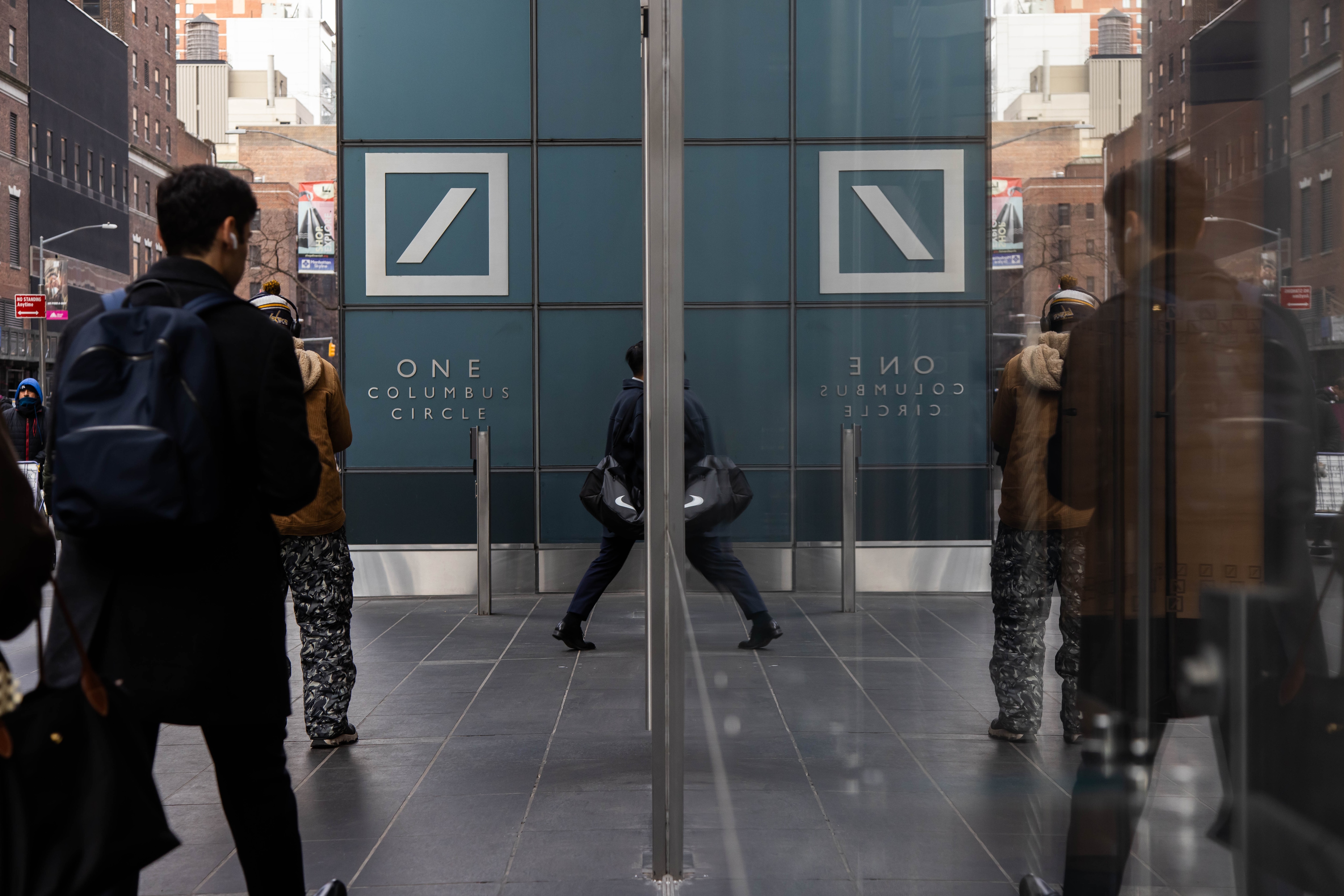
Big banks aren't supposed to survive this much smoke. Yet, Deutsche Bank keeps writing new chapters in a multi-decade saga of compliance failures, regulatory fines, and questionable clientele.
If you look at the headlines involving Deutsche Bank, oligarchs, and Jeffrey Epstein, you're not seeing isolated glitches in a banking system. You're looking at a structural failure of risk management on a global scale. Regulators have slapped them with billions in penalties over the years, but the institutional appetite for high-risk, high-net-worth revenue has proven stubbornly hard to break.
Let's break down how a pillar of European finance repeatedly found itself tethered to some of the most toxic financial flows in modern history, and why the fallout keeps shaking the financial sector.
The Compliance Blind Spot That Cost Billions
Banks employ thousands of compliance officers. They write policies, flag suspicious transactions, and build automated monitoring systems designed to catch money laundering before it hits the ledger.
So how did billions in illicit funds move through global accounts without triggering hard stops?
The reality of high-volume investment banking is messy. Relationship managers bring in massive wealth. They generate millions in fees. When revenue generation competes with risk mitigation inside a corporate hierarchy, revenue usually wins until regulators step in.
Between Russian mirror-trading schemes and compliance breakdowns tied to convicted sex offender Jeffrey Epstein, internal controls failed repeatedly. These weren't minor oversights. They were systemic blind spots where the bank's Know Your Customer protocols failed to ask the obvious questions about where the money came from and who actually controlled it.
The Epstein Connection And Institutional Failure
When Deutsche Bank agreed to pay a 150-million-dollar penalty to New York's Department of Financial Services in 2020, it laid bare a staggering operational failure.
Epstein wasn't an unknown quantity. He was a convicted sex offender when he became a client in 2013. Any standard risk-rating model should have flagged his accounts immediately. Instead, the bank treated him like a VIP client.
They ignored red flags. They processed millions in suspicious cash withdrawals. They allowed him to pay individuals who had direct ties to his criminal enterprise.
Why did this happen? Because the private wealth division valued his network and his deposits more than the reputational risk. The bank later admitted that onboarding him was a severe mistake, but the episode exposed a deeper cultural rot. When powerful clients walk through the door, internal controls often get quiet.
Russian Oligarchs And Mirror Trades
Long before the current geopolitical crisis froze Russian assets across the globe, Deutsche Bank was caught in a massive 10-billion-dollar mirror-trading scandal centered in its Moscow branch.
The scheme was clever, dark, and devastatingly simple. Clients would buy stocks in rubles in Moscow through the bank, while an associated party would simultaneously sell the exact same amount of the same stock in foreign currency through the London office.
It was a textbook method for moving money across borders outside the view of regulators. Billions vanished from Russia into Western accounts, and Deutsche Bank's internal controls were nowhere to be found.
Regulators in New York and London eventually levied massive fines, forcing a top-to-bottom restructuring of the bank's anti-money laundering frameworks. But the damage to its institutional credibility was already done.
What Real Reform Looks Like
You can't fix systemic failures with a press release or a shuffled board of directors. True reform requires changing the financial incentives that reward risk over compliance.
When banks treat regulatory fines as a cost of doing business rather than a catastrophic failure, nothing changes. The math is simple. If a high-risk client brings in 50 million in fees and the regulatory fine years later is 30 million, bad actors will keep taking the bet.
Changing this dynamic means holding executive compensation directly accountable for compliance failures clawing back bonuses from senior leaders when internal controls collapse. It also means empowering risk officers to freeze accounts without needing sign-off from commercial rainmakers.
Financial institutions hold immense power over global capital. Until the cost of failing to police that capital outweighs the profit of accepting it, the headlines will just keep repeating themselves.