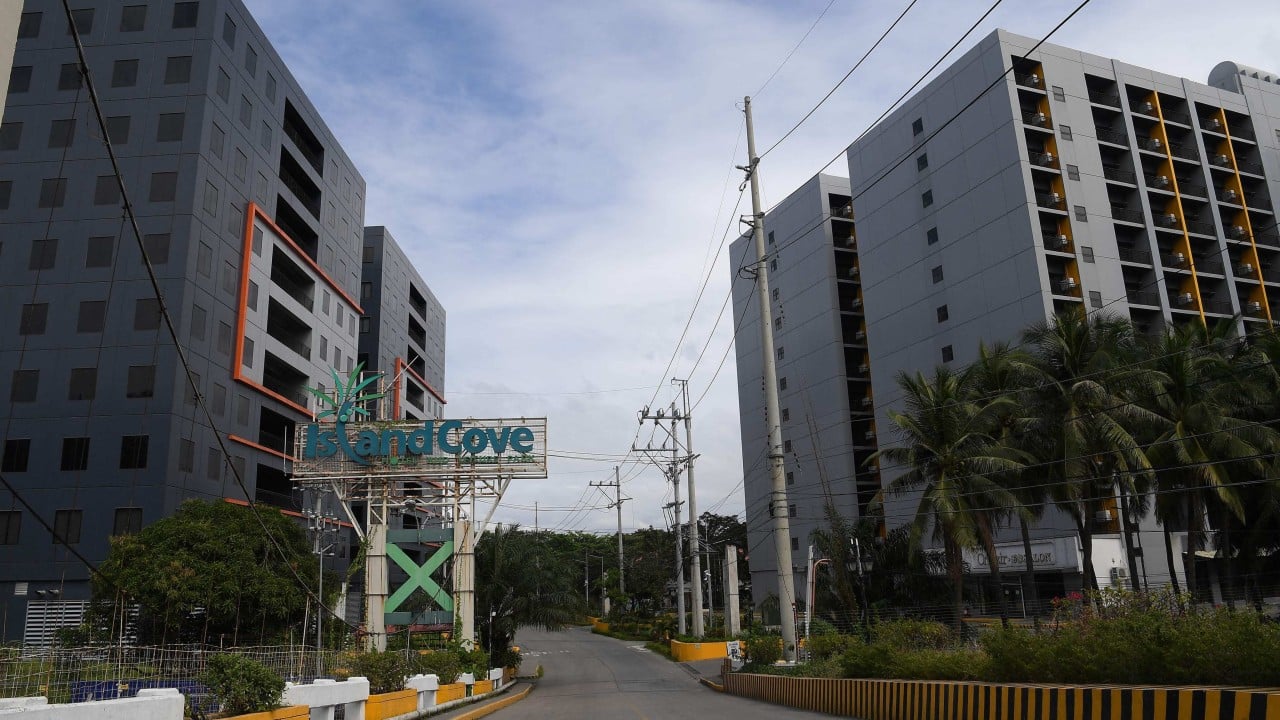
The air inside the compound didn't circulate. It smelled of cheap instant noodles, ozone from cooling fans, and the unmistakable, metallic tang of fear.
Somewhere in a nondescript office park in Pasay, a young man named "Chen"—a name he adopted specifically for the Philippine offshore gaming operators, or POGOs—stared at a row of twelve smartphones. Each screen displayed a different personality. On one, he was a successful crypto investor; on another, a lonely divorcee; on a third, a frantic daughter needing money for a medical emergency.
Chen wasn't a criminal mastermind. He was a prisoner of a spreadsheet. He had been promised a high-paying customer service job, but upon arrival, his passport vanished into a desk drawer. Now, his daily quota was ten "engagements"—ten strangers who had to be convinced to hand over their life savings.
This is the human face of a multi-billion dollar headache that the Philippine government is currently trying to decapitate. For years, POGOs were sold to the public as a golden goose, a source of tax revenue that would pave roads and build schools. But the goose turned out to be a Trojan horse, bringing with it a shadow world of human trafficking, torture, and global financial scams.
The Architecture of a Digital Fortress
The problem with fighting POGOs is that they are built to be invisible. They don't operate like traditional casinos with neon lights and velvet ropes. They are ghosts.
A POGO hub is often just a rented floor in a legitimate-looking skyscraper. To the outside world, it's a tech startup or a back-office processing center. Inside, it’s a factory. The workers are often recruited from across Southeast Asia, lured by the promise of the "Philippine Dream," only to find themselves trapped behind biometric locks and armed guards.
When the Philippine authorities raided a massive compound in Bamban, Tarlac, they didn't just find gambling servers. They found specialized "scam rooms" equipped with scripts for "pig butchering"—a psychological con where victims are "fattened up" with fake affection before being "slaughtered" for their money.
The scale is staggering. We aren't talking about a few dozen bad actors. We are talking about thousands of individuals working in shifts, 24 hours a day, targeting victims in the United States, Europe, and mainland China. The complexity of these operations has outpaced the local police force's ability to track them. By the time a warrant is signed, the servers are wiped, the phones are smashed, and the "investors" have moved three blocks down the street to a new shell company.
The Playbook of a Paper Tiger
For a long time, the government's response felt like trying to catch smoke with a net. The Philippine Amusement and Gaming Corporation (PAGCOR) tried to regulate them, but the sheer volume of "unlicensed" hubs made oversight a joke.
The new strategy—the "Anti-Pogo Playbook"—is a desperate attempt to change the physics of the hunt. It shifts the focus from the gamblers to the infrastructure.
Instead of just checking licenses, the government is now targeting the "enablers." This means going after the landlords who rent out the space, the utility companies that provide the massive bandwidth required for these hubs, and the local officials who look the other way for a suitcase full of cash.
It is a war of attrition.
But there is a fundamental flaw in the logic of the crackdown: money moves faster than policy. When the Philippines announced a total ban on POGOs by the end of 2024, the hubs didn't just vanish. They splintered.
The Great Migration of the Underworld
Think of the POGO industry like water. If you squeeze it in Manila, it leaks through the fingers and pools in Cambodia, Laos, or Myanmar. Or, more dangerously, it stays in the Philippines but goes deeper underground.
Small, mobile "micro-hubs" are the new trend. Instead of a 1,000-person compound, these are groups of ten to twenty people operating out of luxury residential condominiums or private villas in gated communities. They use satellite internet to bypass local ISPs. They use cryptocurrency to pay their bills. They are virtually undetectable until a neighbor hears a scream or a victim manages to jump over a balcony.
This transition from "Gaming" to "Scamming" is the most terrifying part of the evolution. Gaming involves a willing participant losing money. Scamming involves a victim being hunted.
The Philippine authorities are now dealing with a hybrid monster. It’s no longer just about tax evasion; it’s about national security. The presence of these hubs has brought in foreign criminal syndicates that operate with a level of violence rarely seen in the local underworld. Kidnappings for ransom, often targeting the POGO workers themselves, have become a weekly occurrence in the headlines.
The Cost of the Turnaround
There is a quiet tension in the Philippine economy right now. Real estate developers, particularly those in the Makati and Bay Area districts, are bracing for impact. For years, POGOs were the primary tenants for millions of square feet of office space. They paid rent in advance, in cash, and at rates far above the market average.
The "POGO-exit" threatens to leave a hole in the economy that the government hasn't quite figured out how to fill.
Yet, the social cost has become too high to ignore. The corruption has seeped into the very marrow of the bureaucracy. The recent scandals involving "miracle" mayors and forged birth certificates have shown that the POGO industry didn't just buy real estate; it bought identities. It bought the right to exist within the state as a parasite.
The new playbook is more than a set of law enforcement tactics. It is a cultural exorcism. The Philippines is trying to decide what kind of country it wants to be: a regional hub for digital innovation or a sanctuary for digital predators.
The Invisible Stakes
Back in the Pasay compound, Chen doesn't care about the GDP or the PAGCOR regulations. He cares about his quota. He cares about the fact that if he doesn't make a "hit" today, he might not get dinner.
He is currently talking to a woman in Ohio named Margaret. Margaret thinks she’s talking to a handsome young architect who is teaching her how to secure her retirement through a new trading platform. She thinks she has found a friend. Chen knows he is destroying her life.
This is the true cost of the POGO phenomenon. It isn't measured in pesos or dollars, but in the total erosion of digital trust. Every time a hub is allowed to operate, the internet becomes a slightly more dangerous place for everyone.
The Philippine government’s new playbook is a bold move, perhaps the boldest in a decade. But law enforcement is playing a linear game against an exponential enemy. You can ban a name, you can raid a building, and you can deport a worker. But how do you delete a business model that has no headquarters?
The ghost hubs are still there. They are in the apartment next door. They are in the glowing screen of your phone. They are waiting for the next loophole, the next corruptible official, the next person who just wants to believe in a beautiful lie.
The lights in the Pasay office park stay on all night. Outside, the tropical heat is heavy and still. Inside, the fans keep whirring, cooling the servers that are currently reaching out across oceans to find someone to break. The playbook is on the desk of a general in Manila, but the keyboards are still clicking in the dark.