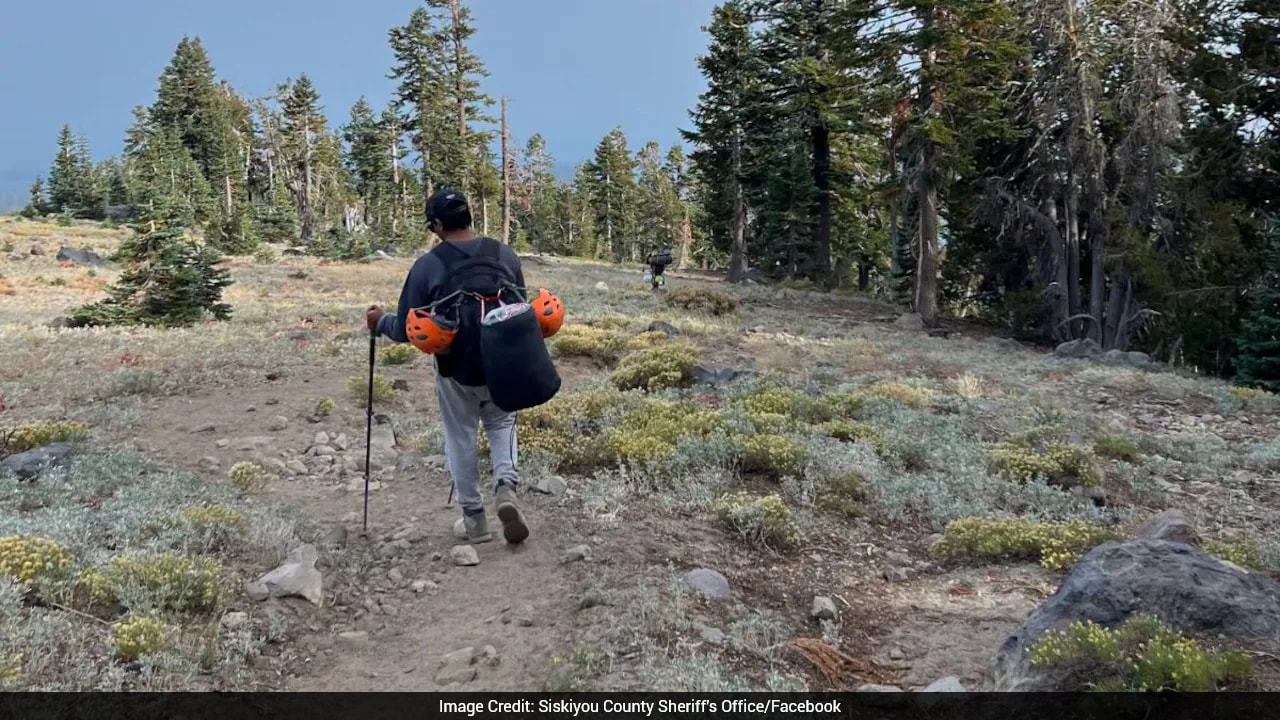
The air at nine thousand feet does not just cold-snap your skin; it steals the moisture right out of your lungs. Every breath tastes like dry ice. By late afternoon, the sun dips behind the jagged granite spine of the peak, and the temperature plummets thirty degrees in the span of twenty minutes.
Three men stood shivering in that gathering dusk, staring at a downloaded GPX file on a cracked smartphone screen, realizing with a sick, hollow thud in their stomachs that the trail ahead of them did not exist.
There was no switchback. There was no beaten path. There was only a sheer, crumbling shale slope dropping into a dark, pine-choked canyon.
They had wanted an adventure. They had wanted to bypass the crowds, skip the cumbersome guidebooks, and find something raw. So they did what millions of travelers do every single day. They typed a prompt into a machine, trusted the smooth, confident syntax of an artificial intelligence tool, and walked straight into a trap of algorithmic hallucinations.
The Promise Of The Shortcut
Convenience is a quiet poison. We live in an era that worships the instant answer. When planning a backpacking trip used to mean squinting at topographic maps, cross-referencing forestry service reports, and calling local ranger stations to ask about snowpack, it was tedious. It required patience. It demanded respect for the environment because the friction of preparation forced you to understand the terrain before your boots ever touched the dirt.
Then came the conversational bots.
You can ask a language model to plot a loop trail through an unfamiliar wilderness area, and within three seconds, it will spit out a pristine, beautifully formatted itinerary. It will tell you the mileage. It will estimate the duration. It will use authoritative, reassuring language that sounds like a seasoned mountaineer who has spent decades sleeping under those stars.
It sounds real. It looks real.
And that is precisely why it is dangerous.
Language models do not know what a mountain is. They do not understand elevation gain, seasonal washouts, cliff bands, or the way a heavy spring snowstorm can erase a trail marker under two feet of powder. They are probability engines. They predict the next most likely word in a sentence based on patterns in their training data. When you ask an AI for a hiking route, it does not check a live satellite feed. It stitches together a plausible-sounding fiction from blog posts, old guidebooks, and forum chatter, blending three different trails into a Frankenstein path that cannot physically be hiked by human legs.
The Reality Of The Ridge
Consider what happens next in a scenario like the one these three men faced.
They had packed light, trusting the algorithm's assertion that the loop would take four hours and terminate near a paved parking lot. They brought one water bottle each, a handful of protein bars, and hoodies instead of technical shell layers. By the time they reached the false summit generated by the AI's hallucinated coordinates, the sun was sinking fast and their water was gone.
Panic does not arrive with dramatic music. It arrives as a cold prickle at the base of your neck.
One of them tried to call for help, but the canyon walls acted as a digital prison, swallowing the signal whole. The screen blinked a flat, mocking "No Service." The tool that had brought them here was now a dead brick of glass and aluminum.
Search and rescue teams see this exact pattern with increasing frequency. Emergency responders note that hikers are venturing further into remote backcountry with less preparation than ever before, emboldened by apps and bots that promise friction-free exploration. The wilderness has not changed. It remains indifferent, vast, and brutally unforgiving of ignorance. What has changed is our perception of risk. We have outsourced our common sense to silicon chips, assuming that technology acts as a protective shield against nature.
It does not. Technology only amplifies our mistakes.
Decoding The Machine Mind
Why do we trust these systems so implicitly? Part of it is psychological. We are hardwired to defer to authority, and fluent, articulate text reads as authoritative. If a machine speaks to us in calm, measured paragraphs, our evolutionary defenses stand down. We mistake fluency for fact.
When professional programmers test code generated by an AI, they scrutinize every line because they know the machine hallucinates logic errors. When financial analysts look at AI-driven market summaries, they cross-check the data because they know the stakes are high.
Yet, when recreational travelers plan a foray into potentially lethal environments, they treat the output of a language model like gospel.
The three men stranded on that mountain did not survive because of the AI. They survived because the weather held, because one of them had the presence of mind to stay put rather than wander further into the dark, and because an experienced backcountry ranger happened to notice an unfamiliar vehicle parked at a closed trailhead long after dark, sparking a midnight search.
They were lucky. Luck is a terrible strategy for survival.
The Weight Of The Wild
Wild places demand humility. They require us to accept that not every question has an instant, frictionless answer. Sometimes, the only way to understand a landscape is to study the map yourself, talk to people who have walked it, and accept the reality that nature does not care about your schedule.
The next time you feel the urge to let a machine plan your escape from the concrete, pause. Look at the contour lines. Check the official, human-verified bulletins. Understand that the most valuable part of any journey is not the destination, but the friction of earning it.
The mountain does not care about your prompt. It only cares about your preparation. And when the sun drops below the ridge and the wind begins to howl, the algorithm cannot keep you warm.