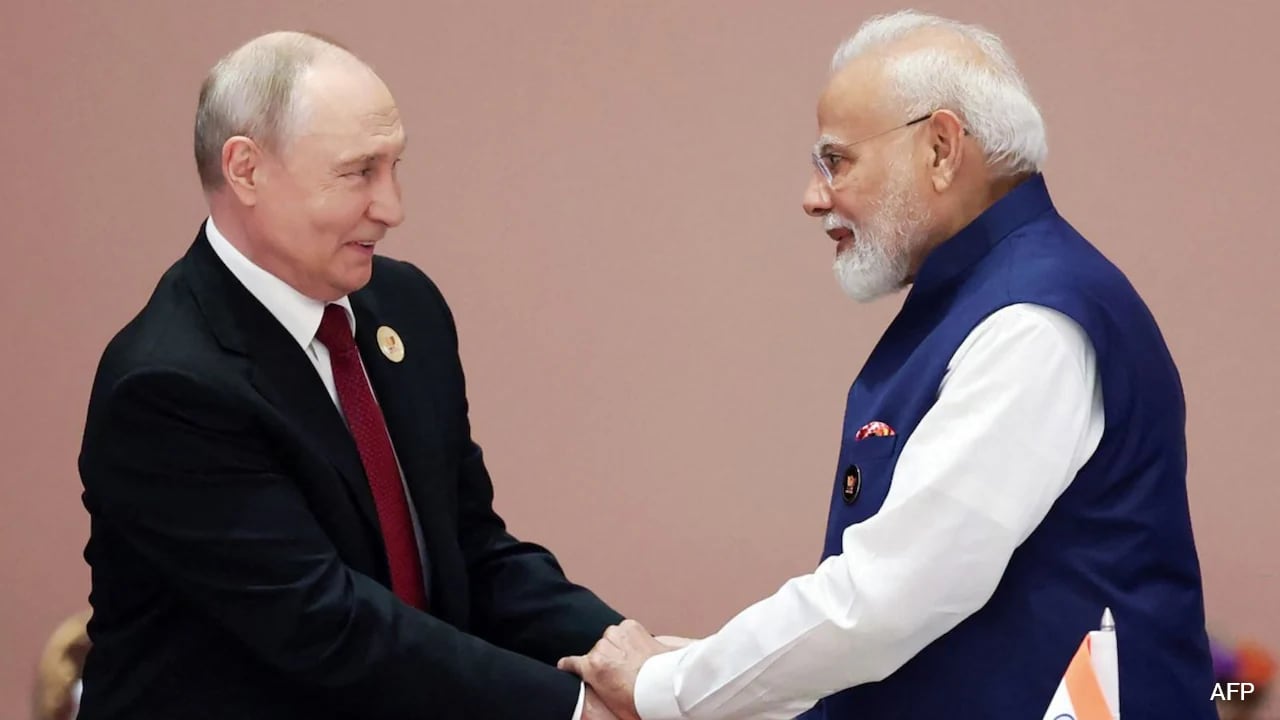
External foreign ministers shake hands under the glare of New York flashbulbs, and the diplomatic press corps dutifully transcribes the platitudes. External Minister S. Jaishankar met with his Iranian and Russian counterparts on the margins of the United Nations General Assembly, a routine administrative exercise on paper. Anyone looking past the staged smiles sees an urgent recalibration of Eurasian security architecture. Sanctions regimes are cracking under the weight of bilateral evasion networks. Global supply chains are fracturing into ideological blocs. New Delhi is walking a narrow diplomatic ridge, managing traditional partnerships while facing intense Western pressure over its independent economic posture.
The public readouts from these meetings spoke of mutual respect, expanded trade pathways, and regional stability. Official communiques rarely capture the hard bargaining taking place behind closed doors. Energy security dominates these discussions. India needs discounted crude to insulate its domestic market from inflationary shocks. Russia needs non-Western buyers to absorb sanctioned commodities and sustain its wartime state apparatus. Iran offers critical geographic corridors that bypass Western choke points, tying Central Asian and South Asian markets together through infrastructure investments like the Chabahar port.
Washington watches these interactions with growing frustration. Western capitals spent decades trying to isolate Moscow and Tehran, treating secondary sanctions as an absolute ceiling for international commerce. New Delhi views this through a lens of strategic autonomy. Foreign policy veterans remember the Cold War non-aligned era when India refused to be boxed into a bipolar binary. Today, the stakes are higher, measured in gigawatts of energy consumption, semiconductor supply lines, and maritime transit rights across the Indian Ocean.
Moscow understands its leverage. Cut off from European financial clearinghouses, the Kremlin leans heavily on Asian trade partners to keep its economy afloat. Transactions settled in national currencies bypass the greenback, accelerating a quiet de-dollarization trend that alarms Western central bankers. When Jaishankar sits across from his Russian counterpart, they are not just discussing bilateral trade targets. They are stress-testing alternative financial architectures designed to withstand future Western economic warfare.
Tehran plays an equally complex game. Isolated by decades of comprehensive sanctions, Iran views its diplomatic engagement with major Asian democracies as a vital lifeline. The International North-South Transport Corridor represents a concrete physical manifestation of this strategy, linking Russian ports to Iranian rail networks and onward to Indian harbors. Progress has been agonizingly slow, bogged down by bureaucratic inertia and financing disputes. Yet, geopolitical urgency has a way of cutting through red tape. Both capitals are accelerating timelines to protect their trade routes from sudden maritime interdiction or secondary penalties.
New Delhi's calculus is entirely pragmatic. Prime Minister Narendra Modi’s administration operates on a core realist principle: foreign policy serves domestic economic growth and national security. Aligning completely with Western sanctions would mean catastrophic energy inflation for a country of 1.4 billion people. Conversely, burning bridges with Washington and European capitals would jeopardize critical defense technology transfers and intelligence-sharing agreements. The solution is a high-wire balancing act. India buys Russian oil, maintains dialogue with Iran, deepens its partnership with the United States through the Quad, and asserts leadership among the Global South.
Critics in Western think tanks often label this hedging as opportunism. That interpretation misses the fundamental driver of modern multipolar diplomacy. Middle powers are refusing to outsource their national security decisions to Washington or Brussels. As global institutions like the UN Security Council gridlock on major geopolitical crises, bilateral and regional coalitions fill the vacuum. The UNGA margins serve as a convenient bazaar where transactional diplomacy is negotiated out of sight of the plenary cameras.
Financial transactions tell the real story of these diplomatic meetings. Look at the mechanics of rupee-ruble accounts or the sophisticated shipping networks moving crude through ghost fleets in the Persian Gulf. These systems did not emerge by accident. They are engineered responses to an increasingly weaponized global financial system. Every time Western regulators tighten the screws, targeted nations build more resilient, opaque workarounds. India participates in these alternative networks because its national interest demands secure energy supplies, not because it seeks to upend the global order single-handedly.
The broader security architecture in West Asia and Central Asia is shifting rapidly. With the United States pulling back from major military entanglements in the Middle East and focusing its strategic attention on the Indo-Pacific, regional players are filling the security vacuum. Iran, Russia, and India share deep concerns about stability in Afghanistan and the spread of radical militant networks near their borders. Intelligence sharing and diplomatic coordination between these three capitals, once unthinkable in certain configurations, have become a quiet necessity.
As the UNGA session concluded and foreign ministers packed their bags for home, the official statements were quickly buried by the next news cycle. The real impact of these high-level talks will not be found in press releases. It will manifest in upcoming bilateral trade agreements, the volume of crude tanker traffic moving through maritime chokepoints, and the quiet expansion of non-Western payment systems. India will continue to absorb the diplomatic blowback from Western capitals, absorbing the pressure with polite indifference while securing the resources its economy requires to grow. The photo ops in New York were just for the public. The real work happened where the cameras could not reach.