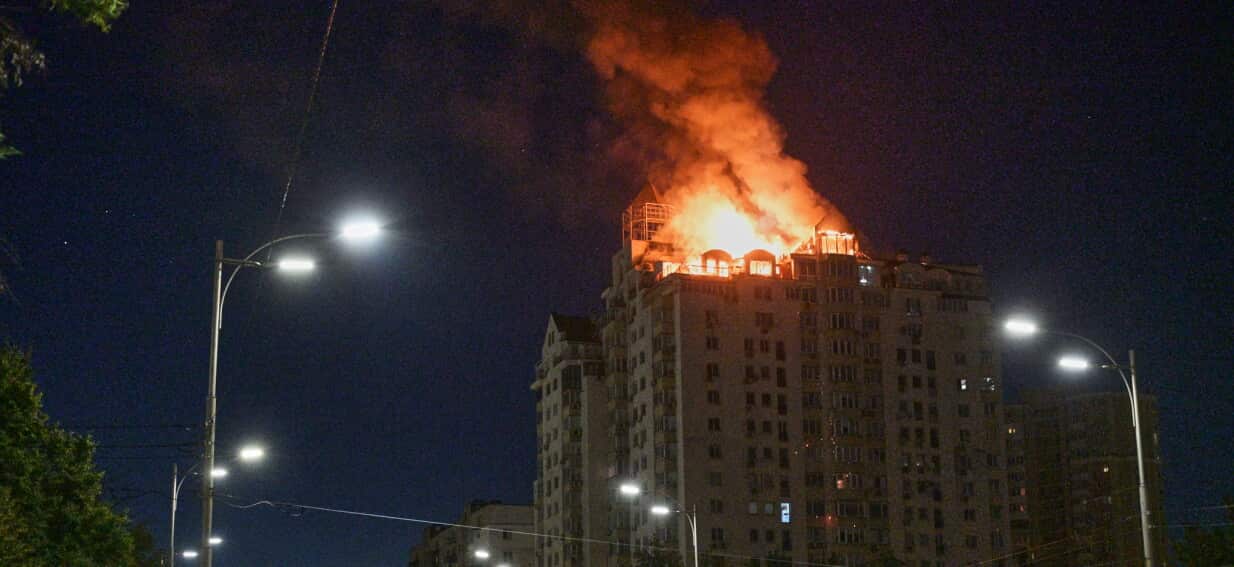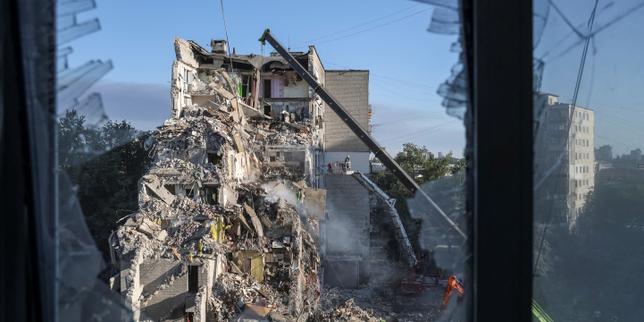
Moscow is raining missiles down on Kyiv with a clear objective to break the electrical grid and exhaust air defense stockpiles. At the exact same time, the diplomatic ground beneath Ukraine is shifting dangerously. German prosecutors have formally turned their sights on Ukrainian nationals for the Nord Stream pipeline sabotage, threatening the very flow of European financial and military support. This dual crisis exposes the fragile reality of Ukraine's war effort, caught between relentless Russian military aggression and a sudden, sharp erosion of Western political trust. Kyiv is now fighting two wars at once: one in the mud of the Donbas, and another in the judicial chambers of Berlin.
The immediate threat is physical and loud. The secondary threat is diplomatic, quiet, and potentially far more lethal to Ukraine’s long-term survival.
The Air War Over Kyiv Becomes a War of Attrition
Russian forces have shifted their strategy from sporadic terror raids to systematic infrastructure destruction. The latest waves of cruise missiles, ballistic projectiles, and cheap drones are designed to do one thing. They aim to drain Ukraine’s supply of expensive Western air defense interceptors. Every Patriot or IRIS-T missile fired to down a low-cost Shahed drone is a win for Moscow’s ledger.
The strategy is working. Energy infrastructure across the country is failing faster than it can be repaired. Rolling blackouts are no longer a temporary inconvenience; they are a permanent feature of daily life. The Kremlin’s stated goal to continue intensifying pressure is not empty rhetoric. It is a calculated military campaign to make Ukrainian cities unlivable before winter, forcing a civilian exodus and breaking the national will to resist.
Ukrainian air defense crews are operating under extreme stress. They must choose which targets to save. Do they protect a thermal power plant that keeps a million citizens warm, or do they shield a military command node? The scarcity of interceptor missiles means making impossible choices every single night. If Western supplies dry up even slightly, the sky over Kyiv will belong to Russian aviation.
The Underwater Sabotage That Haunted Berlin
While the skies over Kyiv burn, a political firestorm is consuming Germany. For nearly two years, the destruction of the Nord Stream 1 and 2 pipelines in the Baltic Sea remained a geopolitical mystery. Accusations flew wildly. Washington blamed Moscow; Moscow blamed London; Warsaw blamed Berlin’s own past energy dependence.
The mystery dissolved when the German Federal Prosecutor issued arrest warrants.
German investigators tracked the logistics of the operation to a small sailing yacht named the Andromeda. The vessel was rented in Poland by a company owned by Ukrainians. The crew consisted of deep-sea divers, all of whom carried Ukrainian passports. German judicial authorities have accused Ukrainian nationals of executing the sabotage, and reports have tied the operation directly to high-ranking military officials in Kyiv, potentially operating outside the direct knowledge of President Volodymyr Zelensky.
This is not a conspiracy theory cooked up by Russian propagandists. It is the official position of the federal prosecutor of Germany, Ukraine's second-largest military backer.
The revelation has hit Berlin like a physical blow. For over a decade, German industry relied on cheap Russian gas flowing through those pipelines. The destruction of Nord Stream forced Germany to restructure its entire economy at an astronomical cost, driving inflation and crippling its manufacturing sector. To discover that the country paying the ultimate economic price for the war may have had its vital infrastructure destroyed by the very nation it is funding is an bitter pill for German politicians to swallow.
The Collapse of the German Political Consensus
The timing of the German judicial findings could not be worse for Kyiv. Chancellor Olaf Scholz is presiding over a fractured coalition government facing immense economic pressure. The German public is growing weary of the war.
The Nord Stream investigation gives massive political ammunition to opposition parties on both the far-right and the far-left. The Alternative for Germany party and the Sahra Wagenknecht Alliance have long argued that Germany is sacrificing its own economic well-being for a foreign war. They are now using the federal prosecutor’s findings to demand an immediate halt to all military aid to Ukraine.
Their argument is simple and potent for the average voter. Why should German taxpayers send billions of euros in weapons to a country whose operatives blew up German energy infrastructure?
German Military Aid Commitments (Selected European Donors)
+----------------+-----------------------+
| Country        | Total Aid (2022-2026) |
+----------------+-----------------------+
| Germany        | €17.7 Billion         |
| United Kingdom | €12.2 Billion         |
| Denmark        | € 6.4 Billion         |
| Poland         | € 4.3 Billion         |
+----------------+-----------------------+
Scholz cannot easily ignore this shift in public sentiment. The German budget is in crisis, and cuts must be made. If German aid drops, the rest of Europe cannot fill the void. The United Kingdom and France are facing their own fiscal constraints, and Poland's relationship with Kyiv has soured over agricultural disputes and historical grievances.
The Denial Dilemma Inside Kyiv
Kyiv’s official response has been a mix of flat denials and quiet panic. Government officials maintain that Ukraine had nothing to do with the Nord Stream bombings. They suggest the operation was a false-flag attack orchestrated by Moscow to alienate Ukraine from its European allies.
That explanation is finding fewer buyers in European capitals. Intelligence agencies in Washington, Berlin, and Warsaw have reviewed the evidence. The trail of money, forged passports, and deep-sea diving expertise leads back to Ukraine.
The real question is who authorized the strike. If it was a rogue operation conducted by the military without Zelensky’s approval, it reveals a dangerous lack of control within the Ukrainian state apparatus. If Zelensky’s office did know, it represents a catastrophic betrayal of trust between Ukraine and its most important European benefactor.
Neither scenario bodes well for Ukraine’s diplomatic standing. A nation fighting an existential war cannot afford to alienate its supply chain. The military reality on the ground is dependent on Western ammunition. Without artillery shells from Europe and air defense missiles from America, the frontline in the east will collapse.
The Convergence of Steel and Law
The twin pressures are feeding into each other. Russia smells blood in the water. Sensing that Western resolve is fracturing under the weight of the Nord Stream scandal and economic fatigue, Vladimir Putin is pushing his military to maximize gains. The intensity of the attacks on Kyiv is designed to show the West that supporting Ukraine is a lost cause.
The strategy aims to force a choice upon Europe. Continue funding a war that appears endless, costly, and potentially compromised by acts of sabotage against European infrastructure, or force Ukraine to the negotiating table on Moscow's terms.
For Ukraine, a forced negotiation right now means territorial partition. It means losing the Donbas, Zaporizhzhia, Kherson, and Crimea permanently. It means accepting a neutral status that would leave the country vulnerable to another invasion a decade down the road.
The veteran diplomats in Brussels and Berlin understand the stakes. They know that a Russian victory would destabilize the entire European security architecture. Yet, they are bound by the realities of domestic politics. You cannot easily convince a citizen in Munich who is struggling to pay his heating bill that he must continue to support an ally that disrupted his energy supply.
The illusion of a seamless, unquestioning alliance between Western Europe and Ukraine is dead. It has been replaced by cold, transactional calculation. Ukraine must now prove its value to a skeptical European audience while defending its capital from a relentless aerial onslaught. The margin for error has shrunk to zero.
The true test for Kyiv is no longer just holding the line at Pokrovsk or intercepting missiles over the Dnipro River. It is convincing a deeply insulted German state that the survival of a democracy in eastern Europe is worth more than the pride of its prosecutors and the memory of its ruined pipelines. If Kyiv fails that diplomatic test, the weapons will stop coming, and the front line will move rapidly westward.