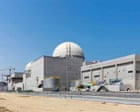
A single drone strike just shattered the illusion of safety in the Persian Gulf.
When a drone managed to bypass heavy defense networks and hit an electrical generator right outside the inner perimeter of the Barakah nuclear power plant in Abu Dhabi, it wasn't just a random act of sabotage. It was a calculated message.
The Federal Authority for Nuclear Regulation was quick to reassure everyone that there's no radioactive leak and that all four reactors are running normally. But let's be real. The fact that an explosive drone got close enough to force a multi-billion-dollar nuclear reactor to rely on emergency diesel generators should scare you. This marks the first time the Barakah plant has been targeted, and it happened right in the middle of a fragile, six-week-old ceasefire in the wider Iran war.
You don't need a PhD in geopolitics to see what's happening here. The strike was designed to prove a point. The perpetrators wanted the United Arab Emirates to know that their most prized, critical infrastructure is well within reach.
The Message Behind the Smoke at Barakah
Geopolitical chess in the Middle East is rarely subtle, but this move was downright glaring. According to intelligence sources, the drone deliberately targeted an auxiliary energy supplier rather than the core reactor dome. Why? Because they wanted to show they could trigger a full-scale nuclear incident if they wanted to, without actually crossing that catastrophic red line just yet.
Emirati officials haven't officially named a culprit in their formal defense ministry briefs, but presidential adviser Anwar Gargash didn't hold back on social media. He openly called it a dangerous escalation, pointing the finger squarely at Iran or its regional proxies.
Think about the geography for a second. The UAE defense ministry tracked three drones crossing over the western border from the direction of Saudi Arabia. The military managed to shoot down two of them. The third got through. Whether it was launched by Houthi rebels in Yemen, Shiite militias in Iraq, or directly from Iranian soil, the fingerprints point back to Tehran.
This isn't an isolated incident. Since the regional war erupted earlier this year, Iran has hurled roughly 3,000 drones and missiles at the UAE. Abu Dhabi has paid a massive price for its hawkish stance against Tehran and its tightening security partnership with Israel. The UAE's largest gas plant was hammered twice last month, and repairs will drag on into next year. Now, the stakes have jumped from disrupting fossil fuels to threatening nuclear infrastructure.
Why the Barakah Reactor is a Unique Target
To understand why this strike is such a massive deal, you have to look at what Barakah represents. Built with South Korean technology for a cool $20 billion, this facility provides a full quarter of the UAE’s electricity. It’s the crown jewel of the country's clean energy shift.
But more importantly, its regulatory framework is completely different from Iran’s murky nuclear ambitions.
- The 123 Agreement: The UAE signed a hyper-strict deal with the US, completely giving up its right to enrich uranium or reprocess spent fuel domestically.
- Imported Fuel: Every ounce of uranium used at Barakah comes from abroad under strict international monitoring.
- Zero Weaponization: The UAE built this purely for commercial power, intentionally keeping it transparent to avoid regional proliferation panics.
Compare that to Iran, which has pushed its uranium enrichment close to weapons-grade levels and routinely blocks UN inspectors from the International Atomic Energy Agency. By targeting Barakah, America's adversaries are striking a Western-backed model of peaceful nuclear energy.
The timing is incredibly volatile. On Iranian state television, things have taken a surreal, aggressive turn. News anchors have literally been hosting live broadcasts while holding rifles. In one recent broadcast, a presenter even took basic firearms training from a Revolutionary Guard member and mimed shooting at a UAE flag. They are actively prepping their public for a return to total war.
Trump, Netanyahu, and the Crumbling Ceasefire
This drone strike essentially puts a match to a powderkeg. The April ceasefire mediated by Pakistan was already on life support after talks in Islamabad stalled. Now, the international community is scrambling.
US President Donald Trump didn't mince words on Truth Social, warning Tehran that the clock is ticking and they need to move fast before "there won't be anything left of them." Trump has already huddled with his national security advisers at his Virginia golf course, with a full-team strategy meeting set for Tuesday.
Meanwhile, Israeli Prime Minister Benjamin Netanyahu is coordinating closely with Washington. Israel has its own score to settle, especially after Iranian forces targeted areas near Israel's Dimona nuclear facility during the height of the combat. With Israeli security cabinets meeting and the US maintaining a tight naval blockade around Iranian ports, the machinery of war is spinning back up.
The UAE has already proven it won't just sit back and take a beating. Abu Dhabi previously launched covert, precision airstrikes directly against Iranian facilities after its oil infrastructure was hit. UAE Foreign Minister Sheikh Abdullah bin Zayed Al Nahyan has been working the phones with Saudi Arabia and IAEA Chief Rafael Grossi, asserting that the Emirates have every sovereign right to respond militarily to these attacks.
What Happens Next
The era of clean, un-targeted civilian infrastructure in the Gulf is officially over. If you're watching the energy markets or regional stability, the next 72 hours are critical.
If you want to understand where this crisis goes from here, keep your eyes on these moving parts:
- Watch the Strait of Hormuz: Iran has effectively choked off shipping traffic through this vital corridor. Any UAE or US military retaliation for the Barakah strike will likely trigger a complete closure, sending global oil prices into an absolute tailspin.
- Monitor US Bomber Movements: The US Air Force is already running B-1B lancer sorties out of RAF Fairford. These heavy bombers aren't just flying for exercise; they are signaling immediate readiness to strike command centers if the truce completely snaps.
- Track Regional Air Defense Deployments: The UAE relies heavily on hosted Western and Israeli air defense systems. Expect an immediate, aggressive hardening of the airspace around Al Dhafra and Western Saudi border routes to close the gaps exposed by this three-drone pack.
The Barakah strike proved that a fragile truce won't protect the region's most sensitive targets. The diplomatic talk is fading fast, and both sides are visibly ready to pull the trigger.