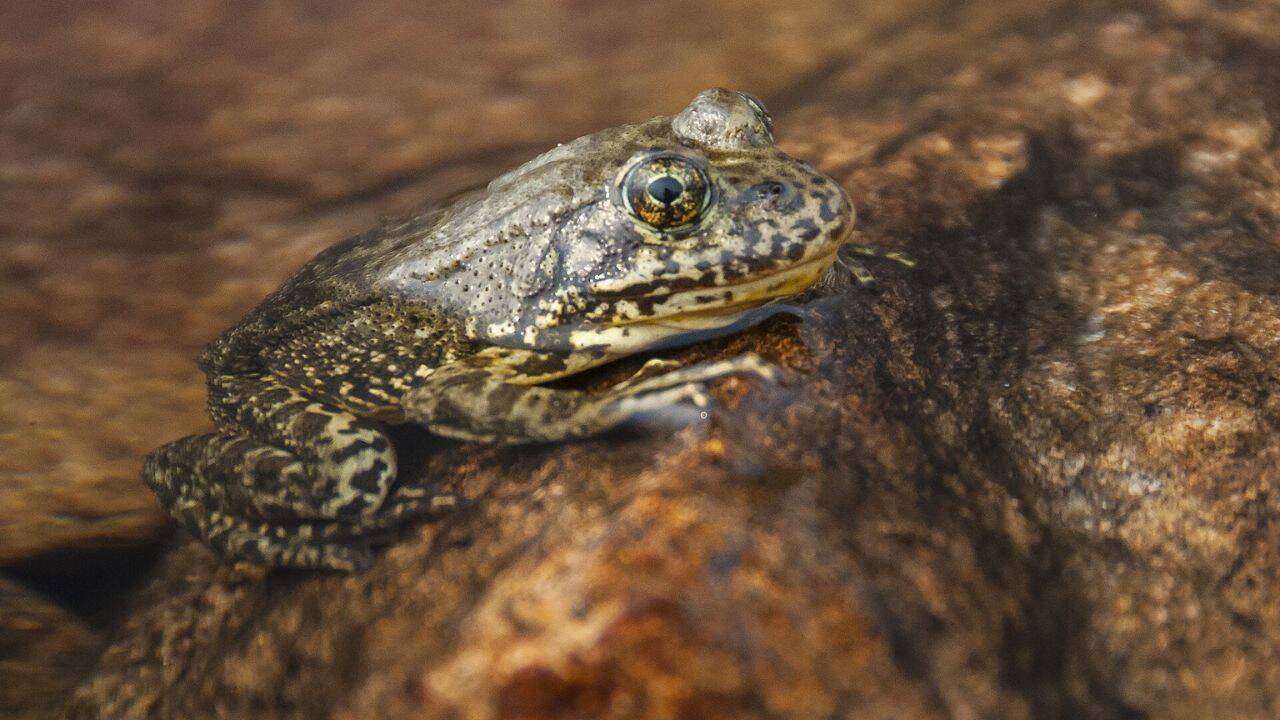
The press release reads like a fairy tale. State wildlife agencies gather the media, hold up a plastic tub full of shiny mountain yellow-legged frogs, and smile for the cameras as thousands of tiny amphibians leap into a pristine alpine stream. Everybody claps. The public feels a warm glow of environmental redemption. Another species pulled back from the brink.
Except it is complete theatre.
I have spent years watching conservation programs throw money at symptoms while ignoring structural collapse. This latest round of California releasing more than 3,000 endangered mountain frogs into the wild is not a victory. It is a slow-motion tragedy disguised as progress. You cannot fix a shattered ecosystem by treating it like an ongoing high-end pet store restocking event.
Let us look past the feel-good headlines and examine the mechanics of what is actually happening in those high-altitude Sierra Nevada lakes.
The Illusion of Repopulation
The lazy consensus in modern conservation is simple: if numbers are low, breed them in captivity and dump them back outside until the population stabilizes.
It sounds logical on the surface. But biology does not care about your institutional quotas. When you take captive-bred mountain yellow-legged frogs and drop them into a wild watershed, you are dropping naive targets into a meat grinder. These animals have grown up in climate-controlled, predator-free environments with a steady supply of sanitized pellets. They do not know how to forage efficiently. They do not recognize native avian predators. Worst of all, they are walking straight into an environment still dominated by the primary reason they collapsed in the first place: the chytrid fungus and non-native trout.
Releasing thousands of individuals into a habitat that has not fundamentally changed is not recovery. It is feeding.
The Chytrid Elephant in the Room
To understand why these high-profile releases keep failing quietly behind closed doors, you have to talk about Batrachochytrium dendrobatidis, universally known as the chytrid fungus. This pathogen eats keratin in amphibian skin, disrupting their electrolyte balance and causing cardiac arrest.
For decades, researchers have watched chytrid wipe out entire lineages of mountain frogs across the western United States. State agencies love to brag about their captive breeding facilities developing fungus-resistant strains or treating batches before release. But once those frogs hit the water, the fungus is waiting in the sediment.
Imagine a scenario where you release thousands of immunocompromised individuals into a room filled with an airborne pathogen without changing the ventilation. That is what California is doing with these streams. The fungus does not magically vanish because a bureaucrat cut a ribbon. Unless the aquatic environment itself achieves a natural microbial equilibrium or genetic resistance takes hold organically over generations, every truckload of lab-raised frogs is just fresh fuel for the fire.
The Trout Problem We Refuse to Solve
Let us talk about the other silent killer that conservationists prefer to whisper about: introduced trout.
Back in the twentieth century, state and federal agencies enthusiastically stocked remote high-mountain lakes with non-native trout like brook, brown, and rainbow trout to keep recreational anglers happy. These fish found themselves in fishless alpine lakes containing abundant, defenseless prey. Mountain yellow-legged frogs evolved in water bodies devoid of fish. Their tadpoles spend up to four years swimming slowly in the open water, making them the aquatic equivalent of a floating sushi platter for a hungry trout.
State agencies will occasionally run local eradication projects to clear a single lake of trout, but they lack the political backbone to launch the massive, multi-watershed eradication effort required to restore true historical baselines. Why? Because sportfishing lobbies are loud, and frog advocates are quiet.
So instead of doing the hard, politically radioactive work of systematically removing invasive fish from entire drainage basins, agencies take the easy route. They breed more frogs and dump them right back into lakes where trout populations are thriving. It is expensive, it is cyclical, and it makes great B-roll for the evening news while changing absolutely nothing about the ecological scorecard.
What Real Recovery Looks Like
If we want actual conservation success, we have to stop measuring victory by the sheer volume of animals pushed out of a hatchery door. Success is not a headcount on release day. Success is a self-sustaining, multi-generational population that increases its numbers without human intervention five years down the line.
Achieving that requires three radical shifts in priorities:
- Habitat Priming: Stop stocking frogs where invasive predators still dominate. Clear the trout first. If you cannot clear the trout, do not release the frogs.
- Selective Hardening: Expose captive generations to natural stressors earlier. If they cannot survive a harsh winter in semi-wild enclosures, they will not survive a Sierra Nevada blizzard.
- Ecosystem-Wide Genomics: Focus resources on tracking which wild populations are naturally surviving the chytrid onslaught, and breed strictly from those proven survivors rather than recycling captive stock that lacks field-tested immunity.
Until we ditch the PR-driven stocking model and start treating ecosystems as interconnected, hostile biological realities rather than public relations canvases, every multi-thousand-frog release is just an expensive exercise in wishful thinking.
Stop counting the frogs you release. Start counting the ones still there a decade later.


