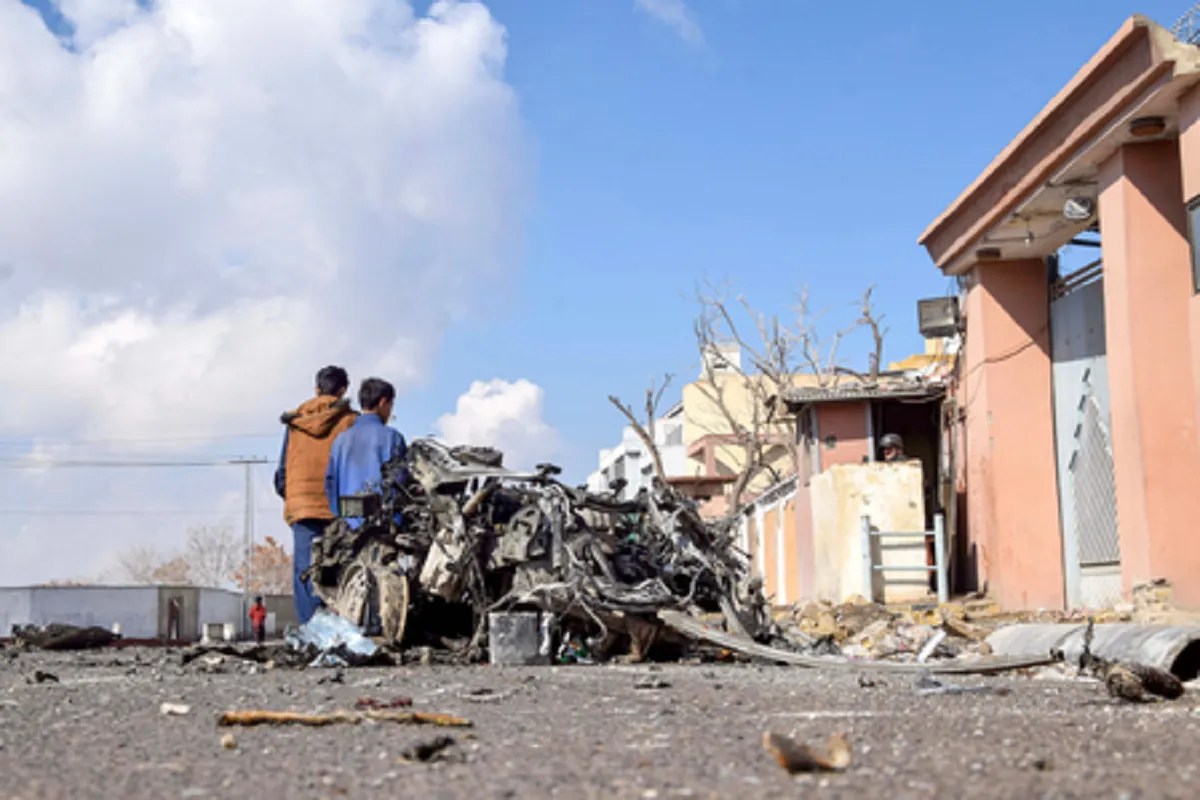
The wind in Balochistan does not blow; it scrapes. It carries a fine, pale dust that settles into the creases of your eyes, the back of your throat, and the gears of automatic rifles. For decades, this dust has witnessed the same repeating cycle. Young men from the fertile plains of Punjab or the bustling streets of Karachi arrive in green digital-camouflage uniforms, carrying the weight of a state’s ambitions. They step off transport trucks into a landscape that looks like the surface of Mars, only hotter. They are told they are here to keep the peace, to guard infrastructure, to protect the nation.
Then, the mountains speak.
The recent spike in coordinated ambushes across Balochistan—where separatist guerrillas have claimed the lives of dozens of Pakistani soldiers in a matter of weeks—is not just a spike in military statistics. It is a human catastrophe hiding behind the dry language of geopolitical press releases. When a headline reads "Insurgents Kill Troops," it erases the terror of a twenty-two-year-old conscript caught in a kill zone. It erases the calculated fury of a local fighter who believes he has nothing left to lose. To understand why this arid frontier is bleeding faster than ever, we have to look past the troop counts and look at the dirt.
The Mirage of the Highway
Consider a hypothetical young lieutenant. Let’s call him Tariq. Tariq grew up in Lahore, a city of gardens and ancient brick. When he is deployed to a remote outpost near the port of Gwadar, the psychological shock is immediate. There are no trees. There is no shade. The heat during the day is an active force, a physical weight pressing down on his helmet.
His assignment is simple on paper: guard a stretch of asphalt. This asphalt is part of a multi-billion-dollar economic corridor, a glittering promise of modern energy pipelines and deep-sea trade routes meant to transform Pakistan into a global hub.
But to the local Baloch villager watching from the ridges, that asphalt looks very different. It looks like a pipeline built to carry wealth away from his ancestral land, leaving behind nothing but checkposts and suspicion.
This is the psychological fault line of the conflict. The state sees a vacuum that needs development; the local population sees an occupation that needs resisting. When these two opposing realities collide on a lonely mountain road, the explosion is inevitable. Tariq’s convoy rounds a bend where the jagged rocks crowd the road. A flash of light, a deafening crack that rattles the jawbone, and the world turns upside down in a cloud of acrid black smoke.
The ambush takes less than four minutes. By the time the dust settles, the attackers have vanished back into the ridges they have known since childhood. They do not need supply lines; they survive on a handful of dried dates and an intimate knowledge of every cave and dry riverbed.
The Evolution of the Shadow
For years, the conventional military wisdom in Islamabad was that the Baloch insurgency was a low-level, fragmented affair. It was viewed as a collection of disgruntled tribal chiefs leading small bands of poorly equipped men. That view is now dangerously obsolete.
The guerrillas have transformed. The old guard, who fought from traditional tribal loyalties, has been replaced by a younger, highly educated generation. These are students, doctors, and engineers who have traded notebooks for assault weapons. They are organized under umbrellas like the Baloch Liberation Army (BLA), and their tactics have taken a lethal turn toward sophistication.
We are no longer seeing erratic sniper fire or crude roadside mines. The latest engagements show a terrifying level of planning. Insurgents are utilizing night-vision equipment, thermal imaging, and coordinated multi-pronged assaults on fortified military bases. They are tracking troop movements with drone surveillance.
The stakes have changed because the funding and the weapons have changed. The fallout from neighboring geopolitical shifts has flooded the region with American-made weaponry left behind in Afghanistan. Suddenly, a insurgent fighter isn’t just hiding with an aging Kalashnikov; he is holding an M4 carbine with advanced optics. The technological gap between the state military and the guerrilla shadow is shrinking.
The Empty Kitchens
To understand the endurance of this fight, one must look at the civilian cost that fuels the recruitment pipeline. Imagine a mother in a small mud-brick home outside Khuzdar. Her eldest son went missing two years ago—picked up, locals whisper, by security agencies for questioning. No charges have been filed. No court date has been set. He is simply gone, a name added to the agonizing list of the "enforced disappeared."
Her younger son stays home, listening to his mother sob into her shawl at night. He looks at the local copper and gold mines operated by foreign conglomerates, then looks at his family’s empty water well and the lack of electricity in his village. He feels a burning, localized humiliation.
When a recruiter from the mountains approaches him, the recruiter does not need a complex ideological manifesto. He only needs to point out the window. He offers a sense of agency to a young man who feels entirely powerless.
This emotional engine is what the state’s heavy-handed security apparatus consistently fails to calculate. Every time a village is subjected to a sweeping collective punishment operation, every time an innocent youth is detained at a checkpoint for hours under the blazing sun, the insurgency wins the argument. The military might win the firefight, but they lose the peace before the first shot is even fired.
The Cost of the Silence
There is a profound loneliness to dying in Balochistan. Because the province is effectively closed off to independent journalism, the war happens in a vacuum of information. Foreign reporters are barred; local journalists operate under a dual threat from both military intelligence and insurgent hit squads.
When a soldier dies, his body is flown back to his village in Punjab in a flag-draped coffin. The state media runs a brief, sanitized segment on his martyrdom. When an insurgent dies, his face is uploaded to a Telegram channel, celebrated as a hero by his peers, and buried in an unmarked grave under a pile of stones.
The true cost is buried under layers of propaganda from both sides. The state claims it is wiping out foreign-funded terrorists; the separatists claim they are on the verge of total liberation. Both claims are detached from the gritty, exhausting reality on the ground. The reality is a grinding war of attrition that neither side can decisively win. The military cannot station a soldier every ten yards across a province the size of Germany. The insurgents cannot hold territory against attack helicopters and heavy artillery.
So, the pendulum swings. A military convoy is hit. The state retaliates with air strikes and raids. The funerals are held on both sides of the divide. The bitterness deepens, turning into something permanent and inherited.
The sun sets over the Chagai hills, casting long, bloody shadows across the desert floor. A convoy of armored personnel carriers rumbles along the highway, their engines straining against the heat. Inside, young men grip their weapons, staring out through narrow bulletproof glass at a landscape that watches them back with silent, unforgiving eyes. The engine noise fades into the distance, leaving only the wind, scraping against the stones, waiting for the next spark to ignite the dust.